
Women's Mental Health IOP
Learn how a women’s mental health IOP can support recovery through structured outpatient care, assessment-based treatment, and flexible levels of care.
Reviewed by clinical staff
On this page
- What is a women’s mental health IOP?
- When IOP may be appropriate
- What treatment in a women’s mental health IOP may include
- Why a women-only setting can matter
- How IOP compares with PHP and outpatient care
- What families and clients can do next
- Frequently asked questions
When mental health symptoms start to interfere with daily life, work, relationships, or parenting, many people need more support than weekly therapy alone can provide. A women’s mental health IOP, or intensive outpatient program, offers structured treatment several days a week while allowing clients to continue living at home. For women who are managing anxiety, depression, trauma, mood changes, or co-occurring substance use concerns, this level of care can provide meaningful support without requiring inpatient treatment.
Women’s Recovery offers women-only partial hospitalization (PHP) and intensive outpatient (IOP) care in Denver. Explore all programs or call 833.754.0554.
At Women’s Recovery in Denver, Colorado, women can access outpatient treatment in a women-only setting focused on mental health, trauma, and substance use. Programs include Partial Hospitalization, Intensive Outpatient, and outpatient care, with recommendations guided by a clinical assessment. For adults and families exploring options, understanding what an IOP is, who it may help, and how it fits within a broader treatment plan can make the next step feel clearer.
What is a women’s mental health IOP?
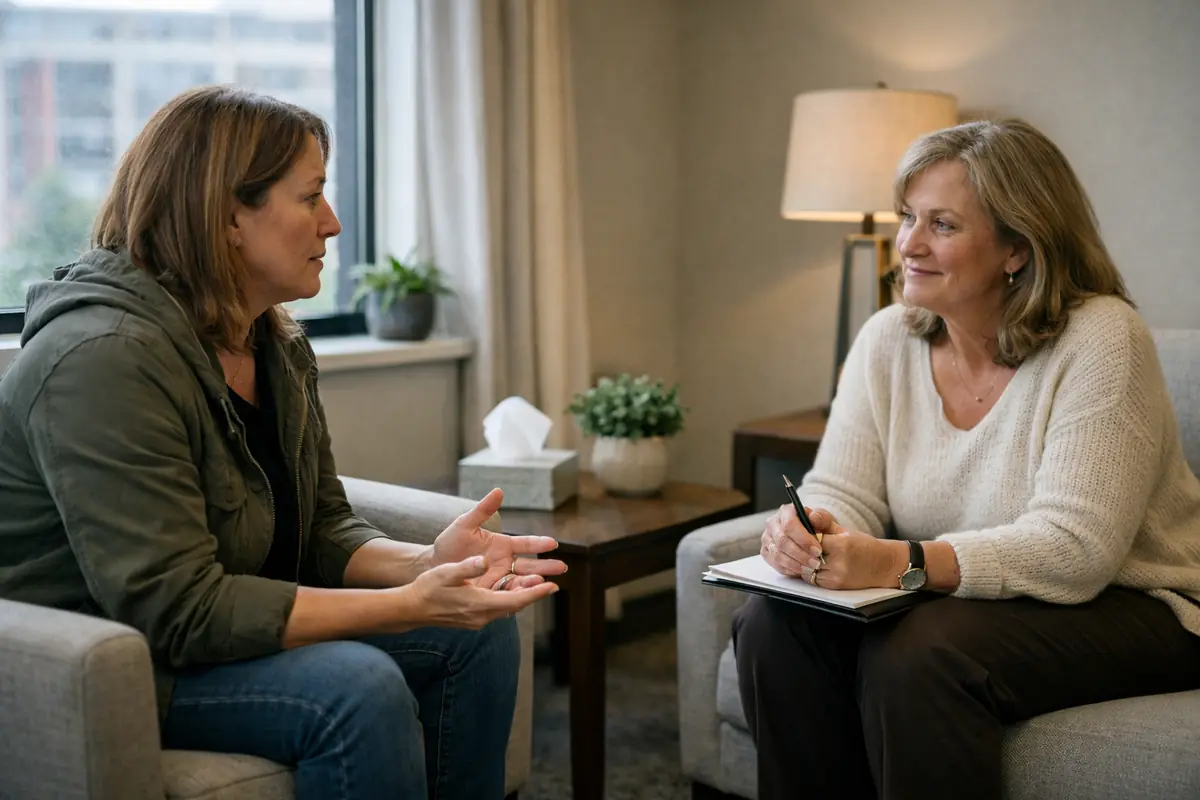
A women’s mental health IOP is a structured outpatient program designed for people who need consistent therapeutic support but do not require 24-hour supervision. In general, IOP care includes multiple treatment sessions each week, often combining group therapy, individual sessions, education, and skills-building. The goal is to help clients stabilize symptoms, improve functioning, and develop practical tools for daily life while remaining connected to home, work, school, or family responsibilities.
A women-only IOP can also offer a treatment environment where clients feel safer discussing trauma, relationships, caregiving stress, body image, grief, and other experiences that may affect mental health. For some women, gender-specific care can reduce barriers to participation and support more open conversation. Because every person’s needs are different, the right level of care should always be determined through an assessment rather than assumed based on symptoms alone.
When IOP may be appropriate
An IOP may be appropriate when symptoms are causing clear distress or disruption, but the person is still able to participate in outpatient treatment safely. This can include women who are stepping down from a higher level of care such as Partial Hospitalization, or women who need more support than standard weekly counseling. Decisions about placement should consider symptom severity, safety, substance use, medical needs, home support, and the ability to engage in treatment consistently.
Families often wonder whether IOP is the right starting point. A full assessment can help clarify whether mental health symptoms, trauma-related concerns, or co-occurring substance use issues would be better addressed in outpatient care, IOP, PHP, or another setting. According to guidance commonly reflected by organizations such as SAMHSA and ASAM, matching the level of care to the person’s current needs is an important part of safe, effective treatment planning.
- You may hear IOP recommended when weekly therapy has not been enough to manage current symptoms.
- IOP can be a useful step-down option after a higher level of care, helping maintain progress with continued structure.
- It may support women with co-occurring mental health and substance use concerns who need coordinated outpatient treatment.
- An assessment helps determine whether IOP is appropriate or whether a different level of care is needed first.
A simple comparison of outpatient levels of care
| Level of care | Best for | Structure | Living at home? |
|---|---|---|---|
| Outpatient | Milder or improving symptoms | Lowest intensity | Yes |
| IOP | Moderate support needs | Several sessions weekly | Yes |
| PHP | Higher support needs without inpatient stay | Most structured outpatient option | Yes |
| Step-down care | Ongoing support after higher care | Gradually reduced intensity | Yes |
| Assessment needed | Unclear starting point | Determines fit | Usually yes |
What treatment in a women’s mental health IOP may include
While each program is different, a women’s mental health IOP commonly includes a combination of evidence-informed therapies and practical recovery support. Treatment often addresses emotional regulation, coping skills, relationships, boundaries, relapse prevention when substance use is present, and strategies for managing triggers. Depending on individual needs, care may also explore trauma, family dynamics, grief, self-esteem, and patterns that contribute to ongoing distress.
At Women’s Recovery, treatment is offered within a continuum that includes PHP, IOP, and outpatient care. That matters because mental health recovery is not always linear. Some women benefit from increased structure for a period of time, then step down gradually as symptoms improve and functioning becomes more stable. Ongoing reassessment can help ensure care continues to reflect current needs rather than a fixed plan set at the beginning.
- Group therapy focused on coping skills, emotional processing, and peer support
- Individual therapy as clinically appropriate within the treatment plan
- Education about mental health, trauma, and substance use recovery
- Relapse prevention and recovery planning when co-occurring substance use is part of care
- Coordination of care and step-up or step-down recommendations based on assessment
Why a women-only setting can matter
For many women, treatment is shaped not only by symptoms but by life context. Past trauma, caregiving responsibilities, relationship stress, reproductive and hormonal changes, stigma, and safety concerns can all affect how mental health symptoms show up and how comfortable someone feels in treatment. A women-only setting may help reduce some of that pressure, making it easier to speak honestly, ask for help, and connect with peers who share similar experiences.
This does not mean one environment is right for everyone. Some women prefer mixed-gender care, while others find that a women-specific space supports trust and engagement. What matters most is whether the setting helps the person participate fully in treatment. A thoughtful assessment can explore clinical needs, preferences, and practical factors so that the care recommendation supports both safety and participation.
Ready for more support? Our women’s IOP and women’s PHP are built for adult women balancing recovery with real life. Call 833.754.0554 to start an assessment.
How IOP compares with PHP and outpatient care
One of the most common questions families ask is how IOP differs from other forms of outpatient treatment. In simple terms, IOP sits between standard outpatient care and Partial Hospitalization in intensity. It offers more structure than weekly therapy but less than a day-long program. The right fit depends on symptom severity, safety needs, substance use patterns, and how much support is needed to function in daily life.
At Women’s Recovery in Denver, women may enter care at different points in the continuum. Some start in PHP and step down to IOP. Others begin in IOP and later move to outpatient treatment as they build stability. The decision is based on assessment and ongoing clinical review, not a one-size-fits-all pathway.
What families and clients can do next
Researching treatment can feel overwhelming, especially when a loved one is struggling. It can help to start with a few practical questions: What symptoms are happening now? Are there safety concerns? Is substance use part of the picture? Has weekly therapy been enough? What kind of support is available at home? Clear answers to these questions can make an assessment more productive and help narrow the most appropriate options.
If you are considering a women’s mental health IOP in Denver, reaching out for an assessment is often the best next step. Women’s Recovery offers women-only outpatient treatment for mental health, trauma, and substance use, including PHP, IOP, and outpatient services. A conversation can help you understand the levels of care available, what may fit your situation, and whether treatment should begin with more or less structure.
- Write down current symptoms, recent changes, and any concerns about safety or substance use before the first call.
- Ask how assessment findings guide recommendations for PHP, IOP, or outpatient treatment.
- Include family or trusted supports in the process when appropriate and clinically helpful.
- Remember that level-of-care decisions can change over time as needs change.
Related reading
- Women's Intensive Outpatient Program Guide
- How Many Hours Is Women’s IOP?
- Online vs In-Person IOP for Women
- What Is Women's IOP?
- Day and Evening IOP for Women
If you or someone you love is looking into a women’s mental health IOP, it can help to speak with a program that understands the connection between mental health, trauma, and substance use. Women’s Recovery in Denver offers women-only PHP, IOP, and outpatient treatment, with care recommendations guided by assessment. To talk through your options and the next steps, call 833-754-0554.
Women-only treatment in Denver. Take the first step today.
You don’t have to wait until things get worse. Talk with our admissions team about PHP, IOP and outpatient programs. Call 833.754.0554.
Frequently asked questions
What does IOP stand for in mental health treatment?
IOP stands for intensive outpatient program. In mental health care, it refers to a structured outpatient level of treatment that provides more support than standard weekly therapy while allowing the client to live at home. It may include group therapy, individual sessions, education, and skill development based on clinical needs.
Is a women’s mental health IOP only for people with substance use issues?
No. Some women enter IOP for primary mental health concerns such as anxiety, depression, trauma-related symptoms, or mood instability. Others have co-occurring substance use concerns that also need treatment. An assessment helps clarify whether mental health, substance use, or both should be addressed and what level of care is most appropriate.
How do I know whether IOP or PHP is a better fit?
The difference usually comes down to symptom severity, safety considerations, daily functioning, and how much structure is needed. PHP is generally more intensive than IOP, while outpatient therapy is less intensive. A clinical assessment can help determine where to start and whether a person may need to move to a higher or lower level of care over time.
Can family be involved in treatment?
Family involvement may be helpful in many situations, especially when loved ones want to understand symptoms, communication patterns, boundaries, or recovery planning. The exact role of family depends on the client’s preferences, clinical needs, and treatment plan. When appropriate, family participation can support continuity and understanding outside of sessions.
What should I expect when I call Women’s Recovery?
A first call is typically a chance to ask questions, describe current concerns, and learn about available levels of care. Because treatment recommendations should follow an assessment, the conversation may focus on symptoms, substance use, safety, and practical needs. To learn more about women-only outpatient options in Denver, you can call 833-754-0554.