
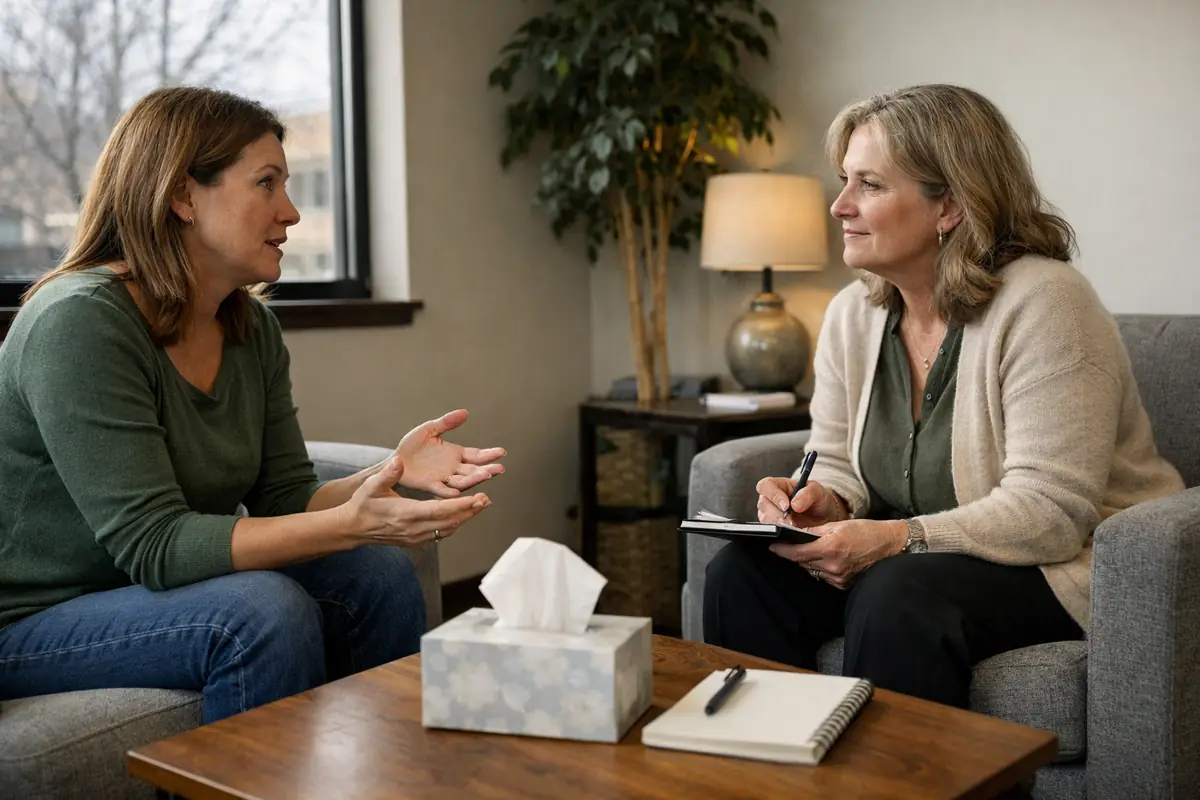
What Is Women's IOP?
Learn what a women's IOP is, who it may help, and how this level of care supports recovery for mental health, trauma, and substance use.
Reviewed by clinical staff
On this page
- Understanding a women's IOP
- Who may benefit from this level of care
- What treatment in a women's IOP may include
- How women's IOP compares with PHP and outpatient care
- Why a women-only setting can matter
- Choosing next steps and getting assessed
- Frequently asked questions
If you are looking into treatment for yourself or someone you love, you may be asking what a women's IOP actually involves. An intensive outpatient program, or IOP, is a structured level of care that offers more support than weekly therapy while allowing a person to continue living at home. In a women-only setting, treatment can be designed around concerns that commonly affect women, including trauma, family roles, relationships, mental health symptoms, and substance use.
Women’s Recovery offers women-only partial hospitalization (PHP) and intensive outpatient (IOP) care in Denver. Explore all programs or call 833.754.0554.
At Women's Recovery in Denver, Colorado, women can access outpatient care for mental health, trauma, and substance use through Partial Hospitalization, Intensive Outpatient, and outpatient treatment. A women's IOP is not the right fit for everyone, and care decisions should follow a clinical assessment. Still, for many adults, this level of care can provide meaningful structure, accountability, and support while they build stability in daily life.
Understanding a women's IOP
A women's IOP is a form of outpatient treatment that typically includes several therapy sessions each week, often in a mix of group, individual, and educational formats. The goal is to provide consistent clinical support without requiring a residential stay. This level of care may be recommended for women who need more than traditional outpatient therapy but do not need round-the-clock supervision or a full day of treatment.
The women-only aspect matters for many people. Some women feel safer discussing trauma, relationships, body image, parenting stress, or substance use in a setting that includes peers with similar lived experiences. A gender-responsive environment may also reduce distractions and make it easier to participate honestly. While every person is different, a women's IOP can create space for recovery work that feels more focused, relevant, and emotionally manageable.
Who may benefit from this level of care
A women's IOP may be appropriate for adults experiencing substance use concerns, anxiety, depression, trauma-related symptoms, mood instability, or a combination of mental health and substance use issues. It can also help women who are stepping down from a higher level of care, such as Partial Hospitalization, and still need regular support. Others may enter IOP when weekly therapy has not been enough to help them stay safe, steady, or engaged in recovery.
The right level of care depends on current symptoms, substance use patterns, safety concerns, medical needs, home environment, and practical responsibilities. According to ASAM, level-of-care decisions should be based on a multidimensional assessment rather than a one-size-fits-all approach. That is why a formal evaluation is important. An assessment helps determine whether a women's IOP, PHP, or standard outpatient treatment is the most appropriate next step.
- Women who need more structure than weekly therapy but do not need inpatient care
- Women with co-occurring mental health and substance use concerns
- Women transitioning from a higher level of care and working to maintain progress
- Women seeking a gender-responsive setting to address trauma, relationships, and recovery
Comparison of common outpatient treatment levels
| Level of care | Structure | Best fit | Living at home |
|---|---|---|---|
| PHP | Highest outpatient structure | Needs daily support and monitoring | Usually yes |
| Women's IOP | Moderate structured care | Needs more than weekly therapy | Yes |
| Outpatient | Lowest routine intensity | Stable symptoms or step-down care | Yes |
| Assessment | Determines level | Matches care to current needs | Varies |
| Step-down planning | Support changes over time | Progress after higher care | Yes |
What treatment in a women's IOP may include
Services in a women's IOP vary by program, but treatment often centers on evidence-based therapy, coping skills, relapse-prevention planning, emotional regulation, and support for daily functioning. For some women, treatment may also address trauma, grief, family dynamics, boundaries, self-esteem, and life transitions. Because many women are balancing work, caregiving, school, or legal stressors, treatment often focuses on practical recovery skills that can be applied outside the therapy setting.
An IOP may include group therapy as a core service because groups can build connection, reduce isolation, and offer accountability. Individual therapy can help women work on personal goals and sensitive issues in a private setting. Depending on clinical needs, care may also involve psychiatric support, coordination with outside providers, and family involvement when appropriate. The exact treatment plan should be individualized after assessment and updated as needs change.
- Group therapy focused on recovery skills, mental health, and peer support
- Individual therapy to address personal goals, symptoms, and treatment planning
- Psychoeducation about trauma, substance use, coping tools, and relapse prevention
- Care coordination and family involvement when clinically appropriate
How women's IOP compares with PHP and outpatient care
One of the most common questions families ask is how IOP differs from other treatment options. In general, Partial Hospitalization offers a higher degree of structure and a larger time commitment during the week. Standard outpatient care is less intensive and may involve one or two sessions weekly. A women's IOP sits in the middle, offering substantial support while allowing a person to remain connected to home, school, work, or family responsibilities.
That middle level can be useful when someone needs regular therapeutic contact but is able to practice skills in the community between sessions. It can also support a gradual step-down in care as stability improves. Still, no table can replace a clinical evaluation. A thorough assessment looks at symptoms, risk, functioning, and history to determine whether PHP, IOP, or outpatient treatment is the safest and most appropriate fit at a given time.
Ready for more support? Our women’s IOP and women’s PHP are built for adult women balancing recovery with real life. Call 833.754.0554 to start an assessment.
Why a women-only setting can matter
For some women, healing is closely tied to feeling emotionally and physically safe enough to speak openly. This can be especially relevant when treatment involves trauma, intimate relationships, family conflict, shame, or substance use. A women-only environment may lower barriers to participation and make it easier to discuss painful experiences without feeling judged, compared, or misunderstood. It can also foster a sense of shared understanding around pressures that women often navigate in daily life.
A gender-responsive setting does not guarantee a better outcome for every person, but it can be a helpful part of treatment planning. Women may find support in discussing topics such as caregiving strain, reproductive health concerns, boundaries, domestic stress, social expectations, or recovery after trauma. When these issues are acknowledged in treatment, care can feel more relevant and grounded in real life rather than overly generic or disconnected from a woman's experience.
- A setting that may feel safer for discussing trauma and relationships
- Peer support among women facing similar pressures and recovery challenges
- Space to address caregiving, family roles, and social expectations
- Treatment that can integrate mental health, trauma, and substance use concerns
Choosing next steps and getting assessed
If you think a women's IOP may be helpful, the next step is usually to schedule a confidential assessment. During that process, a clinician can ask about symptoms, substance use, mental health history, trauma exposure, medical needs, current safety, and what has or has not helped before. This information supports a more accurate recommendation. In some situations, a woman may be advised to start with PHP or another level of care instead of IOP.
At Women's Recovery in Denver, women can explore treatment options for mental health, trauma, and substance use across Partial Hospitalization, Intensive Outpatient, and outpatient care. The purpose of assessment is not to force a preset path but to match support to current needs. If you are unsure what level of care makes sense, asking questions is a good place to begin. Clear information can help you make a more informed and less overwhelming decision.
- Ask what level of care is recommended and why
- Share concerns about safety, symptoms, substance use, and daily responsibilities
- Discuss past treatment experiences and what support feels realistic now
- Review how progress may be reassessed over time
Related reading
- Women's Intensive Outpatient Program Guide
- How Many Hours Is Women’s IOP?
- Women's Mental Health IOP
- Online vs In-Person IOP for Women
- Day and Evening IOP for Women
If you are considering a women's IOP and want help understanding your options, Women's Recovery in Denver can help you start with an assessment and discuss the level of care that fits your current needs. To learn more about PHP, IOP, or outpatient treatment for women, call 833-754-0554.
Women-only treatment in Denver. Take the first step today.
You don’t have to wait until things get worse. Talk with our admissions team about PHP, IOP and outpatient programs. Call 833.754.0554.
Frequently asked questions
How many hours a week is a women's IOP?
Programs vary, so there is no single schedule that applies to every women's IOP. In general, IOP involves multiple treatment sessions each week and is more structured than standard outpatient therapy. The exact schedule should be explained during the intake process, and the recommended level of care should follow a clinical assessment.
Can a women's IOP treat both mental health and substance use concerns?
Yes, many intensive outpatient programs are designed to address co-occurring concerns such as depression, anxiety, trauma, and substance use at the same time. Integrated care can be important because these issues often affect each other. A full assessment helps clarify what should be prioritized and whether IOP is the right level of support.
Is women's IOP only for people leaving rehab or a hospital?
No. Some women enter IOP as a step-down from a higher level of care, but others begin there because weekly therapy is not enough support. IOP can be appropriate when someone needs structure, skill-building, and close therapeutic contact while continuing to live at home and manage daily responsibilities.
What is the difference between women's IOP and regular outpatient therapy?
The main difference is intensity. A women's IOP usually includes several sessions per week and often combines group therapy, individual therapy, and education. Standard outpatient care is less frequent and may involve one or two appointments weekly. Which option fits best depends on symptoms, safety, functioning, and recovery needs identified in assessment.
How do I know if a women-only program is right for me?
A women-only program may be a good fit if you feel more comfortable discussing trauma, relationships, family roles, or substance use in a setting with other women. It can also help if gender-specific stressors are central to your experience. A consultation or assessment can help you decide whether that environment matches your preferences and clinical needs.