
Partial Hospitalization Program for Women in Denver
Our most structured outpatient program for women in Denver. Attend during the day and return home at night, with mental health, trauma, and substance use care considered together.
- Time each week
- 25–30 hoursWeekly individual therapy, case management and psychiatric care.
- Schedule
- Monday–FridayMorning and afternoon groups.
- Care setting
- Outpatient in DenverAttend care and return home afterward.
Assessment guides the entry point and duration. PHP typically lasts four to six weeks; IOP following PHP typically continues for an additional nine to twelve weeks. The 13-week curriculum is a content framework, not a fixed stay.
A place to begin
Trauma-Informed PHP | Co-Occurring Mental Health & Substance Use | Women's Recovery
There's a particular kind of exhaustion that brings a woman to this level of care. It's not just tired. It's the exhaustion of managing, of holding everything together on the outside while something inside has been quietly falling apart for years. Of knowing, with complete clarity, exactly what you're supposed to do differently, and still not being able to do it. Of trying harder and harder at something that requires a completely different approach.
If that sounds familiar, you're in the right place.
Our Partial Hospitalization Program (PHP) is the most structured level of outpatient care we provide. You attend five days each week and go home each evening. PHP offers 25–30 hours per week and typically lasts four to six weeks, with timing based on individual clinical need. Assessment determines whether PHP or direct entry to IOP is appropriate.
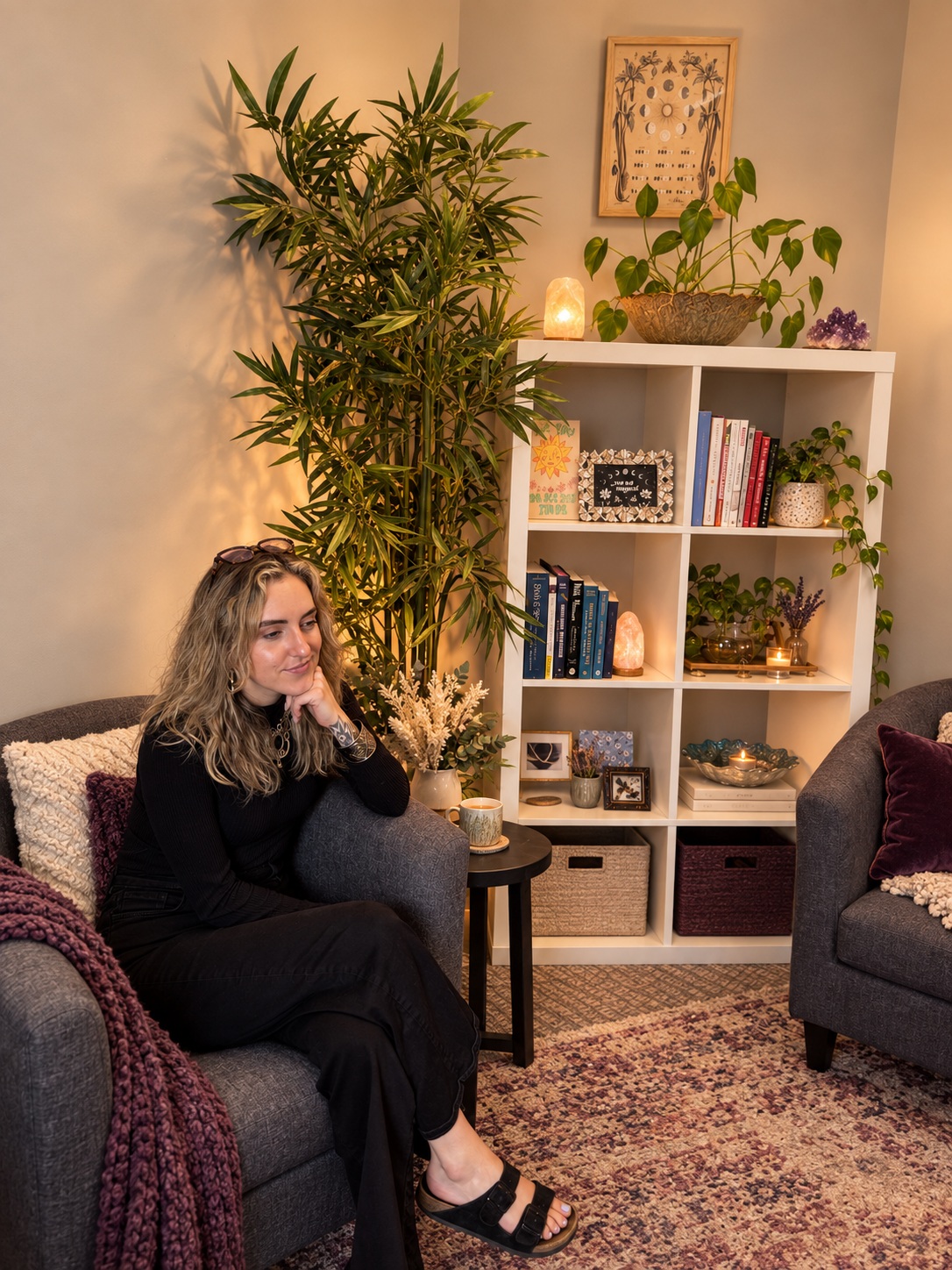
A look at our space
These are rooms at our Denver office. You spend the day here, and you go home at night.






How PHP Works: Structure and Schedule
Morning Group: 9:00 AM – 12:00 PM, Monday through Friday
Morning process
Morning group includes 90 minutes of Yalom-informed interpersonal process. The group gives women space to notice and discuss relationship patterns in the room, with support from the clinical team.
The group
The group doesn't follow a topic. It follows the energy of what's alive. A woman who over-apologizes will over-apologize here. A woman who disappears when conflict arises will disappear here. A woman who takes care of everyone before herself will start doing it in group, and the group will notice, and that noticing is medicine.
The curriculum
The next 90 minutes focuses on psychoeducation using our 13-week gender-responsive curriculum. Topics include nervous system education, Internal Family Systems, shame, grief, attachment, family systems, communication and the body. The curriculum is a structure for group content; an individual plan guides participation and length of stay.
Afternoon Sessions: 1:00 – 3:00 PM (Mon–Thu) | 12:30 – 2:30 PM (Fri)
Afternoon care
Afternoon programming may include body-based and complementary practices alongside clinical care. The team considers these activities with each woman's comfort, preferences and treatment plan in mind. They add ways to participate without replacing individual assessment or other needed care.
Monday, Gentle Movement
Somatic movement practices grounded in nervous system regulation and gentle body re-entry. For many of the women here, the body has been a place to leave rather than a place to live. This group is an invitation back, at whatever pace makes sense.
Tuesday, AcuDetox with Lenka
Lenka offers AcuDetox as a complementary practice within the program. It can take place in a quiet group setting without a requirement to talk. The team can explain what the practice involves and discuss fit, comfort and preferences before participation.
Wednesday, Trauma-Sensitive Yoga
Trauma-sensitive yoga offers a body-based practice with choice, breath and attention to a woman's comfort. It supports the clinical program and can be discussed in relation to individual needs and preferences.
Thursday, Animal-Assisted Work
Animal-assisted work can be part of the program. The team introduces it with attention to comfort, choice and individual needs. Women can discuss preferences or concerns rather than being expected to have a particular response.
Friday, Energy Healing
Crystal Girouard brings Reiki, sound baths, EFT tapping, breathwork and Fascial Maneuvers to complementary group work. Practices are selected according to the group's needs and each woman's comfort. They support the clinical program without promising a particular outcome.
Individual Therapy
Individual Therapy
Each PHP client has weekly individual therapy with her primary therapist, an assigned case manager and access to psychiatric care. Individual sessions may draw on IFS and parts work, somatic approaches, TIST and attachment-based work. Family and outside-provider involvement depends on the client's consent and care plan.
Psychiatric Services
Psychiatric Services
Psychiatric care can include evaluation, diagnosis and medication management. ADHD assessment can be part of care. With the client's consent, the team can coordinate with an existing outside provider when that fits her plan.
The Philosophy Behind the Program
A different starting point
Women come to care with anxiety, numbness, substance use, relationship difficulties and other concerns. Our team listens to what each woman has lived through and what is affecting her now. A symptom is a reason for assessment and support, not a judgment about who she is.
Bessel van der Kolk
Bessel van der Kolk's writing examines trauma and the body. Our team considers physical responses alongside memories, thoughts, relationships and present needs. Understanding a pattern can be useful even when changing it takes further practice and support.
Stephen Porges
Stephen Porges and Peter Levine offer perspectives on body responses and experiences of safety. The team can use these ideas as a way to discuss distress alongside other clinical approaches. They do not provide a single explanation for anxiety, depression, substance use or every woman's experience.
Dan Siegel
Dan Siegel's writing discusses the window of tolerance. The team pays attention to a woman's level of distress and readiness for different kinds of work. Pacing and safety are part of planning; no single concept explains every person's experience.
Gabor Maté
Gabor Maté's writing invites attention to pain and coping. In care, the team can ask what a pattern has helped a woman manage and what it is costing her now, while assessing practical support and clinical needs.
The work here
PHP brings clinical care and complementary body-based work together in a structured outpatient week. An assessment helps the team and each woman decide whether that level of support fits her needs.
the body keeps the score.
Who PHP Is For
Insight is here
She's been in therapy. Possibly for years. She understands herself, sometimes with striking clarity, and that understanding has not been enough. She knows why she drinks. She knows why she can't stop. She knows where the anxiety comes from. She knows the relationship pattern she keeps repeating. And she is exhausted by knowing.
What she has tried
She may have tried medication. It helped, or it didn't, or it helped until it didn't. She may have tried AA, or SMART Recovery, or an outpatient program somewhere else. Something is still not moving.
What is missing
You may understand parts of your story and still want more help changing daily patterns. That is useful information for an assessment. The team considers what has helped, what has felt missing and what support may fit now.
The next step
PHP offers 25–30 hours each week of structured outpatient care, shaped by assessment and individual needs.
Explore the next step
Frequently asked questions
Is PHP the same as inpatient hospitalization?
No. Partial Hospitalization Program (PHP) is an outpatient level of care. You attend structured daytime treatment and do not stay overnight as part of PHP. That is why the name can be confusing. The amount and type of care vary by program and by individual needs. Women’s Recovery can explain its current PHP details, while an assessment determines whether this level is appropriate for you.
Do I need a substance use diagnosis to ask about PHP?
No. Women’s Recovery’s current care model puts women’s mental health and trauma first. Substance use may be part of care when it is relevant, but it is not a condition for calling about mental health treatment. You can begin with the changes in your mood, sleep, daily functioning, or sense of safety. A clinical assessment helps determine the right next step.
What if I cannot manage a full daytime schedule?
Say so when you call. Work, children, transportation, and other responsibilities are real parts of the decision. Women’s Recovery can explain its current PHP schedule and the other current outpatient options, including IOP, so your circumstances can be considered in an individual assessment. A lighter schedule may or may not provide enough support for your needs. That judgment should be clinical, not a guess based on convenience.
Will my insurance pay for PHP?
Coverage depends on your specific plan, the service, and the insurer’s requirements. No general program description can promise payment or a particular out-of-pocket cost. Women’s Recovery’s insurance information can help orient you, but current benefits and any authorization requirements need to be checked for your situation. Insurance details should not be treated as a clinical recommendation.
What if I am in crisis right now?
Women’s Recovery’s routine program phone is not an emergency service. If you are in immediate danger, call 911. If you are experiencing a mental-health crisis or suicidal thoughts, seek immediate crisis support. Once immediate safety is addressed, you can discuss whether a current Women’s Recovery program may be an appropriate next step.
How many hours per week is PHP?
The Partial Hospitalization Program (PHP) offers 25–30 hours each week. Weekly individual therapy, case management and psychiatric care are part of treatment planning. Family involvement depends on client consent and clinical need. Assessment may recommend PHP or direct entry to IOP.