
Online vs In-Person IOP for Women
Compare online IOP for women with in-person care, including fit, structure, privacy, and support needs when choosing treatment in Denver.
Reviewed by clinical staff
On this page
- What an IOP is designed to provide
- How online IOP for women works
- When in-person IOP may be the better fit
- Key differences to consider before choosing
- Special considerations for women in recovery
- How to make the decision with confidence
- Frequently asked questions
When you are looking for treatment, one of the first questions may be whether care should happen online or in person. For many women, an intensive outpatient program, or IOP, can offer meaningful structure while allowing them to keep up with parts of daily life like work, parenting, school, or caregiving. Today, online IOP for women has become a more familiar option, but it is still important to understand how it compares with in-person care.
Women’s Recovery offers women-only partial hospitalization (PHP) and intensive outpatient (IOP) care in Denver. Explore all programs or call 833.754.0554.
Women's Recovery is a women-only outpatient program in Denver, Colorado that provides mental health, trauma, and substance use treatment at the PHP, IOP, and outpatient levels of care. Choosing the right format is not about which option is universally better. It is about which setting best matches a woman's clinical needs, safety, symptoms, home environment, and recovery goals. Care decisions should follow a professional assessment.
What an IOP is designed to provide
An intensive outpatient program is a structured level of care that offers more support than standard weekly therapy, but less than residential treatment or inpatient hospitalization. IOP often includes group therapy, individual sessions, psychoeducation, relapse prevention, coping skills, and treatment planning. Depending on the person, it may address substance use, anxiety, depression, trauma, or more than one concern at the same time.
According to guidance from SAMHSA and ASAM, the right level of care depends on factors such as withdrawal risk, mental health symptoms, safety, functioning, motivation, and recovery environment. That means some women may be appropriate for IOP, while others may need PHP, outpatient therapy, or a higher level of care. The format of treatment, online or in person, is only one part of that decision.
How online IOP for women works
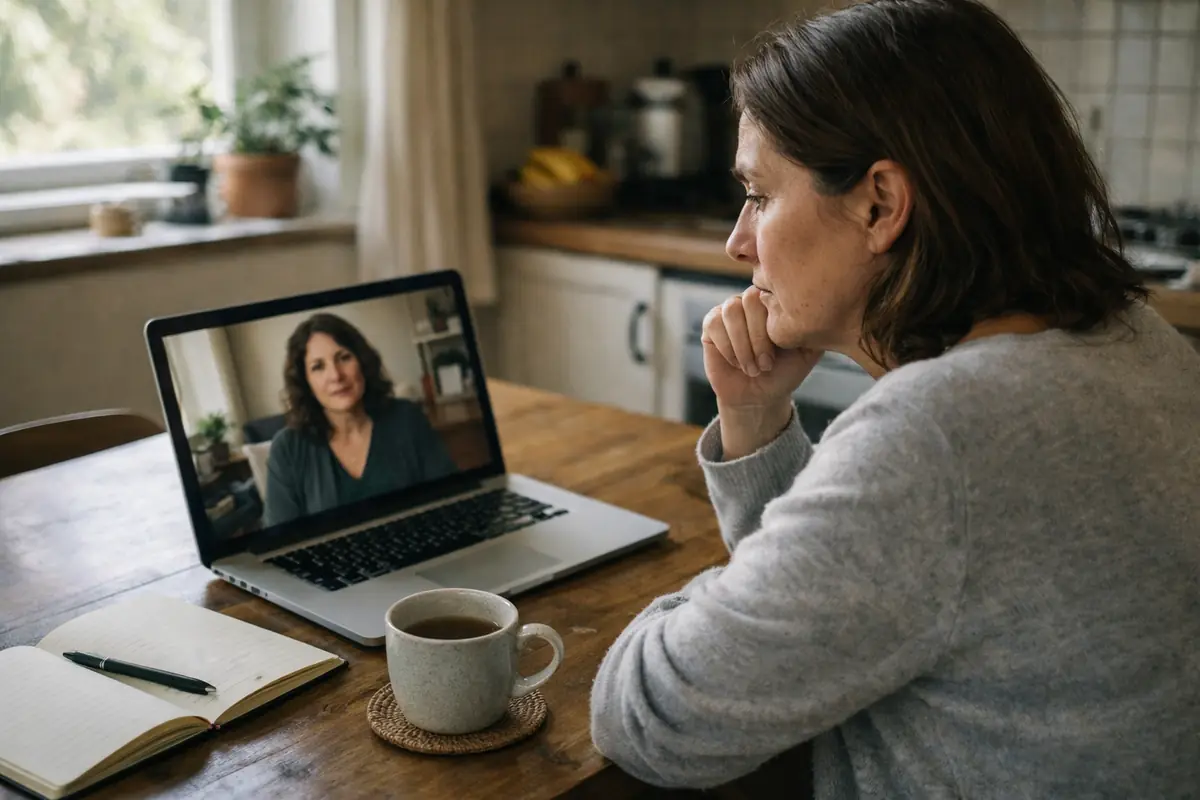
Online IOP for women delivers structured treatment through secure virtual sessions. Women attend therapy from home or another private setting using a phone, tablet, or computer. In many programs, core services remain similar to in-person IOP: group therapy, individual support, skill-building, and ongoing clinical review. What changes most is the method of connection, not necessarily the purpose of care.
For some women, virtual treatment lowers practical barriers. It can reduce commuting time, make attendance easier for those with transportation challenges, and help women stay engaged when work, parenting, or health issues would otherwise interfere. At the same time, online care works best when someone can reliably access technology, maintain a confidential space, and safely participate from home.
A woman may be a stronger fit for online IOP when she has:
Reliable internet access and a device that supports video sessions
A private space for therapy with minimal interruptions
Stable housing or a predictable daily environment
Motivation to participate consistently and communicate openly
Symptoms that can be safely managed in an outpatient setting
- Reliable internet access and a device that supports video sessions
- A private space for therapy with minimal interruptions
- Stable housing or a predictable daily environment
- Motivation to participate consistently and communicate openly
- Symptoms that can be safely managed in an outpatient setting
Online and in-person IOP at a glance
| Factor | Online IOP | In-Person IOP |
|---|---|---|
| Access | Join from home or private location | Travel to treatment setting |
| Structure | Flexible, but self-management matters | Built-in routine through physical attendance |
| Privacy needs | Requires confidential space at home | Privacy comes from clinic environment |
| Peer connection | Virtual interaction may feel easier for some | Face-to-face interaction may feel stronger for some |
| Best fit examples | Transportation barriers, stable home setting | High home stress, need for more containment |
When in-person IOP may be the better fit
In-person IOP can be especially helpful when a woman benefits from leaving home, building routine through physical attendance, or receiving face-to-face support in a therapeutic setting. For some, walking into a treatment space creates a stronger sense of focus and separation from daily stress. That structure can matter when home feels chaotic, isolating, or emotionally unsafe.
Some women also find that in-person care makes it easier to connect with peers, read social cues, and stay present during group work. If there are significant mental health symptoms, frequent crises, major distractions at home, or concerns about privacy in a virtual setting, in-person treatment may offer more containment. If outpatient care is not enough, an assessment may indicate PHP or another level of care instead.
Key differences to consider before choosing
The choice between online and in-person care is often practical and clinical at the same time. A woman may prefer virtual care because it fits her schedule, but still need in-person treatment if home is not a stable place to recover. Another woman may feel anxious in groups at first and do better entering treatment online, especially if the program can support gradual engagement. There is no one-size-fits-all answer.
It can help to look honestly at daily life, symptom severity, and past treatment experiences. If attending virtually would lead to frequent multitasking, caregiving interruptions, or skipped sessions, online care may be less effective for that person. If getting to treatment in person would create so many barriers that attendance becomes inconsistent, virtual care may offer a better path to steady participation.
Questions to think through during an assessment include:
Can I participate privately and consistently from home?
Do I need more structure than my home environment can provide?
Have I done better with face-to-face support in the past?
Are my mental health or substance use symptoms stable enough for outpatient care?
Would transportation, childcare, or work demands interfere with in-person attendance?
- Can I participate privately and consistently from home?
- Do I need more structure than my home environment can provide?
- Have I done better with face-to-face support in the past?
- Are my mental health or substance use symptoms stable enough for outpatient care?
- Would transportation, childcare, or work demands interfere with in-person attendance?
Ready for more support? Our women’s IOP and women’s PHP are built for adult women balancing recovery with real life. Call 833.754.0554 to start an assessment.
Special considerations for women in recovery
Women often enter treatment with overlapping concerns that may include trauma, family stress, relationship difficulties, substance use, depression, anxiety, or caregiving strain. In women-only settings, treatment can create space to address these experiences among peers who may relate to similar pressures. For some women, that environment feels more emotionally safe and supportive, whether care is delivered online or in person.
Trauma-informed care is especially important when comparing treatment formats. A virtual model may feel less intimidating for a woman who is overwhelmed by entering a new setting. On the other hand, in-person care may feel safer for someone who does not have privacy at home or who is triggered by being isolated. A careful assessment can help determine which environment is more supportive and clinically appropriate at this stage of recovery.
How to make the decision with confidence
A good next step is to speak with a treatment provider and complete an assessment rather than trying to decide based on convenience alone. The assessment should explore substance use patterns, mental health symptoms, trauma history, medical needs, current supports, safety concerns, and day-to-day functioning. From there, a provider can recommend the level of care and treatment format that best aligns with current needs.
At Women's Recovery in Denver, women can explore outpatient treatment options for mental health, trauma, and substance use, including PHP, IOP, and outpatient care. If you are specifically researching online IOP for women, it may help to ask how the program supports engagement, privacy, crisis planning, and transitions between levels of care when needs change. The best treatment plan is one that is individualized, realistic, and grounded in assessment.
Related reading
- Women's Intensive Outpatient Program Guide
- How Many Hours Is Women’s IOP?
- Women's Mental Health IOP
- What Is Women's IOP?
- Day and Evening IOP for Women
If you or someone you love is comparing online and in-person treatment, Women's Recovery can help you take the next step. Because the right recommendation depends on a woman's symptoms, safety, and daily environment, care decisions should follow an assessment. To learn more about women's outpatient treatment in Denver, including PHP, IOP, and outpatient options, call 833-754-0554.
Women-only treatment in Denver. Take the first step today.
You don’t have to wait until things get worse. Talk with our admissions team about PHP, IOP and outpatient programs. Call 833.754.0554.
Frequently asked questions
Is online IOP for women as effective as in-person treatment?
It depends on the individual and the clinical situation. Some women engage very well in virtual care, while others need the structure and containment of in-person treatment. Research supported by organizations such as SAMHSA and NIDA suggests telehealth can improve access to behavioral health care, but the best fit should be based on an assessment, safety, and treatment needs.
Who is a good candidate for online IOP?
A woman may be a good candidate if she has a private space, reliable technology, stable enough symptoms for outpatient care, and the ability to attend consistently. Online treatment may also help when commuting, parenting demands, or work schedules make in-person care harder to access. A professional assessment is still important before starting treatment.
When should someone consider PHP instead of IOP?
PHP may be considered when someone needs more support, more frequent clinical contact, or more day-to-day structure than IOP can provide. This can happen when symptoms are more severe, functioning has declined, or there are safety concerns that still do not require inpatient hospitalization. Level-of-care decisions should follow a thorough assessment.
Can online treatment still address trauma and mental health concerns?
Yes, virtual treatment can address trauma, anxiety, depression, and substance use when the program is designed for those needs and the patient can participate safely. That said, some women do better processing trauma in person, especially if home does not feel private or supportive. The setting should match the person, not the other way around.
How do families know where to start?
Families often feel pressure to choose quickly, but starting with an assessment is usually the most helpful step. Ask about the recommended level of care, whether online or in-person participation is appropriate, and what factors influenced that recommendation. Clear guidance can reduce confusion and help the family support treatment in a practical, informed way.