
What Is A Safety Plan And Who Helps Build It In CO

If you're asking "what is a safety plan and who helps build it," the answer is a personal guide created with a mental health professional. A safety plan names warning signs, coping steps, trusted people, and crisis support. The plan helps guide action during distress but does not replace emergency care.
What Is A Safety Plan And Who Helps Build It?
A mental health safety plan is a short, written guide for periods of rising distress. The guide lists personal warning signs and ways to seek help. For women receiving care, benefits of outpatient treatment and staying on track with outpatient care provide context for using the plan between visits.
A plan helps make next steps easier to find. Strong feelings can make choices feel harder than usual. Clear wording can reduce the need to remember every detail. The guide should be brief enough to read during stress.
Safety planning often addresses thoughts of suicide or self-harm. A clinician may discuss other risks based on your needs. Feeling overwhelmed does not tell the whole story about risk. A trained professional can help assess what support is needed.
A useful guide reflects your life, needs, and preferences. A standard form may offer a starting point. Your own words make the steps easier to recognize. A plan can change as your situation or support changes.
The guide is not a test of your willpower. Having trouble using a step is useful information for care. Tell your clinician when a suggestion feels out of reach. The next version can address that barrier without blame.
A written plan cannot assess a new crisis by itself. Some situations need prompt clinical assessment or emergency care. Call 911 for an emergency or immediate danger, or 988 for the Suicide and Crisis Lifeline. Do not wait for admission when safety is at risk.
Who Helps Build A Safety Plan?
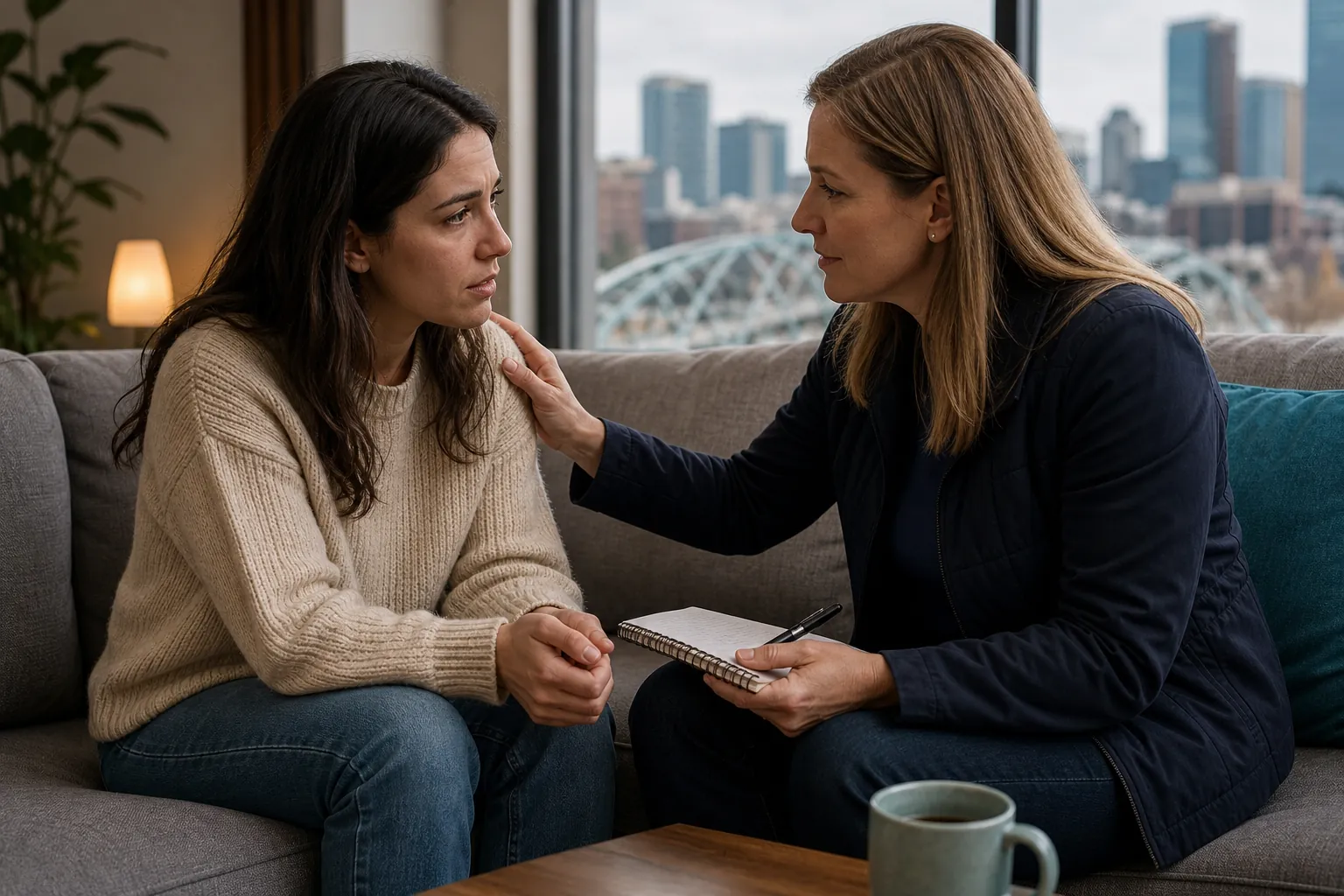
You build a safety plan with a mental health professional who assesses your needs and risks. Trusted people may join with your consent when safe. The pages on benefits of outpatient treatment and barriers to mental health treatment offer context for discussing support needs and concerns about seeking care.
Your role is to describe what distress feels like. The clinician helps turn those details into clear steps. You do not need to arrive with a finished draft. The conversation can begin even when finding words feels hard.
A therapist may lead the discussion during a care visit. Other team members may help address practical barriers. Each person's role should be clear before a crisis occurs. No single friend or relative should carry the whole plan.
Family involvement should reflect your wishes and safety needs. SAMHSA's Resources for Families describes ways families can support care. That does not make every relative a safe choice. A trusted friend may be a better fit.
At Women's Recovery, care includes weekly individual therapy and a case manager. Psychiatric care is included at every level. Contact with support people is based on consent. Ask the clinical team how safety planning could fit your care.
- You share the signs, concerns, and preferences that shape your plan.
- A clinician assesses risk and helps identify clear next steps.
- Trusted people may offer agreed support when involvement feels safe.
- Care team members can help address barriers within their roles.

What Belongs In A Personal Safety Plan?
A personal safety plan usually includes warning signs, coping steps, supportive contacts, and ways to reach urgent help. A clinician can address safer surroundings, too. Within ongoing care, benefits of outpatient treatment and staying on track with outpatient care explain the broader role of support between scheduled visits.
Warning signs should describe changes you can recognize. Examples may include pulling away from others or feeling trapped. Sleep changes or rising substance use may matter for some people. Your clinician helps identify which signs fit your experience.
Coping steps should be realistic when stress is high. A quiet space or familiar calming activity may help some people. No activity works for everyone or replaces needed care. The plan should include another route when a step falls short.
Contacts work best when their role is understood ahead of time. Someone may be able to listen during certain hours. Another person may help you reach professional support. The guide needs options for times when someone cannot respond.
A clinician may discuss reducing access to things that could cause harm. That discussion should match your situation and current risk. Do not take on a risky task alone. Seek professional guidance when making the home safer raises concerns.
- Describe personal warning signs in words you can quickly recognize.
- Include coping steps that feel practical during periods of distress.
- Name trusted people and the support each person can offer.
- Record professional support routes and an option for unavailable contacts.
- Review safer surroundings with a clinician who understands your needs.
How Can Safety Planning Respect Trauma And Privacy?
Safety planning should respect your choices, privacy, and sense of safety. A trauma-informed approach considers how past harm may affect trust and comfort. The pages on benefits of outpatient treatment and barriers to mental health treatment provide context for discussing concerns that may make seeking help feel harder.
You can share that a topic feels hard to discuss. You do not need to tell your full trauma history at once. A clinician still needs enough information to assess current safety. Clear explanations can help you understand why certain details matter.
Privacy concerns deserve direct discussion during planning. Ask how the plan will be stored and shared. Your clinician can explain confidentiality and its safety-related limits. Those limits should be clear before another person becomes involved.
A partner or relative may not be safe to include. Tell the clinician if sharing details could increase danger. The plan can consider safer contacts and storage choices. Do not assume that family access is always helpful.
Phone access, shared accounts, and paper storage can affect privacy. Your clinician can help explore a format that fits your situation. A digital copy may suit one person but expose another. The safest choice depends on who can access the device.
Women's Recovery provides trauma-informed care for adult women. A substance-use diagnosis is not required to call. The team can discuss mental health and trauma concerns. An individual assessment determines fit rather than a label alone.
When Should A Safety Plan Be Reviewed?
A safety plan should be reviewed when needs, risks, contacts, or living conditions change. Review also helps after a step proves hard to use. For ongoing support, benefits of outpatient treatment and staying on track with outpatient care explain how regular care can provide space to discuss changing needs.
A guide may look clear during a calm visit. Later, stress can reveal gaps that were hard to predict. A trusted person may be unavailable when needed. A coping step may require privacy you do not have.
Those gaps do not mean you have failed. They show where the guide needs more practical detail. Bring up what happened when you next speak with the clinician. Seek urgent support sooner if risk has increased.
Changes at home can alter which contacts feel safe. A new job may affect when support is available. Pregnancy or the months after birth may change support needs. Care should account for those changes without making assumptions.
Review can happen during regular care rather than after every crisis. Your clinician can help choose a review schedule. Keep older copies from causing confusion when details change. A current version should be easy to identify and reach.
- Tell your clinician when warning signs become stronger or more frequent.
- Update contact details when a trusted person's availability or role changes.
- Discuss steps that felt confusing, unsafe, or too hard to use.
- Review the guide after major changes at home or in care.
How Does A Safety Plan Fit Outpatient Care?
A safety plan supports outpatient care by guiding steps between visits. Therapy addresses ongoing needs, while urgent assessment checks changes in risk. The pages on benefits of outpatient treatment and staying on track with outpatient care explain the broader care setting; a written guide does not replace clinical support.
Outpatient care means receiving treatment without staying overnight at the program. Women receiving care at Women's Recovery go home each evening. The team assesses if that setting fits current needs. A written guide alone cannot establish that fit.
NIMH's Psychotherapies resource describes therapy as care for troubling thoughts, feelings, and behaviors. A safety guide has a narrower job. The guide helps organize actions when distress rises. Therapy provides space to work on broader concerns over time.
A scheduled visit is different from urgent assessment. Urgent assessment checks a concerning change that needs prompt attention. Crisis support and emergency care have different roles, too. A routine appointment should not delay help for immediate danger.
Women's Recovery offers partial hospitalization, intensive outpatient, and outpatient care. The program does not provide onsite detox, residential, or inpatient care. SAMHSA's Substance Use Treatment resource explains that treatment settings differ. Assessment helps identify needs beyond what a program provides.
| Support | Main Role | Key Limit |
|---|---|---|
| Personal safety plan | Guide actions during distress | Cannot assess changing risk |
| Ongoing therapy | Address mental health needs | Scheduled visits are not emergency care |
| Urgent clinical assessment | Check a concerning change | May lead to higher care |
| Emergency care | Respond to immediate danger | Does not replace follow-up care |
How Can You Start Without A Finished Plan?
You can seek help before you have a safety plan or know what to say. A clinical conversation can identify concerns and next steps. The pages on benefits of outpatient treatment and barriers to mental health treatment provide context for seeking care, even when the process feels hard to begin.
There is no need to complete homework before making contact. Plain words about what feels hard are enough to start. You may feel unsure about the kind of help needed. Staff can explain the program and its assessment process.
Initial contact, clinical assessment, and admission are separate steps. A conversation about services does not establish that outpatient care fits. The assessment considers current symptoms, risk, and support needs. The team then discusses an appropriate next step.
Safety concerns should be shared early during that process. Staff need to know when distress feels urgent. Waiting for routine intake is not the right response to immediate danger. Crisis support or emergency care may be needed instead.
If alcohol, benzodiazepine, or opioid withdrawal is a concern, say so. Withdrawal from these substances can be dangerous and needs medical supervision. Women's Recovery does not provide onsite detox. A safety guide does not replace medical assessment for withdrawal.
You can ask for explanations when a term feels unclear. Needing support does not require a polished account of your life. The goal is to understand current needs and care limits. A useful plan grows from that shared understanding.
Questions about next steps? Call Women’s Recovery at 833.754.0554 or review the Women’s Recovery admissions process.
Frequently Asked Questions
Is A Safety Plan The Same As A Promise To Stay Safe?
No. A safety plan gives practical steps and support options. A promise alone does not explain what to do during distress. The written guide also does not prove that risk is low. A clinician still needs to assess current safety and discuss the right level of support.
Can A Trusted Friend Help If Family Involvement Feels Unsafe?
Yes, a trusted friend may help if involvement feels safe and you consent. Family participation is not required for every plan. Discuss privacy concerns and the friend's role with your clinician. A friend can offer support, but should not become your only route to help during a crisis.
Does Having A Safety Plan Mean I Need Hospital Care?
No. Having a safety plan does not, by itself, determine a treatment setting. A clinician considers current risk, symptoms, daily functioning, and available support. Some people use plans during outpatient care. Others need more intensive help. A written guide cannot replace an assessment of those needs.
Can I Keep My Plan On My Phone?
A phone copy may be useful if the device is accessible and private. Shared accounts, a dead battery, or unsafe access can create problems. Discuss storage with your clinician so the format fits your life. A paper copy may help some people, but privacy still matters.
Can Pregnant Or Postpartum Women Discuss Safety Planning?
Yes. Pregnant and postpartum women can discuss safety needs during assessment and care. Women's Recovery welcomes women during pregnancy and after birth. Children and infants are not onsite. Tell the team about caregiving needs so the discussion reflects daily life. Admission and program fit still require individual assessment.
Sources
- Psychotherapies, National Institute of Mental Health (NIH)
- Resources for Families, SAMHSA
- Substance Use Treatment, SAMHSA
Call 833.754.0554 to talk through next steps.