
Panic Symptoms Vs General Anxiety For Women In CO

The answer to “how do panic symptoms differ from general anxiety for women” centers on onset and intensity. Panic usually brings a sudden surge of intense fear and body symptoms. General anxiety often builds as ongoing worry and tension. Both can overlap, and new physical symptoms may need medical care.
How Do Panic Symptoms And General Anxiety Differ For Women?
Panic symptoms tend to rise sharply, while general anxiety often lasts as ongoing worry. The key clues are the start, intensity, and pattern, not one symptom alone. For women seeking help, barriers to mental health treatment and benefits of outpatient treatment provide context for taking a next step.
Panic can feel like an alarm that suddenly becomes very loud. A woman may feel intense fear with a racing heart or breathlessness. General anxiety may feel more like a steady alarm in the background.
The phrase “general anxiety” describes a feeling or pattern here. Generalized anxiety disorder is a specific diagnosis that needs a clinical assessment. Everyday stress, lasting worry, and a diagnosed condition aren't the same thing.
No single body symptom can settle the difference. A fast heartbeat may happen during panic, worry, illness, or exertion. A clinician considers the whole picture, including health history and daily impact.
Women don't all experience anxiety in the same way. Sleep, health changes, past experiences, and current demands may shape symptoms. The comparison below offers clues, not a way to diagnose yourself.
| Clue | Panic Symptoms | General Anxiety |
|---|---|---|
| Start | Often sudden | Often gradual or ongoing |
| Main feeling | Intense fear or alarm | Worry, unease, or tension |
| Body symptoms | May surge quickly | May linger or come and go |
| Thought pattern | Fear of immediate danger | Concern about possible problems |
| Afterward | Fatigue or fear of recurrence | Continued worry or strain |
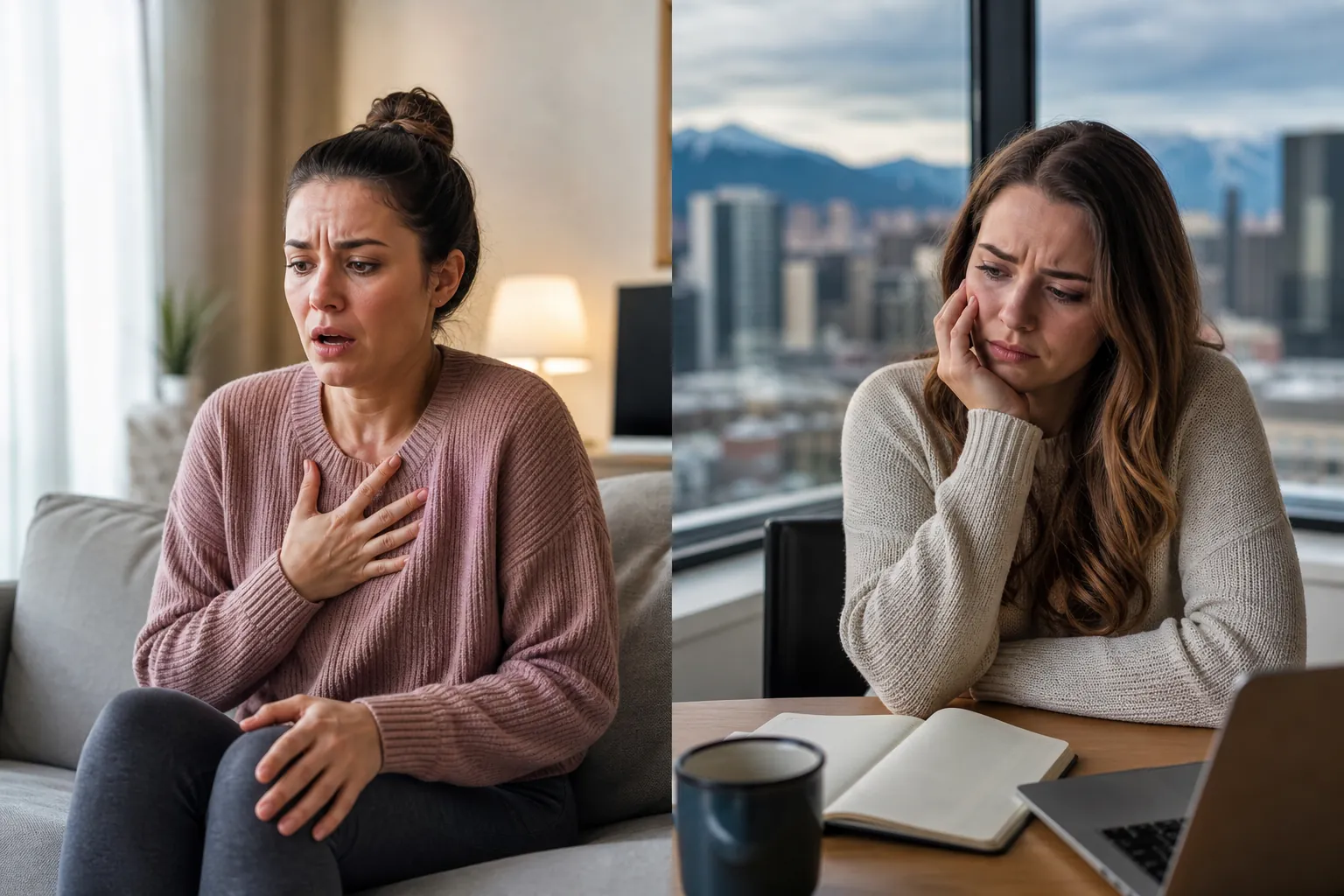
What Can A Panic Attack Feel Like?
A panic attack is a sudden wave of intense fear or discomfort. Body symptoms may feel strong even without a clear threat nearby. Women exploring support can consider women's only outpatient treatment and barriers to seeking mental health care, while new or severe symptoms need medical attention.
The fear may seem to arrive without warning. Some women notice a pounding heart before they feel afraid. Others first notice a sense that something terrible is happening.
A clear trigger isn't required for a panic attack. An episode can happen during stress or during a quiet moment. The most intense feelings may ease before tiredness or unease fades.
These sensations can be frightening, especially during a first episode. Feeling detached means feeling distant from yourself or your surroundings. That experience deserves a careful discussion rather than a rushed label.
- Your heart may pound or race during a sudden surge of fear.
- You may notice shaking, sweating, dizziness, or a feeling of weakness.
- Breathing may feel difficult, and your chest may feel tight.
- You may fear losing control or feel detached from your surroundings.
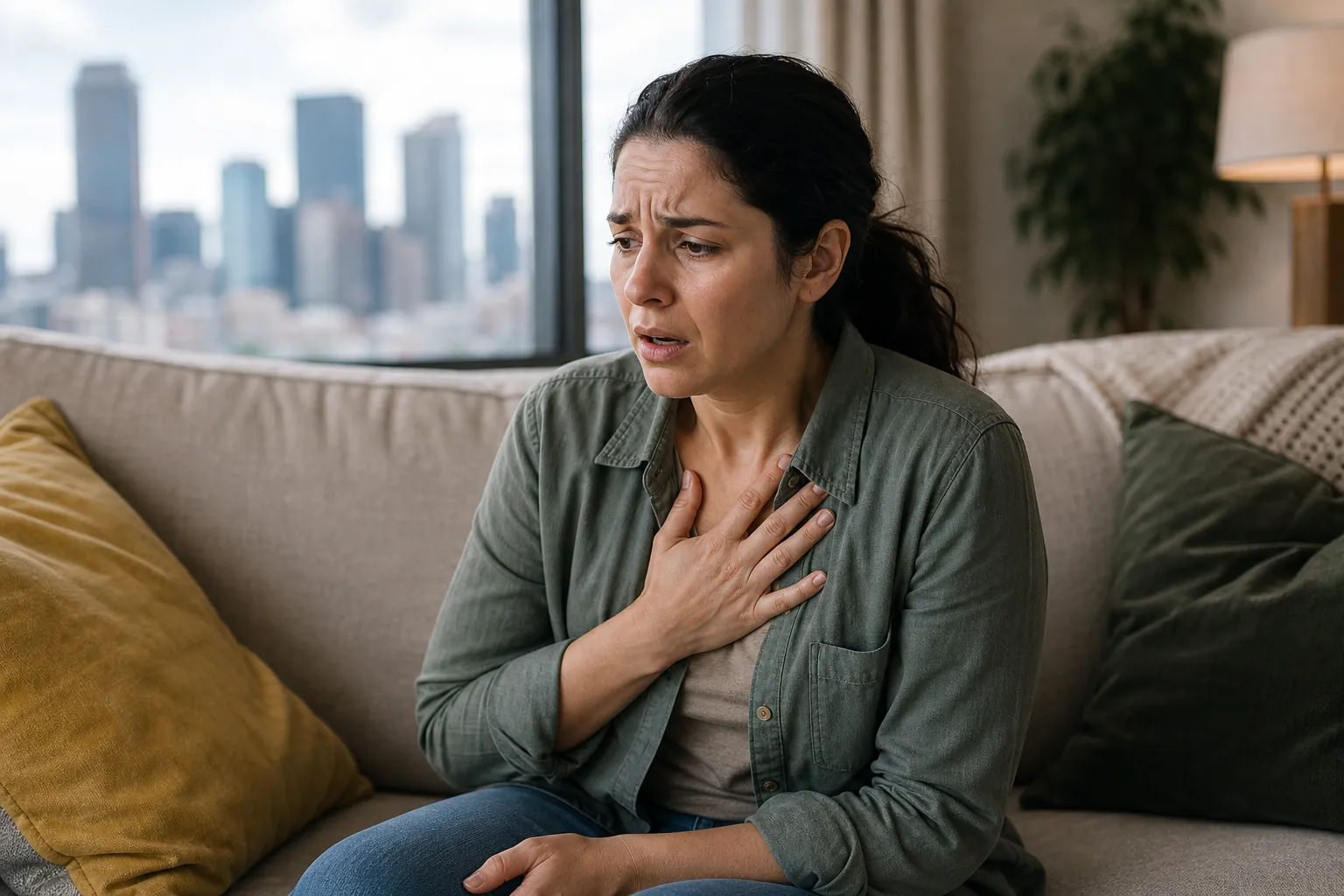
What Does Ongoing Anxiety Look Like In Daily Life?
Ongoing anxiety often involves worry that keeps returning across daily concerns. Muscle tension, poor sleep, fatigue, and trouble focusing may come with that worry. Resources on outpatient treatment for busy women and barriers to mental health treatment can help women consider support without dismissing daily strain.
Worry may move from one subject to another. Work concerns may give way to health fears or family stress. Even after one problem improves, your mind may find another.
Some women keep meeting their daily duties while feeling strained inside. They may need extra effort to focus, rest, or make choices. Getting through the day doesn't show how much distress someone feels.
Physical tension may appear as tight shoulders or an unsettled stomach. Poor sleep can leave you feeling less able to cope. Those symptoms can have other causes, so a health review may help.
Anxiety becomes more concerning when worry is hard to manage or disrupts life. A clinician looks at duration, distress, and effects on daily tasks. There isn't a single symptom that proves a diagnosis.
Support doesn't require waiting until work or home life falls apart. A change in sleep, comfort, or daily habits is worth discussing. The goal is to understand the pattern and what care fits.
Can Panic And Ongoing Anxiety Happen Together?
Panic and ongoing anxiety can occur together, and each pattern deserves attention. A woman may experience a sudden episode, then worry about another episode. Information about women's only outpatient treatment and staying on track with outpatient care can help frame a discussion about support for both patterns.
Anxiety may build around the possibility of feeling panic again. A woman might stop visiting stores or taking certain routes. Those changes can narrow daily life even between episodes.
Having a panic attack doesn't by itself establish panic disorder. Panic disorder is a diagnosis involving recurring attacks and related concerns or behavior changes. A trained clinician reviews the full pattern before making that diagnosis.
Past trauma may affect how safe someone feels in daily settings. A sound, place, or body sensation may bring strong distress. Panic symptoms alone don't establish a trauma diagnosis or explain their cause.
Trauma-informed care considers how past experiences may affect current needs. The approach emphasizes safety, choice, and respectful communication. Women can discuss symptoms without sharing every detail of past experiences at once.
NIMH's Psychotherapies guidance describes therapy as a way to address troubling thoughts, feelings, and behaviors. Treatment choices depend on a person's needs and goals. A care team can explain the proposed approach and its limits.
When Could Physical Symptoms Have Another Cause?
Physical symptoms that resemble panic can have medical or substance-related causes. New, severe, or unusual symptoms shouldn't be assumed to be anxiety. Reading about benefits of outpatient treatment or women's only outpatient treatment cannot replace medical assessment, especially when symptoms differ from a familiar pattern or feel severe.
Chest pain, trouble breathing, and fainting can signal urgent medical problems. A past history of panic doesn't rule out a new illness. A clinician may need to assess the body symptoms before discussing mental health treatment.
For immediate danger or a medical emergency, call 911; for a mental-health crisis, call 988 for the Suicide and Crisis Lifeline. Crisis support does not replace emergency medical care. Don't wait for program admission when immediate help is needed.
Sleep loss, caffeine, medicines, and other substances can affect how the body feels. Hormonal changes may also be relevant during a health review. These factors need individual assessment rather than a single explanation.
Alcohol, benzodiazepine, or opioid withdrawal can be dangerous and needs medical supervision. Women's Recovery doesn't provide onsite detox, which is supervised care for withdrawal. A team can discuss care needs, but urgent withdrawal concerns require prompt medical help.
- A first episode with severe physical symptoms warrants prompt medical attention.
- Symptoms that differ from your usual pattern deserve a fresh medical review.
- A recent medicine or substance change may be relevant to your assessment.
When Should Women Seek An Anxiety Assessment?
An anxiety assessment is worth seeking when fear, worry, or avoidance disrupts daily life. Recurring panic, sleep loss, or growing distress are reasons to speak with a clinician. Barriers to seeking mental health care and outpatient treatment for busy women address common concerns about making room for support.
You don't need the right label before reaching out. A clinician can help sort out sudden episodes and ongoing worry. The assessment can also consider mood, trauma, physical health, and substance use.
A useful assessment looks beyond how symptoms appear during one visit. Some women seem calm while describing intense distress at home. Your account of what happens between visits matters.
These patterns can make a routine assessment more important. They aren't a diagnostic checklist or a reason to delay urgent care. The timing and setting for care depend on your current needs.
- Fear leads you to avoid places, travel, work, or social contact.
- Worry repeatedly disrupts sleep, focus, or your ability to complete daily tasks.
- You use alcohol or other substances to manage distress or body sensations.
- People close to you notice changes in your mood or daily habits.
How Can Outpatient Care Support Women With These Symptoms?
Outpatient care may support women whose symptoms need structured help without an overnight stay. Fit depends on an individual assessment, including safety and daily needs. Benefits of outpatient treatment and women's only outpatient treatment explain the setting, while a clinical team determines which level of care is appropriate.
Women's Recovery provides mental-health, trauma, and co-occurring substance-use care for adult women in Denver. Co-occurring means mental-health and substance-use concerns happen together. A substance-use diagnosis isn't required to call.
The program uses a trauma-informed approach, and women go home each evening. Partial hospitalization, intensive outpatient, and outpatient care are offered. These levels differ in how much structured support they provide.
Every level includes weekly individual therapy, a case manager, and psychiatric care. Contact with chosen support people is based on consent. Specific needs and care plans are discussed with the clinical team.
SAMHSA's Substance Use Treatment guidance describes care at different levels of support. That general guidance doesn't establish which program fits a particular woman. Women's Recovery doesn't provide onsite detox, residential, or inpatient care.
| Care Level | General Structure | Overnight Stay |
|---|---|---|
| Partial hospitalization | More intensive daytime support | No |
| Intensive outpatient | Structured sessions during the week | No |
| Outpatient treatment | Weekly group and individual therapy | No |
Questions about next steps? Call Women’s Recovery at 833.754.0554 or review the Women’s Recovery admissions process.
Frequently Asked Questions
Can a panic attack happen without feeling worried first?
Yes, a panic attack can begin without obvious worry beforehand. Some women notice body sensations first, such as a pounding heart. An unexpected episode doesn't establish a panic disorder diagnosis. New or severe physical symptoms still need medical attention, even when panic seems possible.
Does avoiding a place after panic mean I have agoraphobia?
Avoiding a place after panic doesn't by itself mean you have agoraphobia. Agoraphobia involves fear of situations where escape or help may seem difficult. A clinician looks at the range, duration, and impact of those fears. Discussing avoidance early can help clarify what support you need.
Can pregnancy or the postpartum period change anxiety symptoms?
Pregnancy and the postpartum period can bring changes in anxiety, sleep, and physical sensations. New symptoms deserve review with a healthcare professional rather than an assumption about hormones. Women's Recovery welcomes pregnant and postpartum women, but children and infants aren't onsite. Individual assessment determines whether the program fits current needs.
Do I need a substance-use diagnosis to contact Women's Recovery?
No, a substance-use diagnosis isn't required to contact Women's Recovery. The primary focus is mental health and trauma care for adult women. An initial conversation can explain services and the assessment process. Assessment and admission are separate steps, and the appropriate care setting depends on individual needs.
Will I need medication if I seek help for panic or anxiety?
Seeking help for panic or anxiety doesn't automatically mean you need medication. Care decisions depend on symptoms, health history, preferences, and clinical assessment. NIMH's Psychotherapies guidance describes talk therapy as a treatment approach for mental-health concerns. Women's Recovery includes psychiatric care, where individual treatment questions can be discussed.
Sources
- Psychotherapies, National Institute of Mental Health (NIH)
- Substance Use Treatment, SAMHSA
- What Is Mental Health?, SAMHSA
Call 833.754.0554 to talk through next steps.