
Seeking Help When Loss Feels Overwhelming In CO

If you're asking “how can women seek help when loss feels overwhelming in colorado,” start with a mental health assessment. Support can address grief, sleep, daily tasks, trauma, and substance use concerns. Care should match your needs. Severe distress calls for urgent assessment; immediate danger calls for emergency care.
How Can Women Seek Help When Loss Feels Overwhelming?
Women seeking help after loss can start with a mental health assessment. A clinician can explore distress, daily needs, and suitable support. Understanding the benefits of outpatient treatment can clarify one option, while recognizing barriers to mental health treatment can make reaching out feel more manageable.
The question “how can women seek help when loss feels overwhelming in colorado” has no single answer. A useful first step is speaking with someone who can assess your needs. You don't need a diagnosis or a clear treatment goal before calling.
Loss can follow a death, separation, miscarriage, illness, or major life change. You may feel sadness, anger, guilt, numbness, or several feelings at once. Your response may differ from the people around you.
You can begin with a therapist, primary care provider, or mental health program. Explain how the loss affects sleep, work, meals, or relationships. A plain statement such as “I'm struggling to get through the day” is enough to begin.
Women's Recovery provides mental health, trauma, and co-occurring substance use care for adult women in Denver. Co-occurring means mental health and substance use concerns happen together. A substance use diagnosis isn't required to call.
An assessment helps determine whether the available services fit your needs. Calling doesn't commit you to a program or settle admission. You can describe what's happening without first deciding which kind of care you need.

When Does Grief Need Professional Support?
Grief deserves professional support when distress feels hard to manage or disrupts daily life. No fixed waiting period is required before seeking help. Exploring barriers to mental health treatment may ease hesitation, and women's only outpatient treatment offers context for considering a women-focused setting.
Grief doesn't follow a neat set of stages. Some days may feel steady, while a date or memory brings fresh pain. You don't need to prove that your grief is severe enough to deserve care.
A clinician can help sort through grief and other concerns. Poor sleep, low mood, fear, and trauma reactions may overlap. An assessment looks at the whole picture rather than assigning a label from one symptom.
Support may be useful when basic needs keep slipping. Missed meals, isolation, or trouble caring for yourself deserve attention. These changes aren't a personal failure or proof that you're grieving incorrectly.
The National Institute of Mental Health describes psychotherapy as treatment for troubling emotions, thoughts, and behaviors. Therapy can give you space to discuss loss and daily struggles. The right approach depends on your needs and comfort with the provider.
Tell a clinician if distress is growing, even if you still work. Getting through a shift doesn't show how much effort each day takes. You can seek care while some parts of life remain stable.
- Sleep problems leave you too worn out to manage ordinary daily tasks.
- You often skip meals or struggle with basic personal care.
- Fear, guilt, or painful memories take up much of your day.
- Alcohol or drug use has increased as you try to cope.
- You feel cut off from people who usually offer support.
What Happens During The First Conversation About Care?
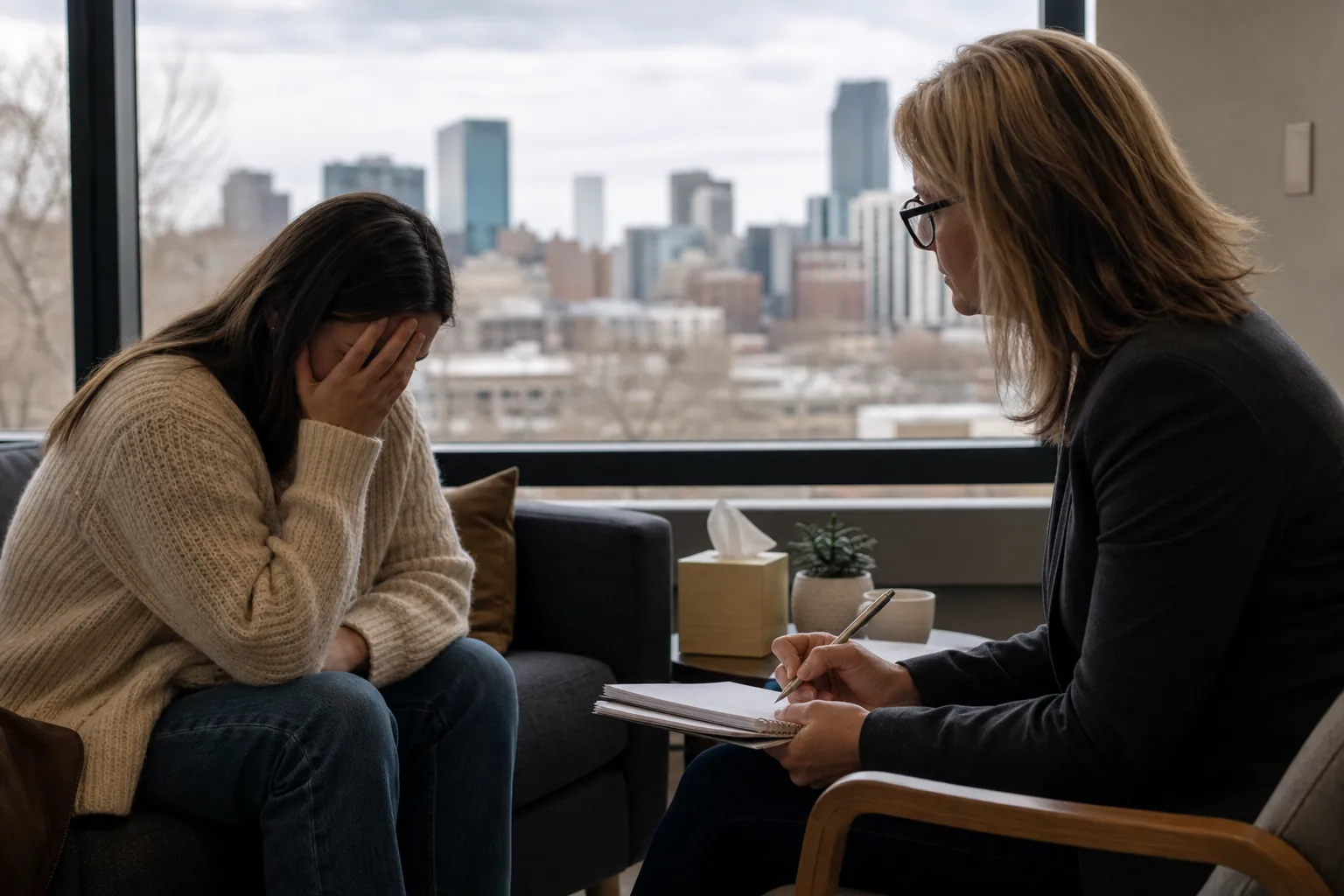
A first conversation about care usually covers current concerns and whether an assessment makes sense. You don't need a polished account of the loss. Reading about women's only outpatient treatment and outpatient treatment for busy women can help explain the setting and practical issues involved.
Start with what's hardest right now. That may be sleep, panic, loneliness, drinking, or getting through work. You can share more of the story as trust grows.
Admissions staff may discuss the program and explain the next steps. A clinical assessment is a separate step that considers needs and fit. Neither a first call nor a benefits review means admission is settled.
During assessment, a clinician may explore mood, safety, health, substance use, and home support. These topics help guide care recommendations. You can say when a question feels hard or when you need a pause.
You don't need to recount every detail of a painful event immediately. Share enough for the team to understand current needs and safety concerns. The pace of deeper discussion belongs within the care process.
Practical issues matter, too, including travel, work, caregiving, and privacy. Women's Recovery serves adults in Denver, and participants go home each evening. Individual assessment determines fit, and available options need confirmation with the team.
If insurance is involved, benefits review helps clarify plan information. Coverage decisions, clinical assessment, and admission are separate matters. You don't need to resolve every detail alone before making an initial call.
How Can Care Address Both Loss And Trauma?
Care can address loss and trauma together when grief includes fear, painful memories, or a shaken sense of safety. Treatment should follow an individual assessment. The roles of women's only outpatient treatment and staying on track with outpatient care may help clarify how ongoing support fits.
Trauma refers to lasting effects from experiences that felt harmful or threatening. Not every loss leads to trauma symptoms. A clinician can explore what you're experiencing without assuming a diagnosis.
Trauma-informed care considers how past experiences may affect comfort, trust, and safety. At Women's Recovery, care is trauma-informed and centers mental health and trauma needs. EMDR is not offered.
The National Institute of Mental Health notes that therapy fit matters. Feeling able to speak, set limits, and discuss goals is important. You can raise concerns when an approach feels confusing or too intense.
Grief may also change how you use alcohol or other drugs. The ASAM Criteria describes care planning that responds to a person's needs and progress. Mention substance use honestly so the assessment can consider the full picture.
You don't have to choose between discussing grief and discussing substance use. Both may affect sleep, relationships, or daily safety. Care planning can consider how these concerns interact without reducing your loss to a diagnosis.
- You can describe current struggles without sharing every painful detail at once.
- You can tell the clinician when you need a pause.
- You can discuss goals in terms of daily needs and comfort.
- You can raise concerns about trust, privacy, or past treatment experiences.
Which Outpatient Level Of Care May Fit After Loss?
The right outpatient level after loss depends on distress, safety, daily functioning, and support outside treatment. Assessment guides the recommendation rather than grief alone. Reviewing the benefits of outpatient treatment alongside outpatient treatment for busy women can clarify both the care structure and the time involved.
Outpatient care means attending treatment while living outside the program. Women's Recovery provides partial hospitalization, intensive outpatient, and outpatient treatment in Denver. Despite its name, partial hospitalization here doesn't include an overnight hospital stay.
Partial hospitalization, or PHP, provides the most scheduled care among these options. Intensive outpatient, or IOP, provides fewer weekly hours. Outpatient treatment has a lighter group schedule, with individual therapy included.
The American Society of Addiction Medicine describes placement as a needs-based decision. For substance use concerns, assessment considers more than the substance involved. Health, safety, daily function, and support can all affect the recommendation.
Every level at Women's Recovery includes weekly individual therapy, a case manager, and psychiatric care. A case manager helps coordinate care and practical needs. Contact with involved support people is consent-based.
These schedules describe the programs, not a personal treatment plan. The clinical team must assess fit and confirm current options. Travel and caregiving needs also matter because women return home each evening.
Women's Recovery does not provide onsite detox, residential, or inpatient care. Detox is medical care for withdrawal from substances. A person who needs overnight monitoring or withdrawal care may need a different setting.
| Program | Weekly Structure | Living Arrangement |
|---|---|---|
| PHP | Twenty-five to thirty hours across five days | Home each evening |
| IOP | Nine to fifteen hours; morning or evening tracks | Home each evening |
| Outpatient | Ninety-minute weekly group plus individual therapy | Home each evening |
How Can Daily Support Make Room For Grief?
Daily support can reduce practical strain while leaving room for grief. Small routines and trusted people can support treatment, though neither replaces needed care. Ideas from staying on track with outpatient care and outpatient treatment for busy women may help connect support with everyday responsibilities.
Loss can make ordinary tasks feel heavy. Meals, laundry, work messages, and childcare may take more effort than usual. Help with one task can create room to rest or attend care.
Support doesn't require constant talking about the loss. Sitting with someone, sharing a meal, or having company on a walk may feel easier. You can prefer quiet company without shutting out all support.
A routine can provide a gentle frame for the day. The goal isn't to stay busy enough to avoid feelings. Leave room for rest, grief, and changes in energy.
Work and family roles may need temporary changes. You can share only the personal details you feel comfortable sharing. A treatment team can discuss practical barriers without deciding what you must tell others.
Women's Recovery welcomes pregnant and postpartum women. Children and infants are not onsite, so childcare may affect attendance. Discuss those needs with the team rather than assuming care will fit an existing routine.
Support people may also need clear limits. You can decline advice or ask for fewer messages. Consent-based contact means involvement in your care should follow the permissions you provide.
- Accept practical help with meals, errands, or care for children.
- Keep one manageable daily routine, such as a regular meal.
- Choose a trusted person who can listen without pressing for details.
- Allow breaks from social plans when your energy feels low.
When Does Distress Require Urgent Or Emergency Help?
Severe distress after loss needs prompt assessment, while immediate danger needs emergency care. Routine program admission is not a crisis service. Information about barriers to mental health treatment and the benefits of outpatient treatment can guide later planning, but neither replaces urgent safety support.
Call 911 for immediate danger, or call 988 for the Suicide and Crisis Lifeline. Immediate danger includes a suspected overdose, serious injury, or an immediate threat of harm. Don't wait for an admission decision during an emergency.
Crisis support and outpatient admissions serve different roles. The crisis line can offer support during a mental health crisis. Emergency services address immediate threats to life or safety.
Urgent assessment may be needed when distress sharply limits basic self-care. Rapidly worsening symptoms also deserve prompt clinical attention. A routine appointment may not be enough when safety is unclear.
Withdrawal from alcohol, benzodiazepines, or opioids can be dangerous. Medical supervision is important when withdrawal may be present. Women's Recovery has no onsite detox, so withdrawal concerns need assessment in an appropriate medical setting.
Grief can make reaching out feel difficult or pointless. You don't have to explain the loss perfectly to request crisis help. State what's happening now and any immediate safety concern.
After urgent needs are addressed, a clinician can discuss ongoing care. Outpatient services may be appropriate for some women, while others need more support. That decision should follow assessment rather than a preset timeline.
Questions about next steps? Call Women’s Recovery at 833.754.0554 or review the Women’s Recovery admissions process.
Frequently Asked Questions
Can I seek care years after a loss?
Yes, you can seek care years after a loss. There is no deadline for asking for support. Anniversaries, new losses, or life changes may bring grief forward again. A clinician can explore current distress and daily needs without assuming that the time since the loss explains everything.
Can I get help if the person I lost is still alive?
Yes, support can help with losses that don't involve death. Separation, estrangement, illness, or changes in a relationship can bring grief. You don't need to compare your experience with someone else's loss. An assessment can focus on how the change affects your health, relationships, and daily life.
What if I feel numb instead of sad?
Feeling numb doesn't rule out a need for support. People respond to loss in different ways, and feelings may shift over time. You can describe numbness exactly as you experience it. A clinician can consider the broader picture, including sleep, daily function, and other changes, without judging your response.
What does insurance approval cover?
Insurance approval applies to the services and terms stated by the health plan. Approval may include limits or further review requirements. Benefits review, clinical assessment, and admission remain separate steps. Confirm the approved service, any ongoing review, and your share of costs with the plan and admissions team.
Can I attend care in Denver if I live elsewhere in Colorado?
You can contact Women's Recovery about care in Denver if you live elsewhere in Colorado. The program is not an overnight setting, and participants go home each evening. Travel, support at home, and attendance needs affect practical fit. Assessment and discussion with the team are needed before planning participation.
Sources
- Psychotherapies, National Institute of Mental Health (NIH)
- The ASAM Criteria, American Society of Addiction Medicine
- Drug Use and Addiction, National Library of Medicine (NIH)
Call 833.754.0554 to talk through next steps.