
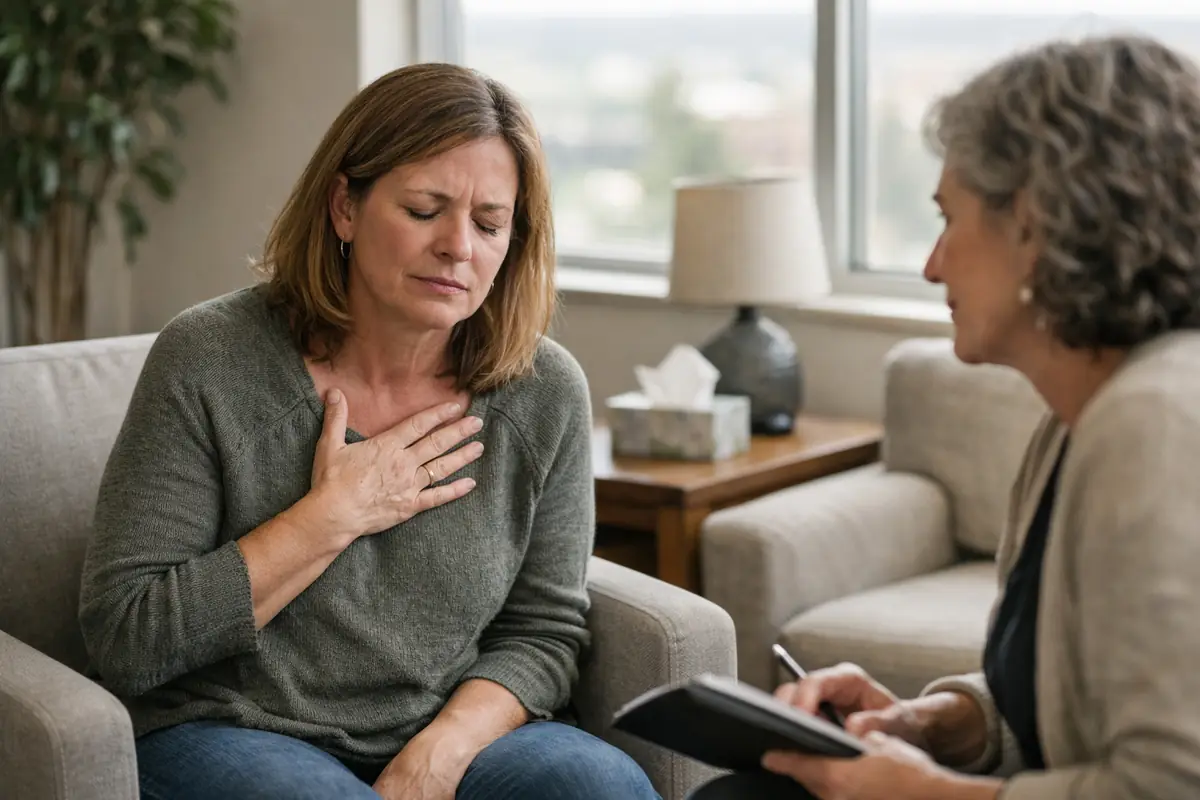
What Does a Panic Attack Feel Like?
Learn what a panic attack can feel like, why symptoms can seem overwhelming, and when to seek assessment and support for panic, anxiety, or co-occurring care.
Reviewed by clinical staff
On this page
- Why a panic attack can feel so alarming
- Common physical and emotional sensations during a panic attack
- What people mean when they say a panic attack feels ‘out of nowhere’
- Panic attack vs anxiety attack: how they may differ
- When to seek help and what assessment can look like
- How treatment and support can help
- Frequently asked questions
A panic attack can feel sudden, intense, and frightening. Many people describe it as a rush of physical and emotional symptoms that seems to come out of nowhere, even when there is no immediate danger. In the moment, it can be hard to tell whether you are having a panic attack, a medical problem, or what many people call an anxiety attack. That uncertainty can add even more fear to an already overwhelming experience.
Women’s Recovery offers women-only partial hospitalization (PHP) and intensive outpatient (IOP) care in Denver. Explore all programs or call 833.754.0554.
If you are researching symptoms for yourself or someone you love, it can help to know that panic attacks are real, distressing, and treatable. They can also happen alongside trauma, substance use, depression, or other mental health concerns. At Women’s Recovery in Denver, care decisions follow a professional assessment so treatment can match each person’s needs, whether that involves outpatient support, Intensive Outpatient care, or Partial Hospitalization programming.
Why a panic attack can feel so alarming
A panic attack is a sudden wave of intense fear or discomfort that builds quickly and brings strong body sensations. A person may feel as if something is seriously wrong, even when they are physically safe. The body’s alarm system can switch on fast, creating symptoms that are powerful enough to make daily functioning difficult for several minutes or longer.
One reason panic attacks feel so alarming is that the symptoms often resemble a medical emergency. Racing heart, chest discomfort, dizziness, shaking, and shortness of breath can make a person worry that they are having a heart problem or losing control. In some cases, a panic attack happens in response to stress or trauma reminders. In other cases, it may seem to happen with little warning.
The experience can also be emotionally disorienting. Some people feel detached from themselves, unreal, trapped, or convinced that something terrible is about to happen. Others feel embarrassed after the episode passes, especially if it happened in public, at work, or around family. These reactions are common and do not mean the person is weak, dramatic, or seeking attention.
Common physical and emotional sensations during a panic attack
People often ask what a panic attack actually feels like in the body. While each person’s experience is different, the symptoms are usually intense and can peak quickly. The body may feel flooded with adrenaline, making it difficult to sit still, think clearly, or reassure yourself that the feeling will pass.
Along with body symptoms, panic often brings a powerful sense of fear or doom. The mind may start scanning for danger, assuming the worst, or focusing on every sensation. That can create a cycle where fear of the symptoms makes the symptoms feel even stronger.
- A pounding, racing, or irregular-feeling heartbeat
- Shortness of breath, tight chest, or a sense that you cannot get enough air
- Shaking, sweating, tingling, nausea, dizziness, or feeling faint
- A fear of dying, losing control, passing out, or going crazy
- Feeling detached, unreal, numb, or suddenly overwhelmed by dread
Panic attack vs ongoing anxiety at a glance
| Feature | Panic attack | Ongoing anxiety | Why it matters |
|---|---|---|---|
| Onset | Often sudden | Often gradual | Can help identify patterns |
| Intensity | Sharp, intense surge | Steady or rising tension | Guides coping and assessment |
| Physical symptoms | Usually strong and immediate | May be milder but persistent | Can affect whether medical evaluation is needed |
| Duration | Often peaks quickly | Can last much longer | Helps distinguish episode vs state |
| Common impact | Fear of another attack | Chronic worry and avoidance | Both can disrupt daily life and recovery |
What people mean when they say a panic attack feels ‘out of nowhere’
Many panic attacks seem to appear without a clear cause. Someone may be driving, shopping, trying to fall asleep, or sitting in a meeting when symptoms begin. Even when there is no obvious trigger, the body may still be reacting to accumulated stress, unresolved trauma, sleep problems, stimulants, alcohol or drug effects, withdrawal, or a learned fear response.
For some people, the first panic attack becomes frightening enough that they begin to fear another one. That fear can lead to avoiding places, situations, or activities associated with the episode. Over time, life may start shrinking around the goal of preventing symptoms. This is one reason early assessment matters: support can address not only the attacks themselves, but also the avoidance and distress that often follow.
Panic symptoms can also overlap with trauma responses. A reminder of past harm, conflict in a relationship, crowded spaces, or feeling trapped can activate the nervous system very quickly. When substance use is also present, it may become even harder to sort out what is driving symptoms. A careful assessment can help identify patterns and guide the next step in care.
Panic attack vs anxiety attack: how they may differ
The phrase anxiety attack is common in everyday conversation, but it is not a formal clinical diagnosis in the way panic attack is used in mental health settings. People often use anxiety attack to describe a period of escalating worry, tension, and distress that builds over time. Panic attacks, by contrast, tend to be more sudden and intense, with pronounced physical symptoms that peak quickly.
That said, the experiences can overlap. A person with chronic anxiety may also have panic attacks. Someone with trauma may feel both constant hypervigilance and sudden surges of panic. The goal is not to label yourself perfectly, but to notice the pattern, intensity, and impact on daily life so a clinician can assess what is going on.
- Panic attacks often start suddenly; anxiety may build more gradually
- Panic usually brings sharper physical symptoms; anxiety may feel more mental and ongoing
- Panic may peak within minutes; anxiety can linger for hours or longer
- Both can interfere with sleep, work, relationships, and substance use recovery efforts
Ready for more support? Our women’s IOP and women’s PHP are built for adult women balancing recovery with real life. Call 833.754.0554 to start an assessment.
When to seek help and what assessment can look like
It is important to take new, severe, or unusual symptoms seriously. If chest pain, trouble breathing, fainting, confusion, or other concerning symptoms are happening, emergency medical care may be appropriate. If you are not sure whether symptoms are panic or a medical issue, it is reasonable to seek immediate medical evaluation. Mental health information should not replace emergency care.
If panic attacks are recurring, affecting your functioning, or happening alongside substance use, trauma, depression, or self-harm thoughts, professional support can help. At Women’s Recovery, care decisions follow an assessment that looks at symptoms, safety, mental health history, trauma history, substance use, daily responsibilities, and support needs. That helps determine whether outpatient therapy, Intensive Outpatient treatment, or a Partial Hospitalization level of care may be appropriate.
Assessment is also useful because panic-like symptoms can have different contributing factors. Sleep deprivation, stimulant use, alcohol withdrawal, trauma responses, chronic stress, and other mental or physical health conditions may all play a role. A thoughtful evaluation can help clarify what needs attention first and how different concerns may be connected.
- Seek urgent medical attention for symptoms that could be a medical emergency
- Reach out for assessment if panic is recurring or leading to avoidance
- Mention any alcohol, medication, or drug use honestly so symptoms can be understood safely
- Share trauma history if you feel able, since triggers are not always obvious
How treatment and support can help
Treatment for panic symptoms often focuses on helping the nervous system feel safer, reducing avoidance, and understanding what is fueling the attacks. Depending on the assessment, care may include therapy, coping skills practice, trauma-informed treatment, support for co-occurring substance use, and coordination with medical or psychiatric providers when appropriate. The right level of care depends on symptom intensity, daily functioning, and overall clinical picture.
For some women, outpatient treatment offers enough structure to build skills while continuing work, school, or family responsibilities. Others may benefit from Intensive Outpatient or Partial Hospitalization programming when symptoms are more disruptive or when multiple issues need attention at once. A women-only setting can also feel more supportive for those healing from trauma or navigating recovery in the context of family, relationships, and gender-specific stressors.
While no single strategy works instantly for everyone, many people find it helpful to learn grounding skills, breathing techniques, trigger awareness, and ways to respond to fearful thoughts without reinforcing the panic cycle. If substance use has become a way to cope with panic or anxiety, integrated treatment can address both concerns together rather than treating them as separate problems.
- Treatment planning should be individualized after assessment
- Co-occurring trauma or substance use may change what support is most helpful
- A structured program can provide accountability, skill building, and clinical support
- Improvement often involves practice, consistency, and addressing underlying stressors
Related reading
- Panic Attack vs Anxiety Attack: Key Differences
- When to See a Therapist for Panic Attacks
- What Does an Anxiety Attack Feel Like?
- When Panic Symptoms Need PHP or IOP Support
- Nocturnal Panic Attacks at Night
If you or someone you love is struggling with panic symptoms, anxiety, trauma, or substance use, Women’s Recovery in Denver can help you explore the next step with compassion and care. Because treatment recommendations follow an assessment, the focus is on understanding what you are experiencing and matching support to your needs. To talk with someone about options, call 833-754-0554.
Women-only treatment in Denver. Take the first step today.
You don’t have to wait until things get worse. Talk with our admissions team about PHP, IOP and outpatient programs. Call 833.754.0554.
Frequently asked questions
Can a panic attack happen when nothing seems wrong?
Yes. A panic attack can seem to come out of nowhere, even in ordinary situations like driving, resting, or shopping. That does not mean the reaction is imagined. Stress, trauma, sleep problems, substance use, withdrawal, or learned fear patterns can all contribute, even when there is no obvious immediate danger.
How long does a panic attack usually last?
The most intense part of a panic attack often builds and peaks quickly, though the exact timing varies from person to person. Some people feel shaken, fatigued, or worried for much longer afterward. Even if the peak is brief, the impact can be significant, especially if attacks begin happening repeatedly or lead to avoidance.
Is a panic attack the same as an anxiety attack?
Not exactly. Anxiety attack is a common everyday phrase, while panic attack is a more specific clinical term. People often use anxiety attack to describe escalating worry or distress, whereas panic attacks tend to be sudden, intense, and strongly physical. Still, the two experiences can overlap, especially when anxiety has been building for a while.
Can substance use make panic symptoms worse?
Yes. Alcohol, stimulants, cannabis, certain medications, and withdrawal states can all affect the nervous system and may worsen or trigger panic-like symptoms for some people. If panic and substance use are both present, it is important to mention both during an assessment so care can be planned safely and accurately.
What kind of treatment might help if panic is affecting daily life?
Helpful care depends on the assessment. Some people benefit from outpatient therapy and coping-skills work, while others may need a more structured level such as Intensive Outpatient or Partial Hospitalization, especially if trauma, depression, or substance use are also involved. Treatment is most effective when it addresses the full picture, not just one symptom.