
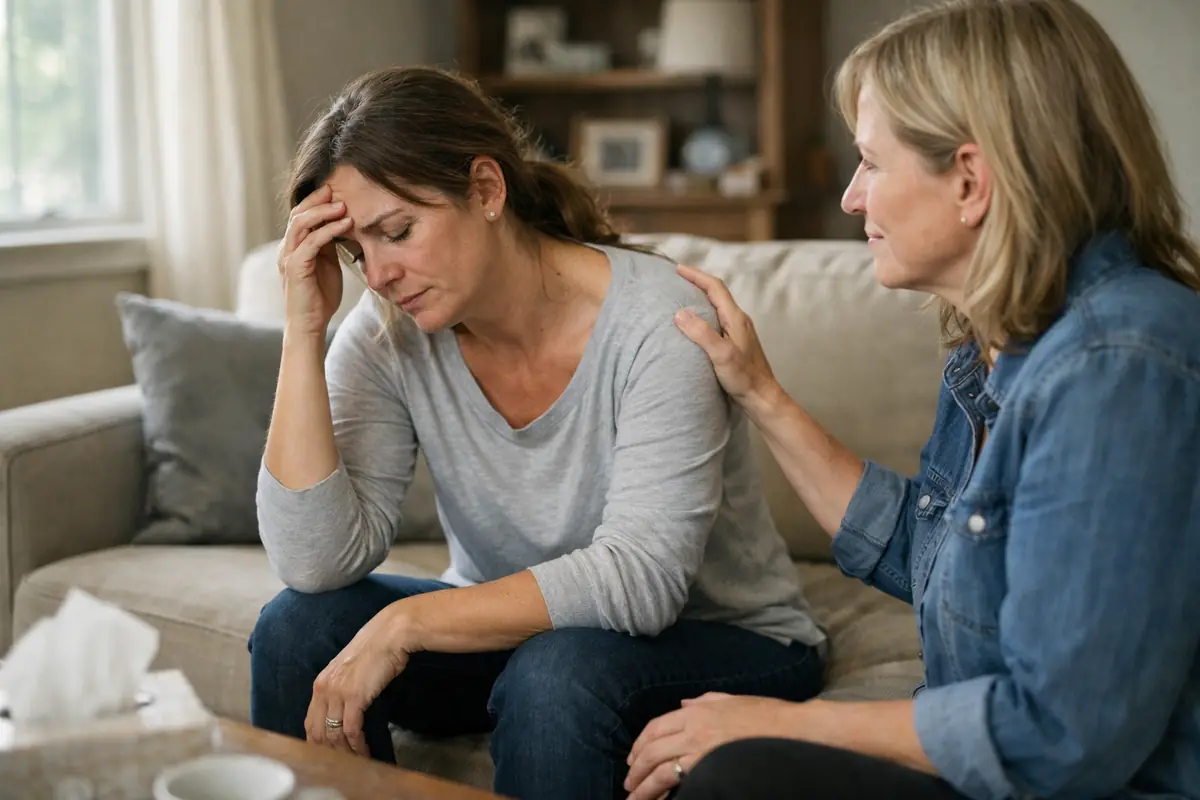
Panic Attack Symptoms in Women
Learn common panic attack symptoms in women, how they differ from anxiety, and when to seek support for mental health or substance use concerns.
Reviewed by clinical staff
On this page
- What a panic attack can feel like
- How panic attack symptoms may show up in women
- Panic attack symptoms versus anxiety attack
- When symptoms may be related to trauma, substance use, or mental health conditions
- When to seek immediate help and when to seek treatment support
- What treatment may involve
- Frequently asked questions
Panic attack symptoms can feel sudden, intense, and frightening. Many women describe a wave of fear, a racing heart, shortness of breath, dizziness, or a sense that something is terribly wrong. In the moment, it may be hard to tell whether you are having a panic attack, a medical problem, or a different type of mental health symptom. Understanding what panic attacks can look and feel like is often the first step toward getting appropriate help.
Women’s Recovery offers women-only partial hospitalization (PHP) and intensive outpatient (IOP) care in Denver. Explore all programs or call 833.754.0554.
For women and families researching treatment, panic symptoms may also overlap with trauma, depression, substance use, chronic stress, hormonal changes, or major life transitions. A careful assessment can help clarify what is happening and what level of care may fit best. At Women's Recovery in Denver, care decisions follow an assessment and may include outpatient treatment, Intensive Outpatient Program care, or Partial Hospitalization Program support depending on each person’s needs.
What a panic attack can feel like
A panic attack is a sudden surge of intense fear or discomfort that builds quickly and can involve strong physical sensations. Some women say it feels like their body has hit an alarm button with no clear warning. Others notice that panic comes during stress, conflict, grief, trauma reminders, substance use, or even while resting. The experience is very real, and the symptoms are not a sign of weakness or lack of control.
Panic symptoms may include chest tightness, pounding heart, sweating, trembling, nausea, tingling, chills, dizziness, or feeling detached from yourself or your surroundings. Some women also report fear of passing out, losing control, or dying. Even when a panic attack ends, the fear of another one can linger. That fear can lead people to avoid driving, social events, work, sleep, or places where they think symptoms could happen again.
- Racing or pounding heartbeat
- Shortness of breath or a feeling of choking
- Dizziness, shakiness, sweating, or nausea
- Chest discomfort, tingling, or chills
- A strong sense of dread or loss of control
How panic attack symptoms may show up in women
Panic attack symptoms in women do not all look the same. One woman may have obvious physical symptoms, while another mainly feels terror, derealization, or a sudden urge to escape. Caregiving pressure, trauma history, relationship stress, body image concerns, and work demands can shape how symptoms are experienced and described. Some women minimize symptoms because they are used to pushing through discomfort or staying focused on others.
Hormonal shifts may also affect how panic feels at different times. Some women notice worsening anxiety or panic around menstrual cycle changes, postpartum adjustment, perimenopause, or periods of poor sleep. Panic can also occur alongside depression, trauma-related symptoms, eating concerns, or substance use. Because symptoms can overlap, it is important not to self-diagnose based on one article alone. A licensed clinician can help sort out what is panic, what may be anxiety, and whether another medical issue needs attention.
Panic attacks and anxiety: a simple comparison
| Feature | Panic attack | Anxiety |
|---|---|---|
| Onset | Often sudden | Often gradual |
| Intensity | Usually very intense | Ranges from mild to severe |
| Physical symptoms | Common and strong | Can be present but may be less abrupt |
| Trigger | May seem to come from nowhere or after a cue | Often tied to ongoing stress or worry |
| Aftereffects | Fear of another attack is common | Tension or worry may continue for hours or longer |
Panic attack symptoms versus anxiety attack
Many people use the terms panic attack and anxiety attack interchangeably, but they are not always the same. Panic attacks tend to come on abruptly and reach a peak quickly, often with intense physical symptoms. Anxiety may build more gradually and stay tied to a specific stressor such as health worries, family conflict, school, work, or finances. Both can feel overwhelming, and both deserve attention.
The distinction matters because treatment planning may differ. A person with repeated panic attacks may need support for panic disorder, trauma, substance use, or another underlying concern. Someone with ongoing anxiety may need help with generalized anxiety, obsessive thoughts, trauma responses, or depression. In many cases, women experience both. A clinical assessment helps identify patterns, rule out urgent concerns, and guide the next step in care.
When symptoms may be related to trauma, substance use, or mental health conditions
Panic symptoms can be linked to more than one issue at the same time. Trauma reminders may trigger a sudden body-based fear response that feels like panic. Alcohol, stimulants, cannabis, nicotine, and some medications can also increase anxiety or cause panic-like symptoms during use, after use, or during withdrawal. If panic attacks are showing up with cravings, mood swings, sleep changes, or difficulty functioning, it is important to look at the whole picture rather than one symptom in isolation.
Women sometimes use substances to try to calm panic, sleep, or get through social situations. That coping pattern can provide short-term relief while making symptoms harder to manage over time. Panic can also co-occur with depression, grief, trauma-related disorders, and chronic stress. Effective care usually starts with a thorough assessment of mental health symptoms, substance use, medical history, safety needs, and current functioning across home, work, and relationships.
- Panic may be connected to trauma reminders or chronic stress
- Alcohol or drugs can trigger, worsen, or mask symptoms
- Withdrawal can sometimes feel similar to panic
- A full assessment can clarify whether co-occurring care is needed
Ready for more support? Our women’s IOP and women’s PHP are built for adult women balancing recovery with real life. Call 833.754.0554 to start an assessment.
When to seek immediate help and when to seek treatment support
Because panic can mimic other serious conditions, new or unusual symptoms should not be ignored. If chest pain, fainting, trouble breathing, confusion, or other alarming symptoms are new, severe, or different from past panic experiences, seek urgent medical attention right away. It is safer to get checked than to assume it is only panic. This is especially important if there are heart concerns, pregnancy-related concerns, recent substance use, or symptoms of overdose.
If symptoms are not an emergency but are affecting daily life, treatment support can help. Consider reaching out if panic is causing avoidance, frequent fear of having another episode, sleep problems, increased substance use, missed responsibilities, or worsening depression or trauma symptoms. Depending on the assessment, care may involve outpatient therapy, more structured Intensive Outpatient Program treatment, or Partial Hospitalization Program support to help stabilize symptoms and build coping skills.
- Seek urgent medical care for severe or unfamiliar symptoms
- Reach out for treatment if panic disrupts work, home, or relationships
- Ask about co-occurring treatment if substance use is involved
- Care recommendations should follow an individualized assessment
What treatment may involve
Treatment for panic symptoms often focuses on understanding triggers, calming the nervous system, changing unhelpful thought patterns, and reducing avoidance. Therapy may include education about the panic cycle, grounding skills, breathing strategies, trauma-informed care, and work on underlying mental health concerns. If substance use is part of the picture, treatment may also address cravings, relapse risk, and the ways substances can interact with anxiety and panic symptoms.
At Women's Recovery, women in Denver can begin with an assessment to determine the most appropriate level of care. Some women benefit from outpatient treatment while maintaining daily responsibilities. Others may need the added structure of an Intensive Outpatient Program or Partial Hospitalization Program. The goal is not to promise a quick fix, but to create a thoughtful care plan that addresses panic symptoms along with trauma, mental health needs, and substance use concerns when present.
Related reading
- Panic Attack vs Anxiety Attack: Key Differences
- When to See a Therapist for Panic Attacks
- What Does an Anxiety Attack Feel Like?
- When Panic Symptoms Need PHP or IOP Support
- Nocturnal Panic Attacks at Night
If you or someone you love is dealing with panic attack symptoms, support is available. Women's Recovery offers women-only outpatient mental health, trauma, and substance use treatment in Denver, Colorado. The first step is a thoughtful assessment to understand what is happening and what level of care may fit best. To learn more or speak with someone about next steps, call 833-754-0554.
Women-only treatment in Denver. Take the first step today.
You don’t have to wait until things get worse. Talk with our admissions team about PHP, IOP and outpatient programs. Call 833.754.0554.
Frequently asked questions
How long do panic attack symptoms usually last?
Panic attacks often peak within minutes, but the aftereffects can last longer. Some women feel shaky, exhausted, emotionally raw, or worried about another episode for hours afterward. If symptoms are lasting a long time, happening often, or interfering with daily life, an assessment can help identify the cause and the right level of support.
Can panic attack symptoms wake you up at night?
Yes. Some people experience nocturnal panic attacks that wake them suddenly with a racing heart, shortness of breath, or intense fear. Nighttime panic can be especially unsettling because it may seem to happen without warning. It can be related to panic disorder, stress, trauma, substance use, or sleep disruption, so a professional evaluation can be helpful.
Are panic attacks dangerous?
Panic attacks themselves are not the same as a heart attack or another medical emergency, but the symptoms can feel very similar. Because chest pain, breathing changes, dizziness, and faint feelings can also happen with medical problems, severe, new, or unusual symptoms should be checked by a medical professional rather than dismissed as panic.
Can substance use make panic attacks worse?
Yes. Alcohol, stimulants, cannabis, nicotine, and some medications can increase anxiety or contribute to panic symptoms during use or withdrawal. Sometimes substances are used to cope with fear in the short term, but they can complicate symptoms over time. If panic and substance use are both present, treatment should address both together when appropriate.
What kind of treatment helps with panic attack symptoms in women?
Treatment may include therapy focused on panic, anxiety, trauma, and coping skills, along with support for any co-occurring substance use or mood concerns. The right approach depends on the person’s symptoms, safety, functioning, and history. Care recommendations should follow an assessment and may include outpatient, Intensive Outpatient Program, or Partial Hospitalization Program treatment.