
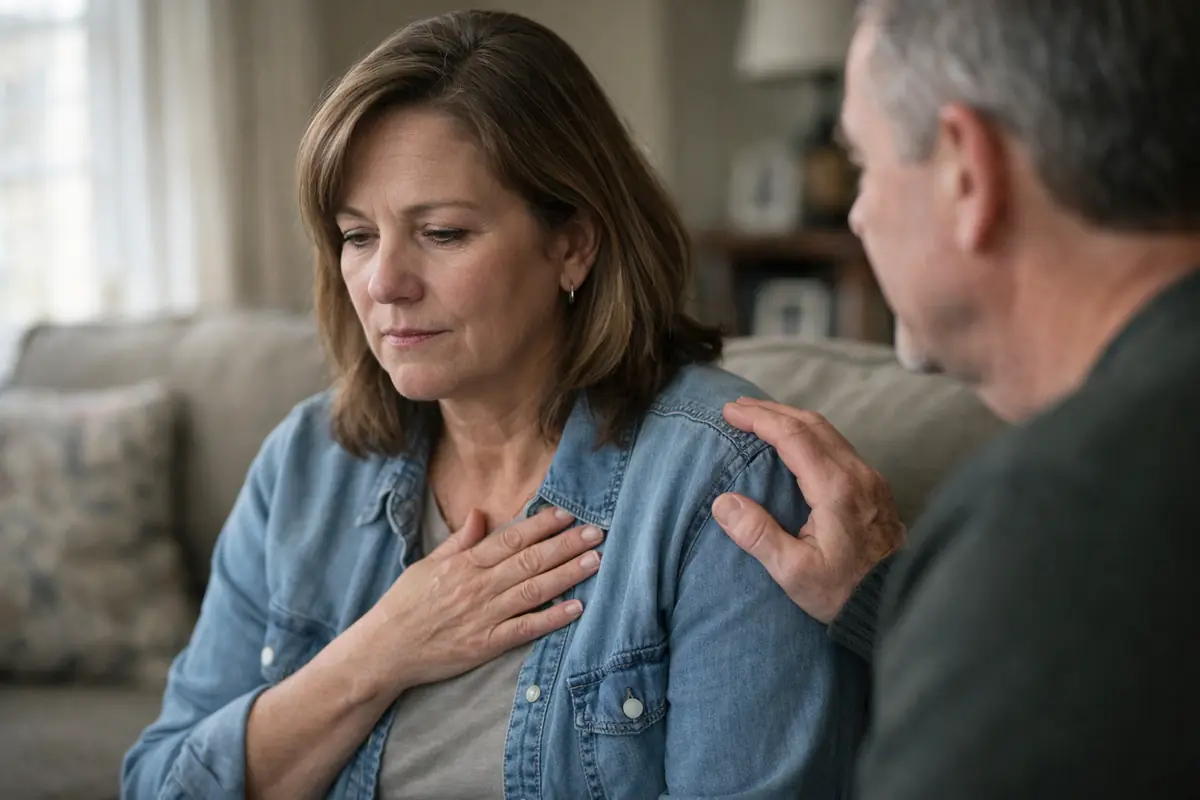
Can Anxiety Cause Chest Pain?
Learn how anxiety can cause chest pain, how to tell it from possible emergencies, and when to seek assessment and treatment support.
Reviewed by clinical staff
On this page
- Yes, anxiety can cause chest pain
- Why anxiety can create physical pain in the chest
- How anxiety chest pain may feel compared with a medical emergency
- When to seek emergency care right away
- The connection between anxiety, trauma, and substance use
- How treatment can help reduce anxiety-related chest pain
- Frequently asked questions
Chest pain can be frightening, especially when it seems to come out of nowhere. Many people wonder whether stress, panic, or ongoing anxiety could be the reason. The short answer is yes: anxiety can cause chest pain and other physical symptoms that feel intense and very real. At the same time, chest pain should never be brushed off automatically, because some causes require urgent medical attention.
Women’s Recovery offers women-only partial hospitalization (PHP) and intensive outpatient (IOP) care in Denver. Explore all programs or call 833.754.0554.
If you or someone you love is dealing with anxiety, panic symptoms, trauma, or substance use concerns, it helps to understand what anxiety-related chest pain can feel like, why it happens, and when to get immediate care. For women in Denver seeking support, Women’s Recovery provides women-only outpatient treatment for mental health, trauma, and substance use, including Partial Hospitalization, Intensive Outpatient, and outpatient care. Treatment recommendations are based on an assessment and each person’s needs.
Yes, anxiety can cause chest pain
Anxiety affects both the mind and body. When you feel threatened, overwhelmed, or intensely fearful, your nervous system can activate a fight-or-flight response. This can lead to muscle tension, rapid breathing, a racing heart, and changes in blood flow that create chest discomfort or pain. During a panic attack, these sensations may become so strong that a person worries they are having a heart attack.
Anxiety-related chest pain may feel sharp, tight, burning, aching, or like pressure in the chest. Some people notice it during moments of acute panic, while others feel it during periods of chronic stress. It may happen alongside dizziness, trembling, nausea, sweating, shortness of breath, or a sense of impending doom. Even when anxiety is the cause, the pain is not “just in your head.” It is a real physical response to emotional distress.
Because chest pain can have many causes, it is important not to self-diagnose in a crisis. If symptoms are new, severe, or concerning, urgent medical evaluation may be needed. Once serious medical causes have been ruled out, mental health treatment can help address the anxiety and teach safer ways to manage symptoms before they spiral.
Why anxiety can create physical pain in the chest
One common reason is muscle tension. Anxiety often causes people to tighten muscles in the chest, shoulders, neck, and upper back without realizing it. Over time, that tension can become sore or painful. Rapid, shallow breathing can also strain chest wall muscles and create discomfort. Some people begin to hyperventilate, which can lead to lightheadedness, tingling, and a stronger sense of alarm that makes the pain feel worse.
Another factor is increased awareness of body sensations. When someone is anxious, they may monitor every heartbeat, breath, or ache, which can amplify discomfort. This does not mean the pain is imagined. It means the nervous system is on high alert. Trauma histories, ongoing stress, sleep problems, and substance use can all increase this cycle of body tension and fear.
Anxiety-related chest pain may involve several overlapping processes at once. Common contributors include:
Muscle tightening in the chest, shoulders, jaw, or back
Rapid breathing or hyperventilation
Racing heart and adrenaline surges
Acid reflux or stomach upset triggered by stress
Heightened sensitivity to normal body sensations
- Muscle tightening in the chest, shoulders, jaw, or back
- Rapid breathing or hyperventilation
- Racing heart and adrenaline surges
- Acid reflux or stomach upset triggered by stress
- Heightened sensitivity to normal body sensations
General comparison: anxiety-related chest pain vs possible medical emergency
| Feature | Anxiety-related chest pain | Possible medical emergency | What to do |
|---|---|---|---|
| Onset | Often during stress or panic | Can happen with activity or at rest | If severe, new, or unclear, get medical help |
| Sensation | Sharp, tight, burning, or aching | Pressure, crushing, squeezing, heavy | Do not rely on sensation alone |
| Other symptoms | Fear, trembling, tingling, rapid breathing | Fainting, severe shortness of breath, spreading pain | Call emergency services or go to the ER if these occur |
| Duration | May improve as panic settles | May persist or worsen | Persistent pain needs prompt evaluation |
| Context | May follow stress, trauma reminders, or hyperventilation | May occur with cardiac risk factors or stimulant use | Share full history with providers |
How anxiety chest pain may feel compared with a medical emergency
There is no perfect way to tell on your own whether chest pain is caused by anxiety or by a heart, lung, or other medical problem. That is why caution matters. In some cases, anxiety chest pain appears suddenly during a panic attack and may improve as the nervous system settles. It may stay in one area, feel sharp or stabbing, and come with intense fear. But these patterns are not a guarantee, and symptoms can overlap.
Pain from a medical issue may involve pressure, heaviness, squeezing, or pain that spreads to the arm, back, jaw, or neck. It may happen with fainting, severe shortness of breath, blue lips, confusion, or persistent vomiting. Still, people can experience symptoms differently, and women sometimes have less typical heart-related symptoms. When in doubt, emergency evaluation is the safest choice.
The table below offers a general comparison, not a diagnosis tool. It can help you know what questions to ask, but it should not replace medical care.
When to seek emergency care right away
Seek immediate medical attention for chest pain that is sudden, severe, crushing, or does not ease up. Emergency care is also important if chest pain happens with fainting, major trouble breathing, weakness on one side, new confusion, or pain spreading to the jaw, arm, or back. If you have risk factors for heart disease or a history of heart or lung problems, do not assume anxiety is the only cause.
If you are unsure whether symptoms are anxiety or an emergency, it is better to get checked. This is especially true if the pain is different from what you have felt before. A medical professional can evaluate possible causes and help rule out immediate danger. After that, a mental health assessment can clarify whether panic, anxiety, trauma, or substance use may be contributing.
Consider urgent evaluation if chest pain occurs with any of the following:
Pressure, squeezing, or heavy pain that lasts several minutes
Pain spreading to the arm, shoulder, jaw, neck, or back
Shortness of breath that feels severe or worsening
Fainting, confusion, or sudden weakness
A history of heart disease, stimulant use, or concerning withdrawal symptoms
- Pressure, squeezing, or heavy pain that lasts several minutes
- Pain spreading to the arm, shoulder, jaw, neck, or back
- Shortness of breath that feels severe or worsening
- Fainting, confusion, or sudden weakness
- A history of heart disease, stimulant use, or concerning withdrawal symptoms
Ready for more support? Our women’s IOP and women’s PHP are built for adult women balancing recovery with real life. Call 833.754.0554 to start an assessment.
The connection between anxiety, trauma, and substance use
Chest pain and panic-like symptoms can become more complicated when trauma or substance use is part of the picture. Trauma can keep the body in a state of high alert, making it easier for stress responses to activate suddenly. A person may feel unsafe in their body, misread sensations as danger, or become overwhelmed by reminders of past experiences. This can intensify chest tightness, rapid heartbeat, and shortness of breath.
Alcohol, stimulants, cannabis, nicotine, and some other substances can also affect heart rate, breathing, and anxiety symptoms. Withdrawal can create chest discomfort and panic-like reactions as well. According to SAMHSA and NIDA, co-occurring mental health and substance use concerns are common, and integrated treatment matters. Looking at only one part of the problem can leave people without the full support they need.
At Women’s Recovery in Denver, care focuses on women facing mental health, trauma, and substance use concerns in a women-only outpatient setting. Depending on the assessment, support may include Partial Hospitalization, Intensive Outpatient, or outpatient treatment. The goal is to understand what is driving symptoms and build a treatment plan that fits the person, rather than forcing a one-size-fits-all approach.
How treatment can help reduce anxiety-related chest pain
Once urgent medical issues have been addressed, treatment can help reduce how often anxiety chest pain happens and how intense it feels. This usually starts with a thorough assessment of symptoms, mental health history, substance use, trauma exposure, physical health concerns, and daily functioning. From there, clinicians can recommend an appropriate level of care, whether that is PHP, IOP, or outpatient support.
Therapy often focuses on learning how anxiety works in the body, recognizing triggers, and responding earlier to warning signs. Breathing skills, grounding strategies, trauma-informed care, and support for substance use recovery can all play a role. For some people, coordination with primary care or other medical providers is important, especially when symptoms overlap with sleep issues, chronic pain, or medication concerns.
Helpful treatment goals may include:
Understanding personal triggers for chest pain and panic symptoms
Building safer coping tools for stress, fear, and overwhelm
Addressing trauma that may keep the nervous system activated
Reducing substance use patterns that worsen anxiety or withdrawal
Creating a continuing care plan that supports long-term stability
- Understanding personal triggers for chest pain and panic symptoms
- Building safer coping tools for stress, fear, and overwhelm
- Addressing trauma that may keep the nervous system activated
- Reducing substance use patterns that worsen anxiety or withdrawal
- Creating a continuing care plan that supports long-term stability
Related reading
- Panic Attack vs Anxiety Attack: Key Differences
- When to See a Therapist for Panic Attacks
- What Does an Anxiety Attack Feel Like?
- When Panic Symptoms Need PHP or IOP Support
- Nocturnal Panic Attacks at Night
If anxiety, panic symptoms, trauma, or substance use concerns are affecting you or someone you love, support is available. Women’s Recovery offers women-only outpatient care in Denver, Colorado, with treatment recommendations based on a thorough assessment. To learn more about Partial Hospitalization, Intensive Outpatient, or outpatient options, call 833-754-0554.
Women-only treatment in Denver. Take the first step today.
You don’t have to wait until things get worse. Talk with our admissions team about PHP, IOP and outpatient programs. Call 833.754.0554.
Frequently asked questions
Can anxiety cause chest pain every day?
Yes, it can. Ongoing stress or untreated anxiety may lead to repeated muscle tension, shallow breathing, and nervous system activation that cause daily chest discomfort. Even so, recurring chest pain should be discussed with a medical provider so other causes can be considered and urgent conditions are not missed.
How long can anxiety chest pain last?
It varies. Some people feel chest pain only during a panic episode that lasts minutes, while others notice lingering soreness or tightness for hours after intense anxiety. If pain is prolonged, severe, or different from your usual pattern, medical evaluation is important before assuming anxiety is the cause.
Can a panic attack feel like a heart attack?
Yes. Panic attacks can cause chest pain, racing heart, sweating, dizziness, shortness of breath, and a sense of doom, which can feel similar to a heart emergency. Because symptoms can overlap, it is safest to seek urgent medical care if you are unsure, especially when symptoms are new or intense.
Does substance use make anxiety chest pain worse?
It can. Stimulants, alcohol, cannabis, nicotine, and withdrawal states may increase heart rate, breathing changes, and panic symptoms. For some people, substance use becomes part of a cycle of anxiety and physical distress. Integrated assessment is important so both mental health and substance use concerns can be addressed together.
What kind of treatment helps if anxiety is causing chest pain?
Treatment often starts with an assessment to understand symptoms, medical history, trauma, substance use, and daily functioning. Depending on needs, care may include therapy, coping skills, trauma-informed treatment, and support for substance use recovery through PHP, IOP, or outpatient services. The right plan depends on the individual.