
Women's Recovery Community Support In Denver, CO
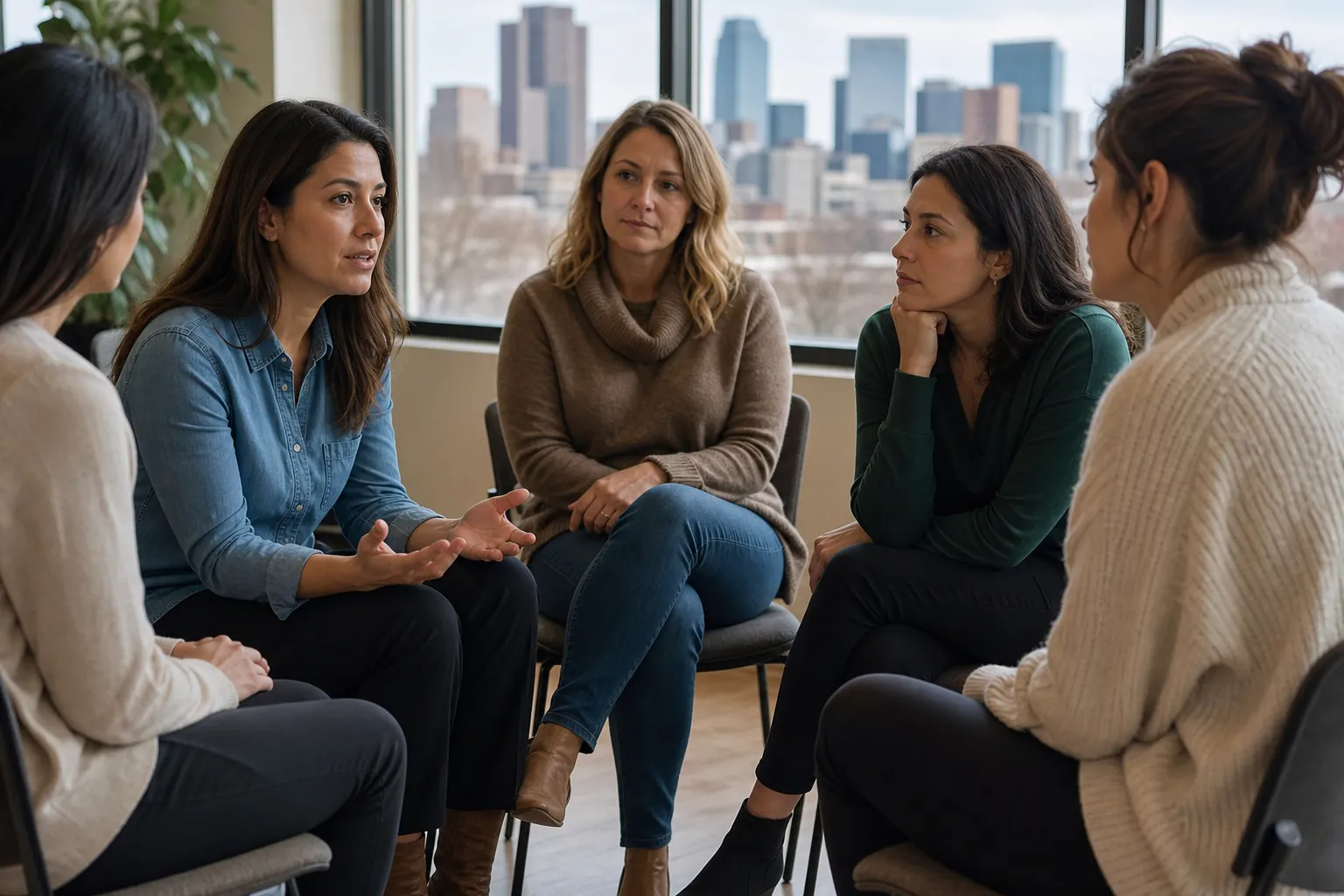
A search for women's recovery community support Denver can lead to peer groups, trusted relationships, and outpatient care. These supports serve different roles. Women’s Recovery offers mental health, trauma, and co-occurring substance use care for adult women. Community connections can complement that care, but cannot replace clinical assessment or treatment.
What Is Women's Recovery Community Support In Denver?
Women's recovery community support in Denver means finding safe connections alongside care. Support may come from peers, trusted friends, or community groups. Outpatient services and care options address clinical needs, while women's only outpatient treatment explains a women-focused setting. The right mix depends on each woman's needs, comfort, and goals.
Community support is a broad term, rather than one service. It can mean a regular peer meeting or a trusted friend. It may also mean a group built around a shared interest. No single type of connection suits every woman.
A peer is someone with shared lived experience. Peer support can offer a place to feel heard and less alone. A clinician has a different role, including assessment and treatment. A warm group setting does not make peer support clinical care.
Recovery can include changes in sleep, mood, relationships, and daily life. Some women seek help with trauma without having a substance use disorder. Others need help with both mental health and substance use concerns. Those are often called co-occurring concerns because they happen together.
Women’s Recovery serves adult women in Denver through care that does not require overnight stays. Mental health and trauma are the primary focus. A substance use diagnosis is not required to call. Individual assessment helps determine whether the care offered fits a woman's needs.
MedlinePlus describes counseling, medicines, or both as possible parts of substance-use treatment. That does not mean every person needs the same network. A small circle with clear boundaries may feel more useful than many contacts. Connection should leave room for privacy, choice, and clinical guidance.
How Can You Tell If A Support Group Feels Safe?
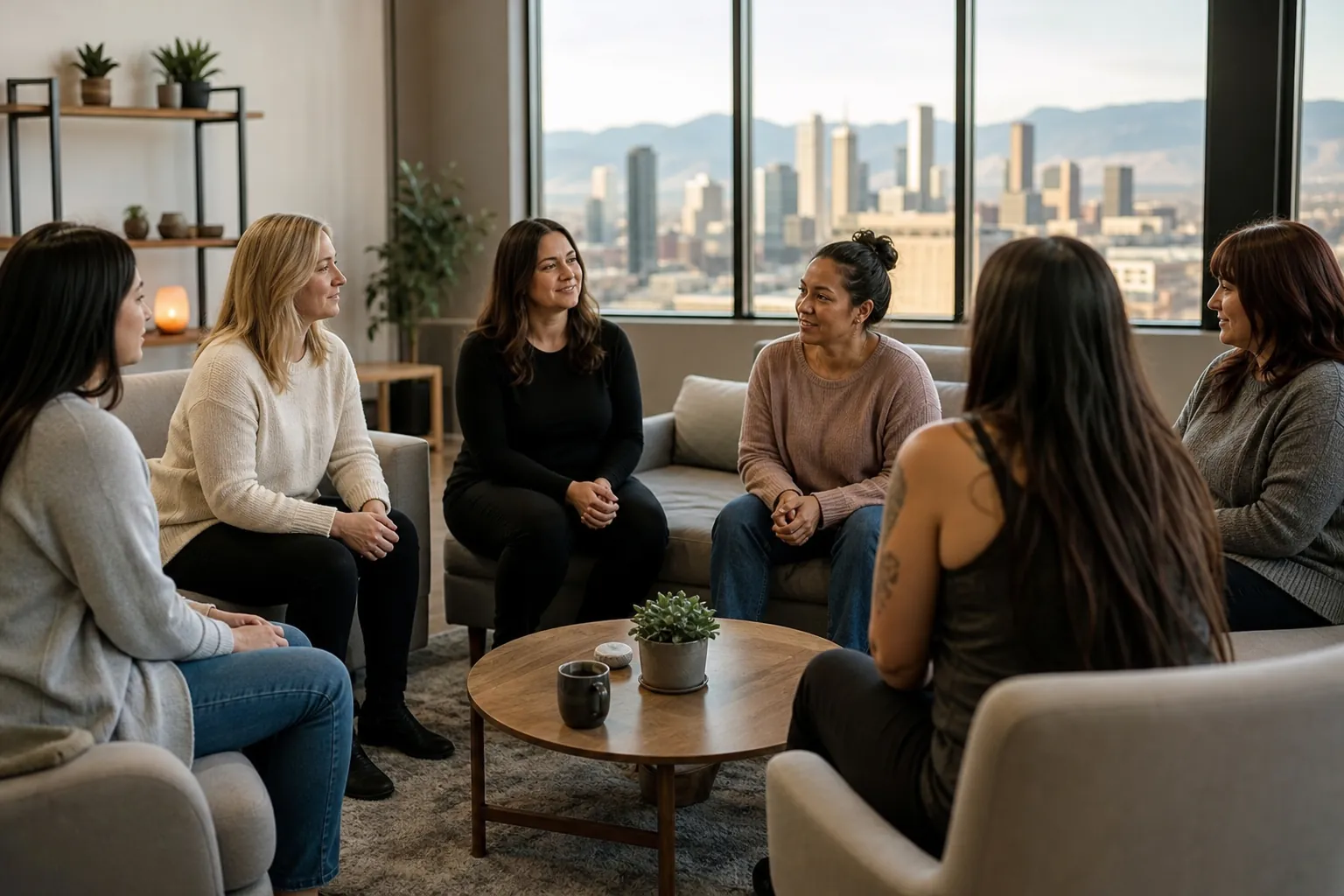
A safer support group respects choice, privacy, and clear boundaries. Members should be able to listen without pressure to disclose personal details. Women's only outpatient treatment settings and outpatient mental health care options offer context for comparing community contact with clinical care. Comfort may grow slowly, and concerns deserve attention.
Trauma can shape how safe a room or conversation feels. Trauma-informed care means taking those effects into account. A community group may use that phrase, but practices still need review. A label alone does not show how leaders handle conflict or unwanted advice.
Privacy rules matter, especially in a local community. Other members may recognize each other outside meetings. Even when a group asks for privacy, members may break that rule. Share only what feels reasonable for the setting and its limits.
Useful signs tend to show up in how people act. A group description may sound welcoming, yet the meeting may feel different. There is no need to share a trauma history to earn a place. A woman can leave a group that feels unsafe.
- Members can decline to speak without being shamed or singled out.
- Leaders explain privacy limits and respond clearly when boundaries are crossed.
- Different backgrounds and recovery goals receive respect without pressure to conform.
- Members are not urged to stop treatment or change prescribed medicines.
- Personal contact outside meetings stays optional and respects each person's consent.
How Do Peer Support And Outpatient Treatment Differ?
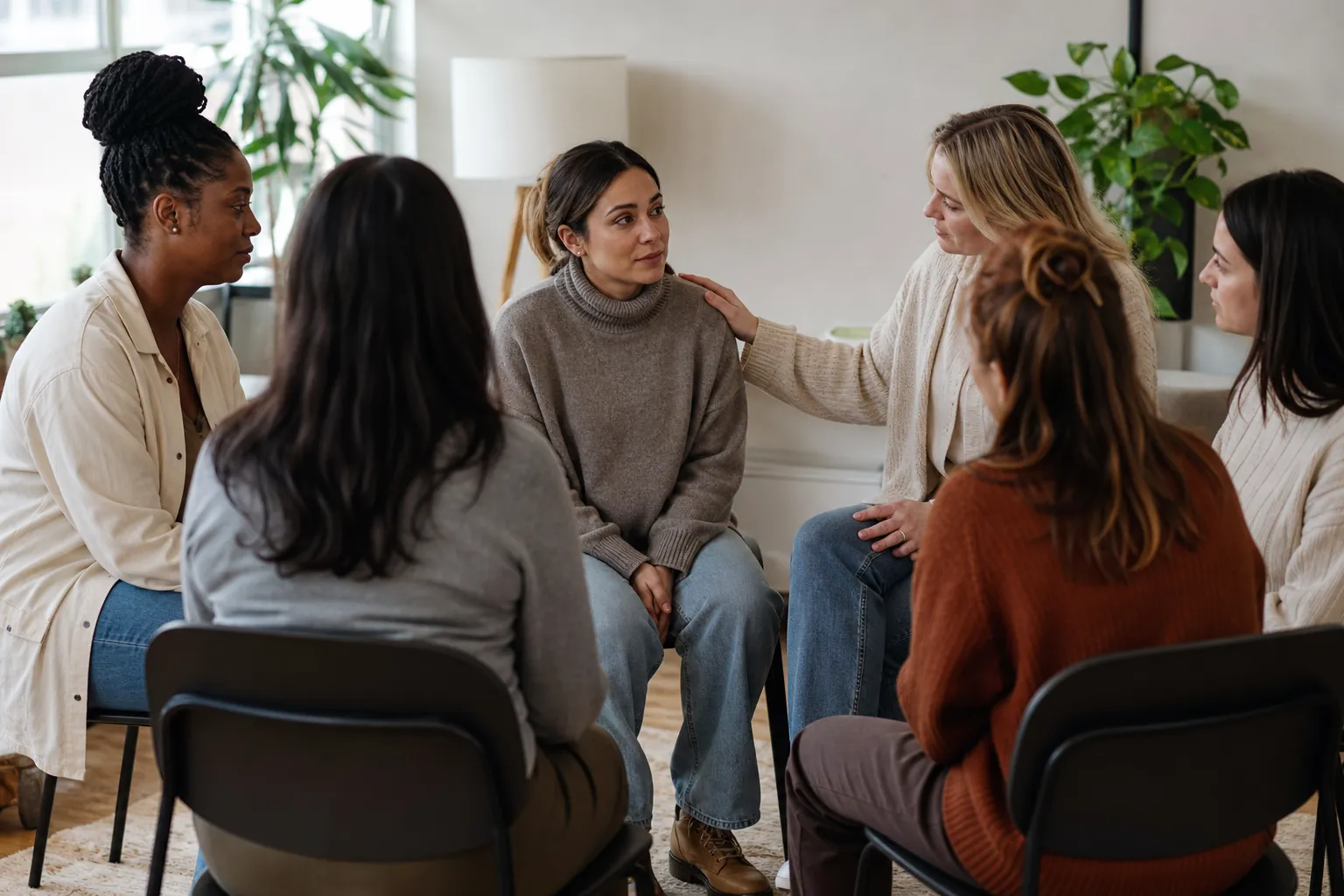
Peer support centers on shared experience, while outpatient treatment addresses clinical needs through professional care. Neither role should be confused with the other. Outpatient services and levels of care explains treatment options, and benefits of outpatient treatment describes care that allows women to return home after scheduled visits.
A community meeting may help someone feel understood after a hard day. The same meeting may lack staff who can assess a change in symptoms. Clinical care provides a separate place to discuss those changes. Community support should not carry responsibility for treatment decisions.
At Women’s Recovery, PHP means Partial Hospitalization Program, a structured day program. IOP means Intensive Outpatient Program, with fewer weekly hours than PHP. Outpatient treatment offers a less intensive schedule. Women go home each evening, and assessment determines the appropriate fit.
Every level includes weekly individual therapy, a case manager, and psychiatric care. A case manager helps coordinate care and practical needs. Contact with support people is based on consent. These are treatment services, not features to assume a community group provides.
The comparison below describes broad support roles, not local meeting availability. Independent groups set their own rules and schedules. SAMHSA describes several treatment types because people need different levels of care. A clinical team can explain which needs belong in treatment rather than a peer setting.
| Support Type | Main Role | Important Limit |
|---|---|---|
| Peer support group | Shared experience and connection | Not a clinical assessment |
| Outpatient treatment | Structured clinical care | Fit requires individual assessment |
| Trusted personal contact | Listening and practical support | Not responsible for treatment |
| Shared-interest community group | Social contact and routine | May lack recovery training |
How Can Community Connections Fit Around Daily Life?
Community connections work best when they fit real limits on time, energy, and travel. A small, steady connection may be enough to start. Balancing outpatient treatment with daily life and the benefits of outpatient treatment can help frame those limits. Support should not crowd out needed care, sleep, or rest.
A full calendar does not always mean strong support. Work shifts, caregiving, and travel can make regular meetings hard. Emotional strain can also reduce the energy available for social time. Missing a meeting does not erase the value of earlier connections.
It may help to think about the type of contact that fits. Some women prefer a small group with the same members. Others find a brief call or shared walk easier. Online groups can reduce travel, though privacy and group rules still matter.
Recovery does not need to become the topic of every social moment. A library group, class, or shared hobby may offer ordinary connection. These spaces need not replace recovery-focused support. They can give daily life room for interests beyond symptoms or treatment.
- Choose contact that leaves enough time for care, meals, and sleep.
- Consider travel demands before adding another standing commitment to the week.
- Keep room to change plans when health or family needs shift.
- Use private spaces for online meetings when personal topics may come up.
What Role Can Friends And Family Play?
Friends and family can offer practical help and steady contact when their involvement feels safe. Support works better with consent and clear limits. Balancing treatment and daily responsibilities addresses everyday demands, while outpatient services and support options explains clinical care. Loved ones do not need access to every treatment detail.
A support person might help with a ride or share a meal. Another might listen without trying to solve the problem. Small acts can be useful when energy is low. The person receiving care should have a voice in what help looks like.
Family is not always the safest source of support. Past harm, conflict, or pressure can make contact stressful. A trusted friend or chosen family member may be a better fit. No one needs to involve an unsafe person to show commitment to recovery.
SAMHSA's family resources describe support for people affected by a loved one's needs. Family members may need their own space to learn and cope. That space should not require the woman in care to share private details. Each person's role can remain clear and limited.
At Women’s Recovery, contact with support people is based on consent. The clinical team can explain how consent works and what information may be shared. Giving permission for one purpose does not mean inviting someone into every part of care. Privacy questions belong in that discussion.
It can help to separate care from supervision. Constant checking, pressure to report feelings, or unwanted advice may strain trust. Respectful support leaves room for the woman to make choices. A clinician can help explore relationship concerns without making loved ones responsible for treatment.
Where Can Women Look For Local Connections?
Women can look for community connections through clinical referrals, public community listings, and established support groups. Each option still needs a fit and safety check. Outpatient services for adult women provides a clinical starting point, while women's only outpatient treatment options explains a separate kind of women-focused support.
An existing clinician may know of groups that match a woman's goals. A public library or community center may list nonclinical social groups. These are possible starting points, not endorsements of a specific meeting. Group schedules, formats, and entry rules can change.
A listing may say little about what a meeting feels like. Some groups focus on substance use, while others discuss broader mental health concerns. Some follow a spiritual approach, and others do not. A woman can prefer a different format without rejecting support as a whole.
Women’s Recovery's Denver location does not mean every outside connection happens through the program. Community referrals and onsite services are separate. Do not assume a listed group is run by the treatment team. The team can clarify what belongs to care and what is independent.
- Public listings can help identify groups, though details need current confirmation.
- Group descriptions should make the purpose and intended members reasonably clear.
- Online spaces need privacy rules as much as in-person meetings do.
- A poor fit with one group does not rule out other connections.
When Is Community Support Not Enough?
Community support is not enough when symptoms call for clinical assessment or emergency care. Peers cannot determine the right level of treatment. Outpatient services and clinical care describes scheduled support, while outpatient treatment benefits and limits offers context. A need for more help is a reason to seek assessment, not blame.
A change in mood, sleep, substance use, or daily function deserves clinical attention. An urgent assessment can help clarify what care may be needed. That assessment is different from admission to a program. A referral may be needed when a service cannot meet the person's needs.
Women’s Recovery does not provide onsite detox, residential, or inpatient care. Detox means medical care during withdrawal from a substance. Withdrawal from alcohol, benzodiazepines, or opioids can be dangerous and needs medical supervision. A peer meeting cannot assess or manage those risks.
For immediate danger or a medical emergency, call 911; for a mental health crisis, call 988, the Suicide and Crisis Lifeline. Emergency care and crisis support serve different roles from routine admission. Do not wait for a program opening or return call during an emergency.
Outside a crisis, a clinical conversation can help sort out next steps. Women do not need to build a support network before seeking care. They also do not need to prove that community efforts have failed. Connection and treatment can develop alongside each other at a suitable pace.
Strong support includes knowing the limits of each role. Friends can care deeply without being able to assess symptoms. Peers can offer insight without directing treatment. Clear limits help keep urgent needs from being left to people who lack the right resources.
Questions about next steps? Call Women’s Recovery at 833.754.0554 or review the Women’s Recovery admissions process.
Frequently Asked Questions
Can I seek support without a substance use diagnosis?
Yes. Women’s Recovery focuses on mental health and trauma care for adult women. A substance use diagnosis is not required to call. Community groups vary, so some may focus on substance use while others address different needs. Individual assessment determines whether the program's services fit your concerns.
Do I have to tell coworkers that I attend a group?
You can generally keep community group attendance private from coworkers. A meeting may include people you know, however, and group privacy rules have limits. Workplace leave or scheduling needs may raise separate questions. A clinical team can discuss care-related privacy without requiring you to share personal details with peers.
Can pregnant or postpartum women receive care?
Pregnant and postpartum women are welcome at Women’s Recovery. Individual assessment still determines fit and care needs. Children and infants are not onsite, so that limit matters when considering attendance. Community meetings have their own child attendance rules, which should not be assumed to match the program's policy.
Is it okay to listen without sharing my story?
Listening can be a valid way to take part in community support. Each group sets its own format, so participation rules may differ. A respectful space should explain those rules without pressuring members to disclose trauma. Clinical groups may have different treatment expectations, which the care team can explain.
What if I recognize someone from a local meeting?
Respect the person's privacy and avoid naming the meeting in public. Attendance does not give permission to discuss someone's health or recovery. A brief greeting can stay neutral unless both people choose otherwise. If an encounter raises concerns about your own privacy, the group leader can clarify the group's boundaries.
Sources
- Substance Use Treatment, SAMHSA
- Resources for Families, SAMHSA
- Drug Use and Addiction, National Library of Medicine (NIH)
Call 833.754.0554 to talk through next steps.