
Body Symptoms Of Anxiety Women Should Not Ignore In CO
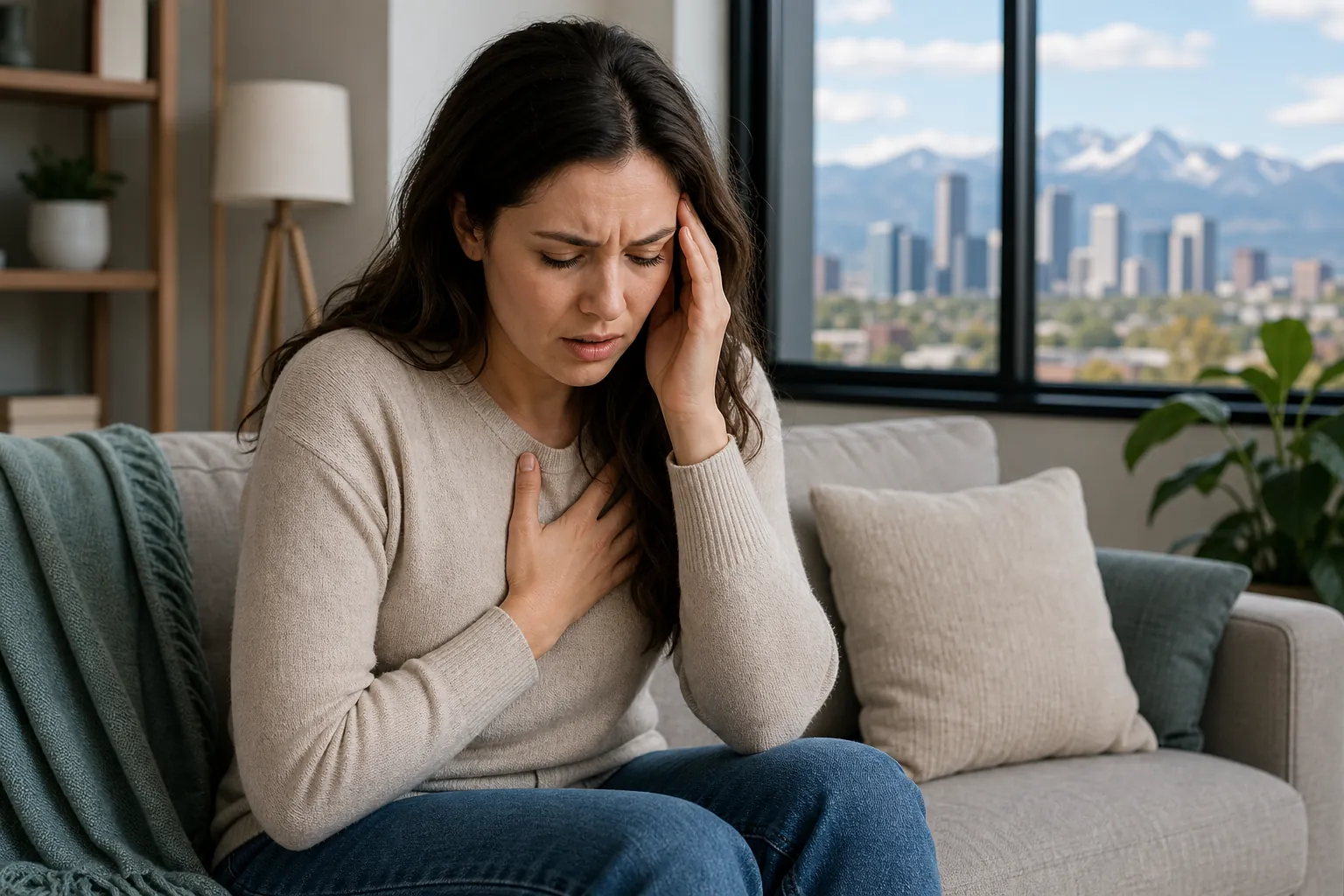
When asking what body symptoms of anxiety should women not ignore, focus on new, severe, persistent, or changing symptoms. Chest pain, fainting, or trouble breathing need medical attention, not an assumed anxiety label. Racing heartbeat, stomach upset, tension, and poor sleep also deserve care when they disrupt daily life.
What Body Symptoms Of Anxiety Should Women Not Ignore?
Body symptoms of anxiety deserve attention when they persist or disrupt life. Common signs include muscle tension, shaking, nausea, sweating, and a racing heart. Medical causes still need consideration. Support includes understanding barriers to mental health treatment and exploring outpatient care for adult women after a health assessment.
Anxiety can trigger the body's stress response, which prepares you for danger. Your heart may beat faster, and your muscles may tighten. Those changes are real, even when no outside threat is clear. They don't mean you are imagining the discomfort.
Some women first notice body changes rather than fearful thoughts. A tight jaw, upset stomach, or restless sleep may stand out. Pay attention when symptoms keep returning or change your usual habits. Avoid deciding on your own that every symptom comes from anxiety.
A symptom deserves care before you reach a breaking point. You may still work, parent, or attend school while feeling unwell. Being able to push through does not make distress less important. A medical visit can help sort out possible causes.
- Muscle tension or headaches keep returning and interfere with normal tasks.
- Stomach upset or nausea changes how you eat or drink.
- A racing heartbeat keeps happening without a clear, known cause.
- Poor sleep leaves you tired, tense, or unable to focus.
When Do Physical Symptoms Need Emergency Care?
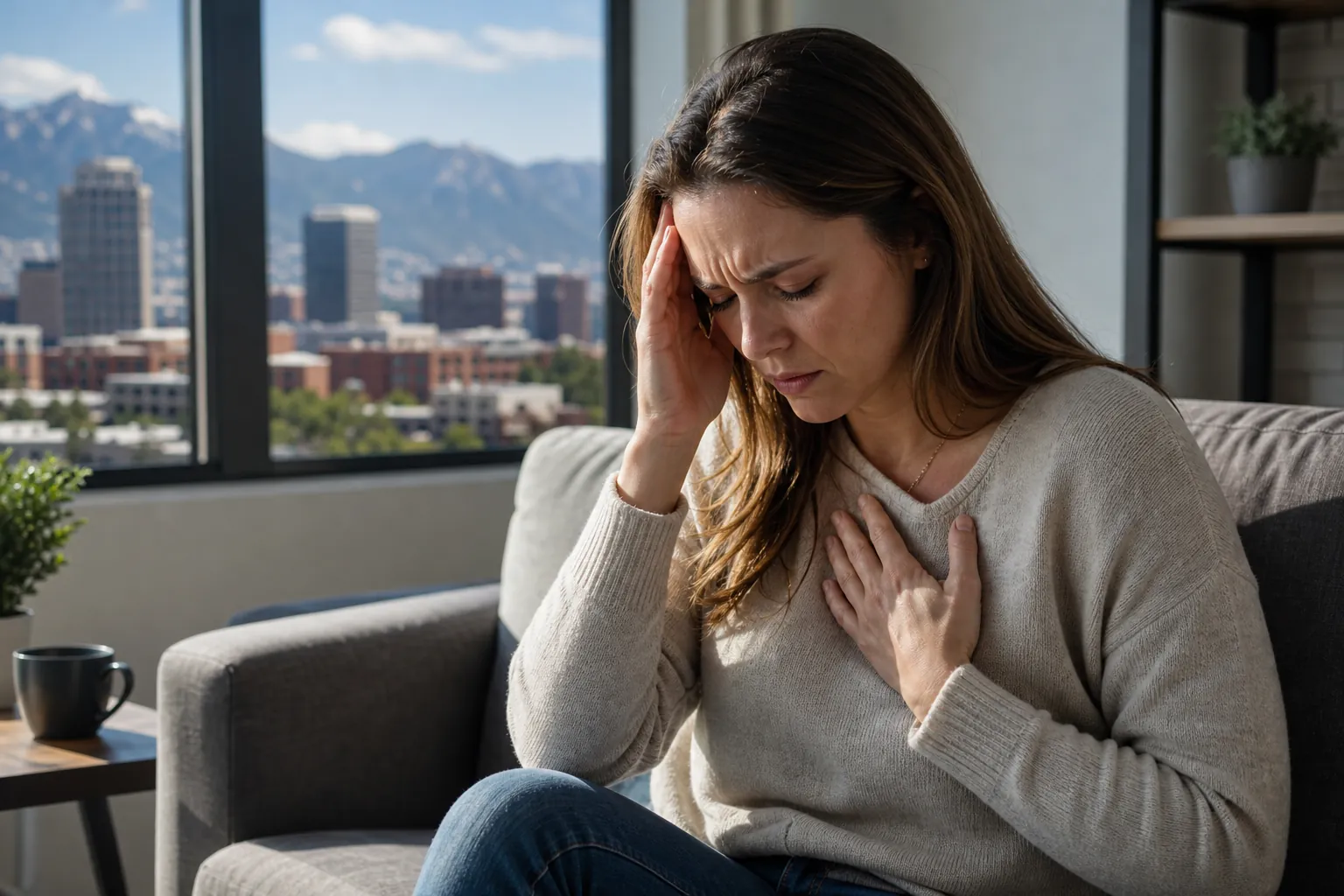
New or severe chest pain, major breathing trouble, fainting, or sudden weakness may signal an emergency. Don't label those symptoms as anxiety without medical evaluation. Benefits of outpatient treatment and barriers to seeking mental health care address ongoing support, not emergency assessment or treatment for a medical crisis.
Call 911 for an emergency or immediate danger, or 988 for the Suicide and Crisis Lifeline during a mental health crisis. Emergency services address immediate medical threats. Crisis support can help during emotional distress, but cannot replace emergency medical care.
Panic can cause intense fear and strong body sensations. Those sensations may overlap with heart, lung, or other medical problems. Even a past panic diagnosis cannot explain every new episode. A new pattern or unusually severe symptoms need fresh attention.
Chest pressure with sweating, nausea, or pain in the back or jaw deserves urgent attention. Sudden trouble speaking, facial drooping, or weakness also needs emergency care. Don't drive yourself when you feel faint or severely unwell.
Less severe symptoms may still need prompt medical review. If you are unsure how urgently to act, seek medical guidance. Don't wait for a therapy visit, admissions call, or insurance decision during an emergency.
| Symptom Pattern | Appropriate Response | Important Limit |
|---|---|---|
| New, severe chest pain | Emergency medical care | Do not assume panic |
| Sudden weakness or speech trouble | Emergency medical care | Do not wait for therapy |
| Recurring, nonsevere body symptoms | Prompt medical review | Physical causes need review |
| Ongoing worry affecting daily life | Mental health assessment | Urgent symptoms take priority |

How Can You Tell Anxiety From A Physical Illness?
You usually cannot tell anxiety from a physical illness by symptoms alone. Anxiety and medical conditions can also occur together. A clinician reviews the pattern and decides what evaluation fits. Understanding barriers to seeking care and women's outpatient treatment options can support next steps without replacing medical care.
A fast heartbeat may occur during anxiety, but has other possible causes. So can fatigue, dizziness, stomach pain, or shortness of breath. Similar symptoms do not prove that conditions share the same cause. Online symptom checks cannot settle that question.
A clinician may review your health history, examine you, or order tests. Testing depends on your symptoms and medical risks. Not every person needs the same tests. A normal result can be useful without explaining every symptom at once.
Patterns can help guide the conversation, but they aren't proof. Symptoms during stress may relate to anxiety or another condition. Symptoms that ease with rest still deserve review when new or unusual. You don't need a symptom log before contacting a clinician.
- New symptoms differ from sensations you have already discussed with a clinician.
- Symptoms grow stronger, last longer, or happen more often than before.
- Body changes begin after an illness, medication change, or substance use.
- Symptoms affect eating, sleep, movement, work, or your sense of safety.
Can Hormones, Trauma, Or Poor Sleep Affect Symptoms?
Hormonal changes, trauma reminders, and poor sleep can affect body sensations and anxiety. Those factors do not rule out a medical problem. Outpatient support designed for women and help with treatment access barriers may be useful when symptoms persist, alongside medical review of new or changing physical concerns.
Some women notice changes around their menstrual cycle or menopause. Pregnancy and the postpartum period can bring physical and emotional changes too. Tell a medical clinician when symptoms started and what else changed. Avoid assuming that hormones explain chest pain, fainting, or breathing trouble.
Trauma can leave the body more alert to possible danger. A sound, place, touch, or memory may bring tension or a racing heart. You may notice the body response before understanding the trigger. You do not need to share a trauma story before seeking help.
Poor sleep may leave you more tense and less able to cope. Body discomfort can then make sleep harder, creating a difficult cycle. SAMHSA describes mental health as affecting how people feel, think, and act. Physical symptoms still need attention on their own terms.
Caffeine, alcohol, and other substances can complicate the picture. Withdrawal means symptoms after reducing or stopping a substance. Withdrawal from alcohol, benzodiazepines, or opioids can be dangerous and needs medical supervision. Women's Recovery does not provide onsite detox.
Pregnant and postpartum women should report new symptoms to their medical team. New severe headaches, chest pain, or breathing trouble need urgent medical attention. Don't dismiss symptoms as ordinary stress from parenting or pregnancy.
What Happens During An Assessment For Physical Anxiety Symptoms?
An assessment for physical anxiety symptoms explores medical concerns, emotional distress, and daily functioning. A clinician may recommend medical evaluation before or alongside therapy. Women's outpatient mental health care and understanding obstacles to getting treatment offer context, but a program assessment does not replace urgent medical evaluation.
A medical visit may focus on where symptoms occur and their severity. The clinician may also review health conditions, medicines, supplements, and substance use. These details help identify possible causes and safety concerns. You can explain symptoms in your own words.
A mental health assessment looks at worry, sleep, mood, and daily life. The clinician may explore trauma, stress, or behaviors linked to distress. Questions should help build a clearer picture, rather than blame you. Tell the clinician when you need a pause or clarification.
Physical and mental health care can happen at the same time. You don't have to choose between being believed and getting emotional support. Therapy does not make a body symptom less real. Medical care does not prevent anxiety from being part of the picture.
The National Institute of Mental Health describes psychotherapy as treatment through conversation. Therapy can help people understand and change troubling thoughts, feelings, and behaviors. The approach should fit your needs and goals. Ask the clinical team to explain any proposed treatment in plain language.
An assessment also helps determine the right setting for care. Admission is a separate step based on clinical fit and program requirements. Contacting a program does not establish a diagnosis or confirm admission.
What Can Help When Body Symptoms Keep Returning?
Recurring body symptoms often need a plan that includes medical follow-up and mental health support. The plan should match the cause, severity, and impact on daily life. Understanding outpatient treatment benefits and outpatient support for busy women can help explain care that fits around life outside treatment.
Therapy may help you notice stress patterns and respond to body sensations. A clinician can help you choose skills that feel safe and useful. No single breathing or grounding exercise works for everyone. Stop an exercise and seek guidance if symptoms worsen.
Medication may be part of care for some people. The National Institute of Mental Health advises discussing benefits, side effects, and concerns with a prescriber. Don't start, stop, or change a prescribed dose on your own. New symptoms after a medicine change need review.
Daily habits can support care without replacing evaluation or treatment. A plan should account for work, caregiving, disability, and access to food or sleep. Avoid treating self-care as another test you must pass. Small, realistic changes are often easier to sustain.
- Keep recommended medical follow-up even when stress seems linked to symptoms.
- Discuss caffeine, alcohol, supplements, and other substances with your clinician.
- Use coping skills chosen with your clinician rather than forcing uncomfortable exercises.
- Tell your care team when symptoms change or disrupt daily routines.
How Can Women In Denver Find Appropriate Support?
Women in Denver can seek medical review for physical symptoms and assessment for ongoing anxiety or trauma concerns. Women's Recovery serves adult women through outpatient care. A women's outpatient treatment setting and treatment support for busy women describe care considerations, while individual assessment determines whether the services fit.
Women's Recovery provides mental health, trauma, and co-occurring substance use care. Co-occurring means mental health and substance use concerns happen together. A substance use diagnosis is not required to call. Services are for adult women age eighteen and older.
Care is trauma-informed, meaning care takes trauma's possible effects into account. The programs include partial hospitalization, intensive outpatient care, and outpatient treatment. Women go home each evening. These services do not provide emergency care, onsite detox, residential care, or inpatient care.
Every level includes weekly individual therapy, a case manager, and psychiatric care. Contact with support people happens with consent. The clinical team assesses needs and explains which services may fit. No single level is right for every woman with anxiety symptoms.
Pregnant and postpartum women are welcome, but children and infants are not onsite. Childcare and travel needs may affect how a plan fits. You can raise those concerns during the first contact. No preparation or completed symptom diary is needed before calling.
Admissions staff can explain the assessment process and program limits. Assessment, any benefits review, and admission are separate steps. A benefits review does not confirm coverage or admission. New medical symptoms still need the right medical care, even while treatment is being considered.
Questions about next steps? Call Women’s Recovery at 833.754.0554 or review the Women’s Recovery admissions process.
Frequently Asked Questions
Can anxiety symptoms happen when I don't feel worried?
Yes, body sensations can appear before you notice worry or fear. Stress responses may feel automatic, especially around reminders of past trauma. Still, a calm mood does not prove that symptoms are harmless. New, persistent, or changing sensations deserve medical review rather than a self-diagnosis of anxiety.
Does a normal test result mean my symptoms aren't real?
No, a normal test result does not make your symptoms unreal. A test answers a specific medical question, not every possible question about discomfort. Ask the clinician what the result means and what follow-up fits. Mental health support can be useful while medical questions remain open.
Can checking my pulse repeatedly make anxiety harder to manage?
Repeated checking can become part of an anxiety cycle for some people. Brief relief may give way to another urge to check. A therapist can help address that pattern without dismissing symptoms. Follow medical advice about monitoring, and don't ignore new warning signs because you suspect anxiety.
Do I need a substance use diagnosis to contact Women's Recovery?
No, a substance use diagnosis is not required to contact Women's Recovery. Mental health and trauma care are the primary focus. Adult women can seek an assessment for concerns such as ongoing anxiety. The team determines clinical fit, and contacting the program does not confirm admission or a specific schedule.
Can someone close to me help with treatment?
Yes, a trusted support person may help you explain changes or manage practical needs. Your preferences and consent matter when care involves other people. Women's Recovery includes consent-based contact with support people. You can discuss what information may be shared and raise concerns about privacy during assessment.
Sources
- What Is Mental Health?, SAMHSA
- Psychotherapies, National Institute of Mental Health (NIH)
- Mental Health Medications, National Institute of Mental Health (NIH)
Call 833.754.0554 to talk through next steps.