
Process Groups And Psychoeducation In Denver, CO
For 'how do process groups and psychoeducation differ in colorado,' the main difference is the focus: process groups explore feelings and relationships, while psychoeducation teaches about mental health and coping. Both can involve discussion, but their goals differ. The exact format and fit depend on the clinician and program.
Process Groups And Psychoeducation
Process groups and psychoeducation differ mainly in whether the group explores lived feelings or teaches a topic and related skills. Work on dealing with family trauma may draw on either focus, while adjusting to a sober life can involve both emotional support and a clearer grasp of patterns in daily life.
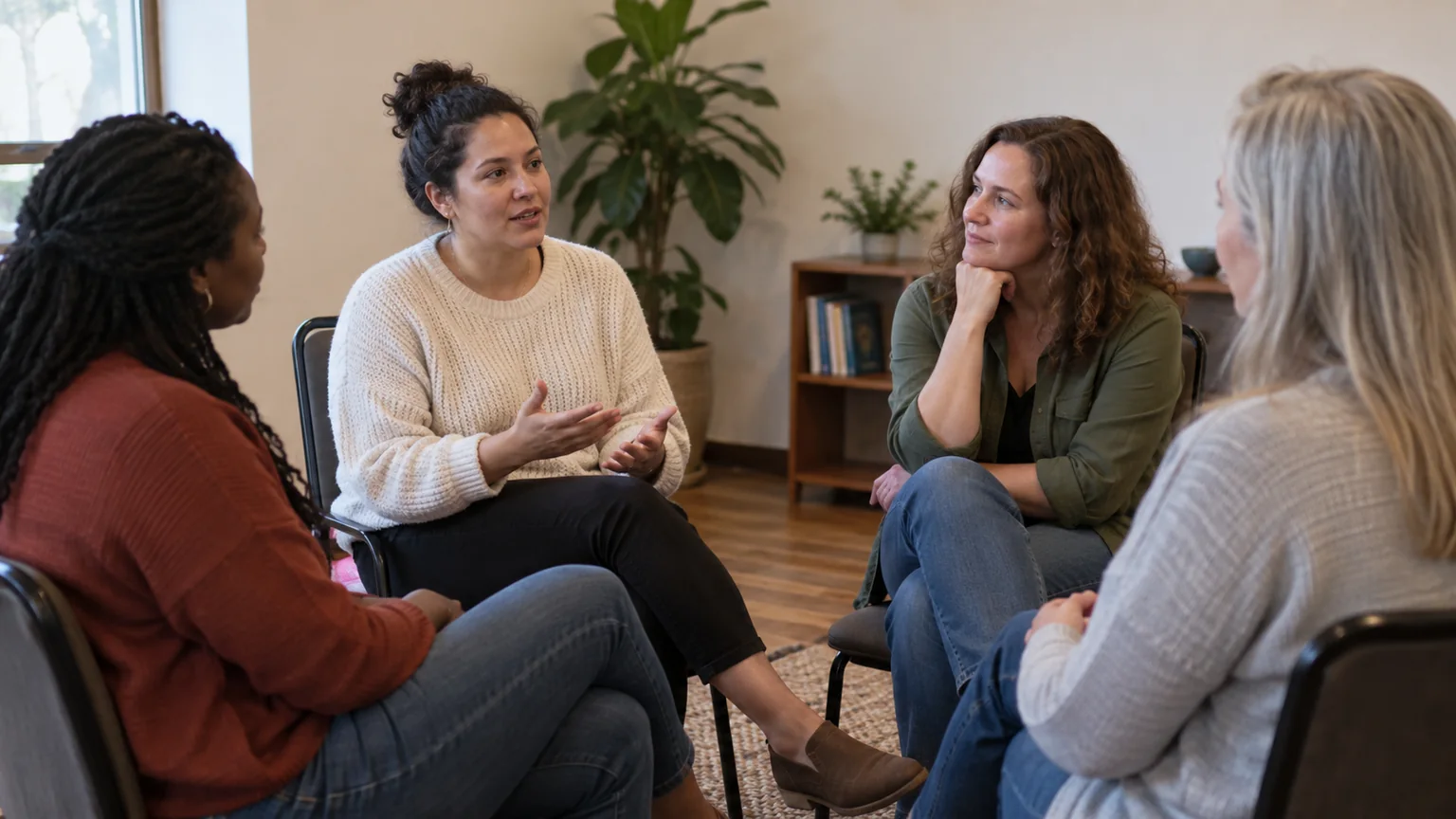
A process group focuses on what members feel, share, and notice with others. A clinician guides talks about current events or reactions within the room toward the group's therapeutic goals.
Psychoeducation is a clinical term for teaching about mental health, symptoms, care, or coping. The leader may explain a topic, use examples, and invite discussion. The teaching can help people name an experience that once felt hard to describe or confusing to make sense of.
The two formats can overlap. A teaching group may include a personal story, and a process group may pause for a clear explanation of a skill. The main difference lies in what the session is designed to do, rather than whether anyone shares feelings.
These are general descriptions of group care. At Women's Recovery, each three-hour IOP session combines ninety minutes of process group with ninety minutes of psychoeducation. These formats are part of the IOP structure; an assessment still determines whether that level fits your needs.
| Feature | Process Group | Psychoeducation |
|---|---|---|
| Main focus | Feelings and relationship patterns | Mental health topics and coping |
| Typical structure | Guided discussion | Planned topic or lesson |
| Personal sharing | Often central to the work | May support the topic |
| Leader's role | Guide and explore group responses | Explain and connect facts to daily life |
| Possible overlap | Brief teaching within discussion | Discussion within a lesson |
What Usually Happens In A Process Group?

A process group usually centers on members' current feelings, concerns, and responses to one another, with a clinician guiding the talk. Themes from working through family trauma may emerge alongside sober life across family roles, but the session's pace and limits depend on the group's purpose and clinical setting.
A member may describe a tense visit or feeling left out. The leader helps explore feelings, needs, and relationship patterns rather than simply collecting advice from everyone in the room.
Responses from other members can become part of the work. Feeling heard, doubting someone's care, or wanting to withdraw may offer useful material when handled with care. The clinician's role includes helping the group stay respectful and keeping the focus on therapeutic needs.
Process work does not require every woman to tell a full trauma story. The group can explore a present feeling or a small part of an event. The leader should explain what kind of sharing fits the setting and how to handle a topic that feels too much.
A process group has a clinical purpose and agreed boundaries. Members may care about one another, but outside friendships or exchanging contact details are not assumed parts of care.
What Does Psychoeducation Teach In Plain Terms?
Psychoeducation teaches plain facts about mental health and practical ways to respond to symptoms or stress. Lessons related to family trauma and its effects or changes when adjusting to sober life can help women name patterns, while the clinician connects the topic to care without treating a lesson as a diagnosis.
A lesson might explain stress, sleep, mood, or coping in plain terms. Examples can make the ideas clear without asking every member to share a deeply personal story.
Teaching can help a woman name a familiar feeling in clear terms. That shared language may make a later talk with a therapist easier to begin.
Some sessions may include practice with a coping skill, though the exact content depends on the provider. A skill needs to be explained in terms that fit the person's needs. Hearing about a method does not establish that the method is right for every symptom or setting.
Psychoeducation supports care rather than replacing assessment or private therapy. Two women can recognize the same example yet have different needs and causes for distress. The clinician can help sort what applies to each person instead of letting a group lesson settle a complex health question.
- A clear explanation can help a woman name a symptom without needing to know clinical terms first.
- Everyday examples can connect a mental health topic with choices made between care visits.
- General teaching still needs clinical context before a woman applies the lesson to her own care.
How Does Personal Sharing Change Between The Formats?

Personal sharing is often central in process groups and more closely tied to a planned topic in psychoeducation. Concerns about supporting a daughter in alcohol recovery or addressing trauma within a family may fit either format, but the leader can help decide how much detail serves the purpose of that session.
In process work, a current concern may become the main thread. A brief account can be enough when the useful focus is a feeling such as shame, anger, or fear of judgment.
In a teaching group, a personal example may illustrate the topic without becoming the whole session. The leader may redirect the talk so the lesson remains useful to all members. That shift does not mean the woman's concern lacks value or should be left out of care.
Private therapy can hold details that need more time, privacy, or a different pace. A group leader can help identify topics that need that separate space.
Privacy rules deserve attention in both formats. Staff can set expectations, but no clinician can fully control what another member says outside the room. A woman can weigh that limit when deciding how much personal detail to share, even in a group that feels warm and supportive.
How Can Women Stay Engaged When Focus Is Hard?
Women can stay engaged in group care when the clinician knows about trouble with focus, memory, or mental fatigue and can consider ways to support access. Reading about common signs linked to ADHD may name some concerns, while adjusting to daily sober life provides context without assuming one cause for attention problems.
Poor sleep, stress, medicine effects, and many health concerns can affect focus in groups. Trouble following a talk deserves attention without assuming a diagnosis from one symptom or session.
Plain language, a clear pace, or a brief recap may help some women follow the group. The clinician can consider what support fits the concern and format.
Process groups may feel hard when many people speak or when strong emotion fills the room. A teaching group may feel hard when terms are unfamiliar or facts come quickly. Naming which part is difficult gives the clinician a more useful starting point than simply calling yourself bad at groups.
The ability to repeat every point is not the only measure of engagement. Noticing one useful idea or one feeling worth exploring can matter too. Persistent trouble with attention or memory should be discussed clinically, especially when the same problem affects work, home life, or safety.
- Difficulty following a fast discussion deserves support rather than a judgment about effort.
- Trouble recalling a lesson can reflect fatigue or stress and needs context before a cause is assumed.
- A concrete description of what feels hard helps the clinician consider useful changes.
How Do The Formats Address Trauma Without Rushing Disclosure?
Both group formats can address trauma while keeping the focus on current needs and a manageable pace. care for the effects of family trauma may include teaching or guided discussion, while recovery across close family roles can raise feelings that deserve private support before a detailed story is shared.
Trauma work need not begin with a detailed account of harm. Teaching can explain stress responses, while process work can explore how fear affects trust in the present.
A woman may feel ready to discuss one part of the story but not another. The clinician can help set a pace and decide what belongs in the group. The ability to pause matters, especially when sharing brings strong distress or makes it hard to remain present.
Group members also differ in what they can hear comfortably. Detailed descriptions of harm can affect others in the room, even when the speaker needs care and support. Clear limits can protect space for the speaker while helping the group avoid more detail than the setting can hold.
Women's Recovery focuses on mental health and trauma. Its IOP session includes ninety minutes of process group and ninety minutes of psychoeducation. A confirmed format does not establish a particular trauma therapy or require a full account of traumatic events. The clinician can explain the specific focus and limits of a session.
Can Teaching And Process Work Support The Same Care Plan?
Teaching and process work can support the same care plan when each format serves a clear clinical purpose. Facts can help explain patterns tied to family trauma, while guided discussion can explore feelings linked to building a sober daily life. The mix depends on assessed needs and the groups a provider actually offers.
Teaching can help a woman name a stress response before discussing how the response shapes a relationship. Process work may then explore the feelings and choices tied to that pattern.
The order of teaching and process work may vary. Knowing clinical terms does not erase the need to discuss feelings, and speaking easily does not replace a need for structure.
No format covers every need by itself. A group may leave a medication concern, a safety issue, or a private relationship story unresolved. Those needs may call for psychiatric care, individual therapy, or another part of the person's assessed treatment plan.
At Women's Recovery, every offered level includes weekly individual therapy, case manager support, and psychiatric care. IOP uses a three-hour session with ninety minutes of process group and ninety minutes of psychoeducation. Individual assessment guides how that structure fits a woman's broader care needs.
How Can You Tell Whether A Group Format Fits Your Needs?
A group format fits when its purpose, pace, and boundaries support the woman's assessed needs and allow concerns to be addressed. Work around family support in alcohol recovery and adjustment to a sober life may require different emphases, so fit should be reviewed with the clinician rather than judged by the group's label.
A useful group can bring discomfort as new feelings arise. Repeated pressure to share, unclear boundaries, or feeling unsafe deserve a clinical response, even when some parts of care feel helpful.
The purpose should be clear enough that you can see why the group is part of care. In a teaching session, that may mean grasping a topic and its use. In process work, the value may lie in seeing a relationship pattern or expressing a feeling more clearly.
A woman may grasp a lesson yet struggle to use it during conflict at home. That gap can guide further work without making the lesson pointless.
A care review can consider both benefits and strain. The clinician can discuss the pace, group setting, and support needed around the sessions. A general comparison helps explain the terms, but only an assessment and ongoing talks can clarify what fits one woman's current needs.
- A clear group purpose helps women connect each session with the broader goals of care.
- Repeated distress or pressure to disclose deserves a private clinical talk about the setting.
- Useful ideas may need support between sessions before they become part of daily choices.
Questions about next steps? Call Women’s Recovery at 833.754.0554 or review intensive outpatient care at Women’s Recovery.
Frequently Asked Questions
Is Psychoeducation The Same As A School Class?
Psychoeducation uses teaching, but its purpose is to support health care rather than academic achievement. A clinician may explain symptoms, coping, or treatment in plain terms and connect the topic to daily life. The format can include discussion, and the expectations depend on the program rather than a standard classroom model.
Is A Process Group The Same As Peer Support?
A clinician-led process group differs from a peer support meeting in leadership, goals, and clinical structure. Both settings may include shared experiences, but a process group has a therapeutic purpose guided by the clinician. A peer meeting's format and rules depend on the group, so the labels should not be treated as interchangeable.
Can A Group Lesson Diagnose A Mental Health Condition?
No, recognizing yourself in a group lesson does not establish a diagnosis. Many symptoms overlap across health conditions and stressful life events. A clinician needs context about the pattern, its effects, and other possible causes before reaching a clinical view. A lesson can help you describe concerns for that assessment.
Can I Prefer Teaching Even If I Find Personal Sharing Hard?
Yes, preferring clear teaching is a useful fact to share with the clinician. The preference may reflect how you learn, your comfort with groups, or the needs you have now. The care plan still depends on assessment, and private support can address concerns that make personal sharing feel difficult.
Do These Formats Require A Substance Use Diagnosis?
No, process groups and psychoeducation are broad formats used in mental health care as well as substance use care. Their content depends on the group and provider. Women's Recovery does not require a substance use diagnosis to call. Its IOP sessions include ninety minutes of process group and ninety minutes of psychoeducation, with clinical assessment determining individual fit.
For clinical context, see SAMHSA guidance on group-treatment models.
Sources
- Psychotherapies, National Institute of Mental Health (NIH)
- Substance Use Treatment, SAMHSA
- Resources for Families, SAMHSA
Call 833.754.0554 to talk through next steps.