
Stress Symptoms And Mental Health In Denver, CO

The question, how do body-based stress symptoms fit into women's mental health care, has no single answer: stress can affect both emotional well-being and physical sensations. Symptoms are not proof of trauma or a mental-health condition, so consider medical evaluation and discuss patterns with a qualified care professional.
What To Know About Stress Symptoms And Mental Health In Denver, CO?
Body-based stress symptoms can be part of a broader mental-health picture, but they do not identify a cause by themselves. A care professional can consider emotions, physical health, and life events together. A medical provider can assess symptoms that may have a physical cause. The Women’s Recovery clinical approach and outpatient care overview explain how scheduled care is organized.
Stress can show up in the body as tension, changes in sleep, stomach discomfort, headaches, or a racing heartbeat. These experiences can occur with worry, sadness, feeling irritable or numb, or trouble focusing. They can also have causes unrelated to stress, so avoid treating a symptom list as a diagnosis.
For some women, a body sensation may be connected to a reminder, relationship, or situation that feels unsafe. For others, the connection may be less clear or may change over time. A pattern can be useful to notice. It does not mean a person must share trauma details before seeking mental-health support.
Care can make room for both the physical experience and the person's own understanding of it. A trauma-informed approach aims to support choice, emotional safety, and collaboration rather than assuming what happened or what a symptom means. support for family trauma can provide a related perspective on how past experiences may affect family life.

What Physical Changes Might Be Worth Discussing?
Physical changes may be worth discussing if they feel new, last, cause distress, or disrupt daily life. A clinician can assess possible causes and whether medical care, mental-health care, or both may help. The same sensation can have different causes. The Women’s Recovery clinical approach and outpatient care overview explain how scheduled care works.
Some people notice muscle tension, shallow breathing, fatigue, restlessness, appetite changes, or trouble falling or staying asleep. Others feel on edge, disconnected, or easily startled. These signs do not prove trauma or another condition.
When symptoms began, whether they come and go, and how they affect work, relationships, or rest can help a clinician understand the concern.
A medical evaluation may be needed for symptoms that are severe, sudden, worsening, or concerning. Mental-health care does not replace a physical health assessment. A physical cause does not make emotional support irrelevant. Professionals can consider both when planning next steps.
Seek emergency help if there is immediate danger. For less urgent concerns, contact a medical or mental-health professional.
- New, severe, sudden, worsening, or concerning physical symptoms may need medical evaluation.
- Changes in sleep, concentration, relationships, or daily tasks can be part of the picture.
- Physical and emotional concerns can both be discussed with professionals.
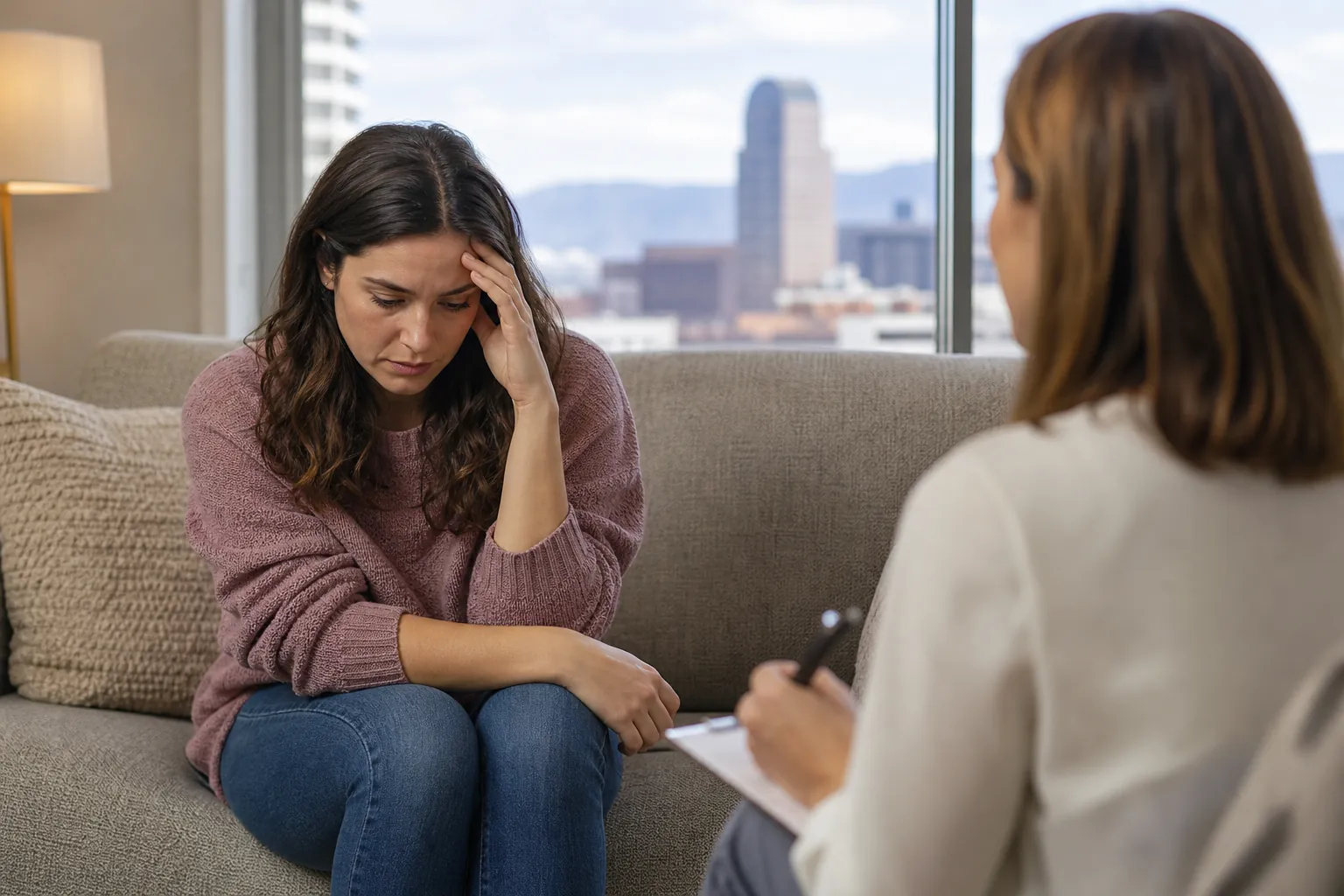
How Can You Tell Whether Stress May Be Affecting Your Body?
You cannot tell from a body sensation alone whether stress is the cause. Patterns, other possible causes, and a discussion with qualified professionals can help explain what support may fit. They do not force a conclusion about trauma or mental health. The Women’s Recovery clinical approach and outpatient care overview explain how scheduled care is organized.
A pattern may be clearer when a symptom often appears around one stressor. It may also ease when life events change. That observation can be worth sharing, but it is not proof of a specific cause. Some symptoms vary for reasons that are not clear. Physical conditions can also change how a person feels.
You do not need a symptom diary before seeking care. A clinician can help you discuss what you feel, when it tends to happen, and how it affects your day. Start with what you remember. A detailed account is not a condition for asking for support.
A clinician may ask about the impact on everyday functioning, emotional well-being, health history, and current stress. You can say when a question feels too personal or ask why the information is relevant. trauma-informed care principles may help explain why choice and collaboration matter in these conversations.
It is reasonable to seek support even if the connection between stress and physical symptoms is uncertain. The aim is not to prove a theory about your body; it is to understand your concerns and consider appropriate care.
When Should You Seek Mental-Health or Medical Support?
Consider professional support if physical or emotional symptoms last, cause distress, get worse, or disrupt daily life. Medical and mental-health professionals can address different concerns. Seeking one type of care does not prevent you from seeking the other. The Women’s Recovery clinical approach and outpatient care overview explain how scheduled care works.
A primary-care professional can assess physical symptoms and decide if more assessment is needed. A mental-health professional can discuss emotional distress, coping, relationships, and whether therapy or other support may help. Depending on the concern, both views may be useful.
You can seek support before life feels unmanageable. You can also ask for help even if talking about trauma feels hard.
Women’s Recovery offers mental-health, trauma, and co-occurring substance-use care for adult women. You do not need a substance-use diagnosis to call 833.754.0554. An individual assessment helps determine whether the program may be a fit.
Get urgent medical help for symptoms that feel like an emergency or may signal immediate danger. For other concerns, contact a qualified provider.
What Does Trauma-Informed Mental-Health Care Involve?
Trauma-informed care recognizes that difficult experiences may affect a person's sense of safety and well-being, without assuming that every symptom comes from trauma. It emphasizes respectful communication, shared work, and choice. Care decisions reflect each person’s needs and can include both mental and physical concerns. The Women’s Recovery clinical approach and outpatient care overview explain how scheduled care is organized.
A person should be able to ask what a session will involve, raise concerns, and discuss boundaries. A clinician can explain options and invite the person to take part in decisions. One approach is not right for everyone. Feeling unsure or needing time to build trust is a valid part of the conversation.
Trauma-informed care is a way of considering safety and the effects of trauma; it is not a guarantee that every interaction will feel easy or that a particular treatment will be appropriate. If a question or exercise feels overwhelming, tell the clinician and ask about alternatives or a pause.
Women’s Recovery focuses on mental health and trauma, including co-occurring substance-use care, for adult women. Its levels of care include weekly individual therapy, a case manager, psychiatric care, and stakeholder contact only with consent. Ask the team how those elements are used and what participation would involve.
The care conversation can cover privacy, feedback, and treatment goals. Clear explanations can reduce uncertainty. An individual assessment helps the clinical team determine which setting and level of support fit.
How Do Levels of Care Differ for Women Seeking Support?
Partial hospitalization, intensive outpatient, and outpatient care differ mainly in the amount and frequency of structured support. Women’s Recovery provides these levels for adult women, with women returning home each evening; an individual assessment helps determine which level may fit a person's needs. Women’s Recovery’s PHP care and IOP care describe structured options.
A partial hospitalization program, or PHP, is the most structured of these options at Women’s Recovery. The program typically involves 25 to 30 hours per week over five days, and PHP typically lasts four to six weeks. Each person’s needs and assessment matter. These details do not set a personal schedule or expected length of care.
The Intensive Outpatient Program (IOP), involves 9 to 15 hours each week across three to five three-hour sessions, with morning and evening tracks. Outpatient group meets for 1.5 hours weekly and includes individual therapy. These descriptions are general program details, not a promise of a particular schedule for an individual.
All of these options are nonresidential, and women go home each evening. Women’s Recovery does not provide onsite detox, residential care, or inpatient care. If you may need a different level of support, ask a qualified professional about an appropriate referral or next step rather than assuming an outpatient program can meet every need.
The team's assessment can consider symptoms, safety, daily responsibilities, and the support a person needs. PTSD care options for women offers another perspective on discussing treatment needs. Ask the care team how it determines fit and how a level of care can be reconsidered if needs change.
| Care level | Program structure | General schedule |
|---|---|---|
| PHP | Most structured outpatient level | 25 to 30 hours weekly over five days |
| IOP | Structured outpatient sessions | 9 to 15 hours weekly, morning or evening tracks |
| Outpatient | Group and individual therapy | Weekly 1.5-hour group |
How Can You Choose Care For Body-Based Stress Symptoms In CO?
Body-based stress symptoms can have many causes. They do not prove a mental-health diagnosis or that trauma occurred. A medical professional can assess physical symptoms. A mental-health professional can consider emotional concerns too. Learn about services through Women’s Recovery’s admissions process and its Denver, CO care location.
Women’s Recovery serves women age 18 and older with mental-health and trauma concerns. You do not need a substance-use diagnosis to call 833.754.0554. An individual assessment helps determine whether available care is a fit. There is no universal requirement to enter PHP.
Care options are PHP, Intensive Outpatient Program (IOP), and outpatient care. PHP usually involves 25–30 hours a week, five days a week, for about four to six weeks. IOP involves 9–15 hours a week across three to five three-hour sessions. Morning and evening tracks are available. Outpatient care includes 1.5 group hours each week plus individual therapy.
Every level includes weekly individual therapy, a case manager, psychiatric care, and contact with other people involved in care only with consent. Women must be medically and psychiatrically stable for these programs and return home each evening. Women’s Recovery does not offer onsite detox, residential or inpatient care, or EMDR.
- An individual assessment helps determine whether a level of care is appropriate.
- Schedules differ by level, and each person’s fit is assessed individually.
- Contact with other people involved in care requires consent.
- Pregnant and postpartum women are welcome. Children and infants are not onsite.
Questions about next steps? Call Women’s Recovery at 833.754.0554 or review the Women’s Recovery admissions process.
Frequently Asked Questions
Do body-based stress symptoms always mean someone has experienced trauma?
No. Physical symptoms can have many possible causes, including health conditions and everyday stress, and they do not establish that trauma occurred. A medical professional can help evaluate physical symptoms, while a mental-health professional can consider emotional concerns. Women’s Recovery’s admissions process and Denver, CO care location provide information about its services.
Can I ask for mental-health care if I do not have a substance-use diagnosis?
Yes. Women’s Recovery provides mental-health and trauma care for women age 18 and older, and a substance-use diagnosis is not required to call. The number is 833.754.0554. An individual assessment determines whether the available services are an appropriate fit, based on the person’s needs and medical situation.
Do women in the programs stay overnight?
No. Women’s Recovery offers PHP, IOP, and outpatient care, and participants return home each evening. The programs require medical and psychiatric stability. Women’s Recovery does not provide onsite detox, residential, or inpatient care, so it cannot provide overnight or inpatient support through these services.
Can I attend if I am pregnant or postpartum?
Yes. Pregnant and postpartum women are welcome at Women’s Recovery, and an individual assessment determines whether available care is appropriate. Children and infants are not onsite. These details can help with practical planning, but the program does not provide childcare or onsite care for children or infants.
What if talking about past experiences feels uncomfortable?
You do not need to decide on a trauma label to seek help for distress or physical symptoms. An assessment considers individual needs and medical circumstances to determine appropriate care. Mental-health treatment may address symptoms and daily life. A person can focus on current concerns without assuming that one cause or past experience explains them.
Sources
- Substance Use Treatment, SAMHSA
- The ASAM Criteria, American Society of Addiction Medicine
- What Is Mental Health?, SAMHSA
Call 833.754.0554 to talk through next steps.