
Postpartum Women's Mental Health Groups In Denver, CO

Yes, the answer to “can postpartum women join women's mental health groups in Denver” is that postpartum women are welcome at Women’s Recovery. An individual assessment determines which care fits their needs. Babies and children cannot attend onsite, so childcare is needed during treatment. A substance-use diagnosis is not required.
Can Postpartum Women Join Women's Mental Health Groups In Denver?
Postpartum women can join women’s mental health groups when an assessment finds the care appropriate. Women’s Recovery welcomes adult women after childbirth, including those without substance-use concerns. Understanding the meaning of trauma informed care and dealing with family trauma can help explain the broader care context.
Giving birth does not mean you must handle distress alone. You can seek help for changes in mood, sleep, stress, or daily life. You don’t need to know what to call those changes before reaching out.
Women’s Recovery provides mental health, trauma, and co-occurring substance-use care in Denver. Co-occurring means mental health and substance-use concerns happen together. Substance use does not have to be part of your reason for seeking care.
Being welcome does not mean every program fits every person. Staff need to review your current needs and safety first. The right setting depends on more than your postpartum status.
Group care also differs from a casual parent meetup. Treatment has clinical goals and a set structure. Ask the team to explain the current group focus before assuming the group covers birth recovery or parenting.
There is no need to prove that distress is severe enough to deserve attention. You can describe what has changed and how daily life feels. The assessment helps turn those concerns into a care recommendation.

What Happens During The First Assessment?
A first assessment reviews symptoms, daily functioning, support, and safety to guide a care recommendation. The assessment is separate from admission and does not promise a placement. Background on how trauma informed care works and treatment approaches for PTSD in women can clarify related care terms.
You can call even if you feel unsure about group treatment. You do not need a diagnosis or a written history first. Start with the concern that led you to seek help.
Staff may explore how you are sleeping and managing daily tasks. They may also discuss past care and current sources of stress. These details help the team consider what support may fit.
An assessment should consider the demands of caring for a baby. A treatment plan needs to account for travel, childcare, and recovery after birth. Practical limits matter alongside symptoms.
You can explain that a topic feels hard to discuss. You can also say when you do not remember a detail. Honest limits give the team useful information without requiring a perfect account.
After assessment, the team can explain a recommendation and next steps. Admission remains a separate process. A different setting may be needed if your needs fall outside the care offered.
- The review may include mood changes and their effect on daily tasks.
- The team may discuss current treatment and support from other health professionals.
- Staff may review childcare needs and barriers to attending regular sessions.
What Can Group Care Help You Work On?
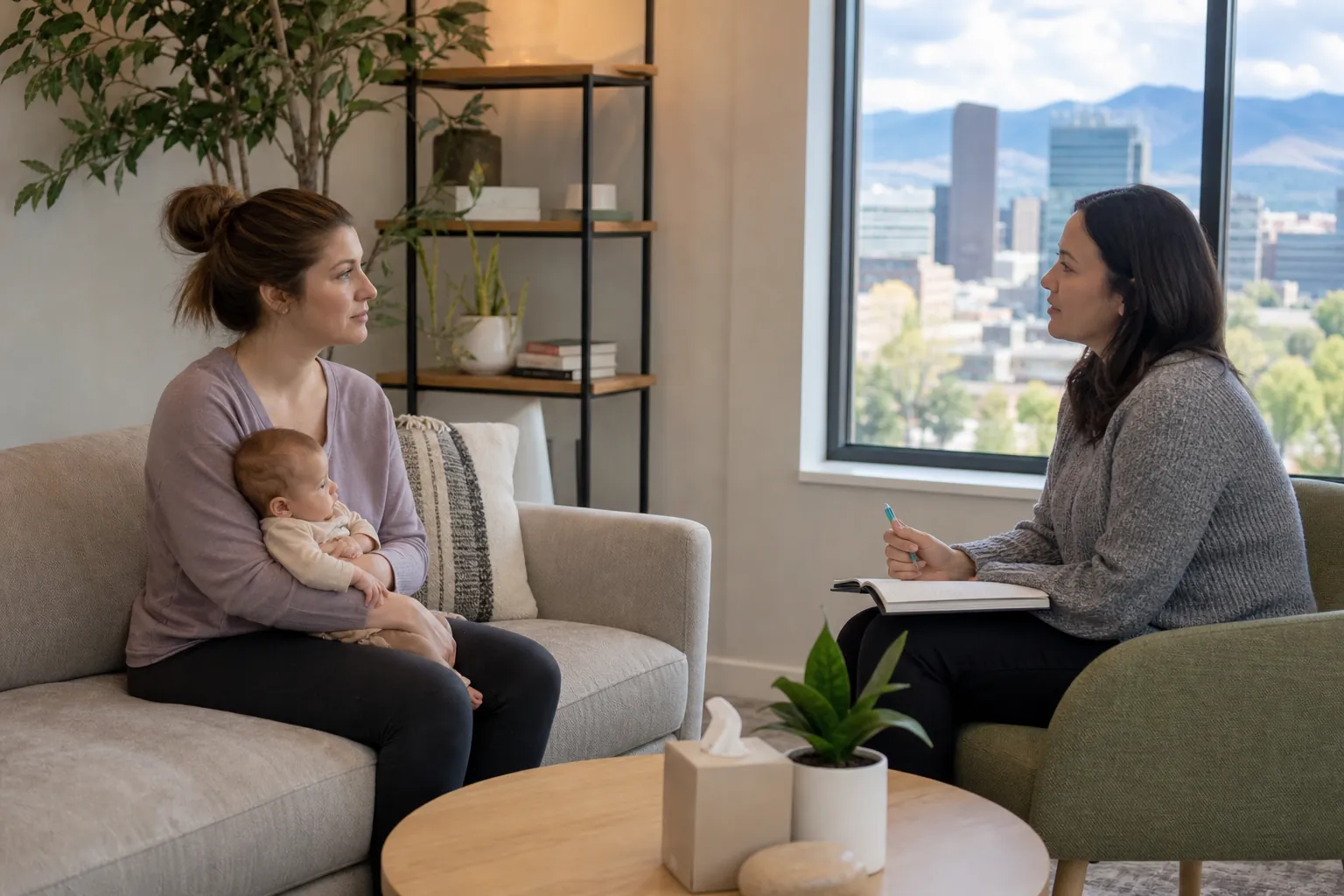
Group care can provide a structured place to discuss distress, practice skills, and hear other women’s views. The group’s actual focus depends on the program and your care plan. Related reading on ways to work through past trauma and principles of trauma informed care offers useful context.
After childbirth, you may feel pressure to look happy or capable. A treatment group can create room to talk about harder feelings. You do not have to present a polished version of your life.
The National Institute of Mental Health describes psychotherapy as treatment that addresses troubling emotions, thoughts, and behaviors. Group therapy is one format for that work. The right approach depends on the person’s needs and goals.
A women’s mental health group is not necessarily a postpartum-specific group. Women may attend for different reasons and at different life stages. Confirm the group’s current focus with the clinical team.
Group care should not require telling your full birth story immediately. Discuss your comfort level and the group’s expectations with staff. Trauma-informed care considers how past harm may affect your sense of safety.
Weekly individual therapy is included at every Women’s Recovery care level. That gives you a separate setting for personal concerns. Staff can explain how individual work and group work fit together.
- You can discuss your comfort with sharing personal details before group participation.
- You can tell staff when a topic brings up strong distress.
- You can request a clear explanation of group privacy rules and limits.
Which Outpatient Care Level Might Fit After Birth?
The appropriate outpatient care level depends on assessed needs and the support required each week. Women’s Recovery offers PHP, IOP, and outpatient treatment, with women returning home each evening. Reading about the trauma informed care approach and how PTSD treatment is approached can provide context without determining placement.
Partial Hospitalization Program, or PHP, means structured daytime care without an overnight stay. Intensive Outpatient Program, or IOP, provides several treatment sessions each week. Outpatient treatment has a lighter group schedule.
SAMHSA describes substance-use treatment as available in different settings and intensities. Those broad categories do not decide an individual’s care needs. Women’s Recovery uses an assessment to determine fit for its mental health and trauma services.
Every level includes weekly individual therapy, a case manager, and psychiatric care. Contact with chosen support people is based on consent. The table describes program structure, not a schedule promised to an individual.
More hours are not automatically a better fit after birth. Fewer hours may also provide too little support for some needs. Discuss both clinical needs and real-life demands with the team.
Women’s Recovery does not provide onsite detox, residential treatment, or inpatient care. Outpatient care is not a substitute for a hospital when hospital care is needed. A recommendation may involve services outside this program.
| Care Level | Usual Structure | Time At Home |
|---|---|---|
| PHP | 25-30 hours weekly over five days | Home each evening |
| IOP | 9-15 hours weekly; morning or evening tracks | Home each evening |
| Outpatient | Weekly 1.5-hour group plus individual therapy | Home outside visits |
How Do Childcare And Feeding Affect Attendance?
Childcare is needed for onsite treatment because babies and children cannot attend Women’s Recovery. Feeding needs, travel, and postpartum health concerns should be discussed when reviewing attendance. Learning about a trauma informed approach to care and support around family trauma may help frame concerns about comfort and support.
Welcoming postpartum women does not mean offering onsite infant care. A treatment session requires time away from hands-on childcare. That can be a major barrier, and naming the barrier is reasonable.
A partner, relative, friend, or paid caregiver may be part of your plan. The right choice depends on your family’s needs and resources. You do not need a finished childcare plan before making contact.
If you breastfeed or pump, discuss your needs with admissions staff. Do not assume that breaks, storage, or private space are available. The team needs to clarify what the setting can support.
Your birth-care clinician can address medical concerns tied to feeding or physical recovery. Mental health treatment does not replace postpartum medical visits. Coordination between providers may help when you give consent.
IOP has morning and evening tracks, but an individual schedule is not assured. Ask staff to explain the current options during the admissions process. Choose based on confirmed details rather than an assumed opening.
- Childcare needs to cover travel time as well as the treatment session.
- Backup care can help when a regular caregiver becomes unavailable.
- Feeding and pumping needs should be discussed before relying on specific arrangements.
- Physical recovery limits may affect travel and should be shared with staff.
How Can Family Support Fit Into Treatment?
Family support can help with practical needs, but participation should respect your consent and safety. Women’s Recovery includes consent-based contact with chosen support people at every care level. Resources on dealing with family trauma and working through painful past experiences can help explain why boundaries matter.
Support may mean watching the baby, sharing meals, or helping with transport. Emotional support can mean listening without trying to solve everything. SAMHSA’s family resources recognize the role loved ones can play in care.
A relative’s involvement is not always helpful or safe. Family conflict may be part of the distress you want to address. Tell the clinical team if contact with someone creates fear or pressure.
Consent-based contact means involvement is discussed rather than assumed. Staff can explain what information may be shared and with whom. They should also explain any legal or safety limits on privacy.
You may want practical help without sharing details from therapy. Those are separate choices to discuss with the team. A loved one does not need your full history to help with childcare.
Becoming a parent may bring new thoughts about your own childhood. That does not mean you must resolve every old conflict at once. Your treatment goals can focus on what feels most pressing now.
A clear support role can reduce confusion at home. One person might help with rides while another handles meals. Care decisions should remain centered on your assessed needs, rather than family pressure.
When Is More Urgent Help Needed?
Urgent postpartum concerns need prompt assessment rather than waiting for a group opening. Immediate danger requires emergency care, while other serious symptoms may need a same-day clinical review. Background on understanding trauma informed support and care approaches for women with PTSD cannot replace an urgent safety assessment.
Call 911 for an emergency or immediate danger, or call 988 for the Suicide and Crisis Lifeline. Do not wait for program admission or a return call when safety is at risk. Crisis support and routine admissions serve different purposes.
Thoughts of harming yourself or your baby need prompt professional attention. Sudden confusion, hearing things others do not hear, or losing touch with reality also needs urgent assessment. A clinician must assess the cause and the safest setting.
Some distressing thoughts are unwanted and deeply upsetting to the person experiencing them. Their meaning cannot be judged from a short description alone. Tell a qualified clinician what is happening so they can assess risk.
For serious symptoms without immediate danger, contact your birth-care or mental health clinician promptly. A clinician can help decide how quickly you need evaluation. Do not use a future group start date as the only response.
Women’s Recovery offers outpatient care, not emergency or inpatient services. Joining a group is a later decision when immediate safety needs are addressed. A higher level of care may be needed first.
Questions about next steps? Call Women’s Recovery at 833.754.0554 or review the Women’s Recovery admissions process.
Frequently Asked Questions
Do I Need A Postpartum Depression Diagnosis Before Calling?
No diagnosis is required before contacting Women’s Recovery about care. You can describe changes in mood, stress, sleep, or daily functioning in plain words. The clinical assessment helps clarify needs and program fit. A substance-use diagnosis is not required, and calling does not commit you to admission.
Can I Join If I Gave Birth Several Months Ago?
You can contact Women’s Recovery several months after childbirth. The supplied program facts do not set a postpartum time cutoff. Staff need to assess current symptoms, safety, and care needs. Share when you gave birth, but do not assume that time alone rules you in or out.
Will Everyone In The Group Be A New Mother?
Do not assume everyone in the group will be a new mother. Women’s Recovery serves adult women with varied mental health and trauma needs. A postpartum-only group is not confirmed in the program facts. The admissions team can explain the current group focus and how your needs may fit.
What Happens After A Benefits Review?
A benefits review helps clarify possible insurance terms and remaining questions. The review does not establish coverage, clinical fit, or admission. A clinical assessment and separate admission steps are still needed. Confirm plan requirements and any personal financial responsibility before relying on an expected treatment arrangement.
Can I Keep Seeing My Birth-Care Clinician During Treatment?
Mental health group care does not replace care from your birth-care clinician. You may still need postpartum medical visits and other health follow-up. Tell the treatment team about current providers and appointment needs. With your consent, the team can discuss coordination and explain what information sharing would involve.
Sources
- Psychotherapies, National Institute of Mental Health (NIH)
- Substance Use Treatment, SAMHSA
- Resources for Families, SAMHSA
Call 833.754.0554 to talk through next steps.