






Denver's women-only program for mental health, trauma and substance use.Call Admissions 833.754.0554
Call 833.754.0554Verify Insurance

Cannabis / marijuana / THC use and intensive outpatient care (IOP) for women from Lakewood

Your symptoms made sense. We treat what they were managing.

IOP is where you go next. You stay in a women-only space for part of the week, and you go home every night. Tell us what you’re carrying. We’ll walk you through the first step. Women from Lakewood start at our Denver program.

You do not have to label yourself or make every decision today.

For residents of Lakewood, CO. Women’s Recovery lists its physical location in Denver, CO.

Seating area with a sofa, round table, plants and artwork at Women’s Recovery

A look at our space

These are rooms at our Denver office. You spend the day here, and you go home at night.

Seating area with a sofa, round table, plants and artwork at Women’s Recovery Lounge with purple chairs, cream sofa and table Lounge with purple chairs and dried flowers Dark sofa and coffee table in a furnished room Plum armchairs beside a window table Entrance to the Belcaro Place building with the number 3801 above the doors

What are the short-term health effects of cannabis use?

Cannabis containing THC can cause temporary shifts in mood, thoughts, and perception, along with a short-lived high and feelings of warmth or excitement. Cannabis / marijuana / THC Intensive Outpatient Program (IOP) Addiction Treatment brings together cannabis-focused treatment and support for Lakewood, CO women. Care can help you understand patterns and make changes without shame.

Supporting guidance: Cannabis (Marijuana) Drugs A to Z | National Institute on Drug Abuse (NIDA) Treatment Types for Mental Health, Drugs and Alcohol | SAMHSA

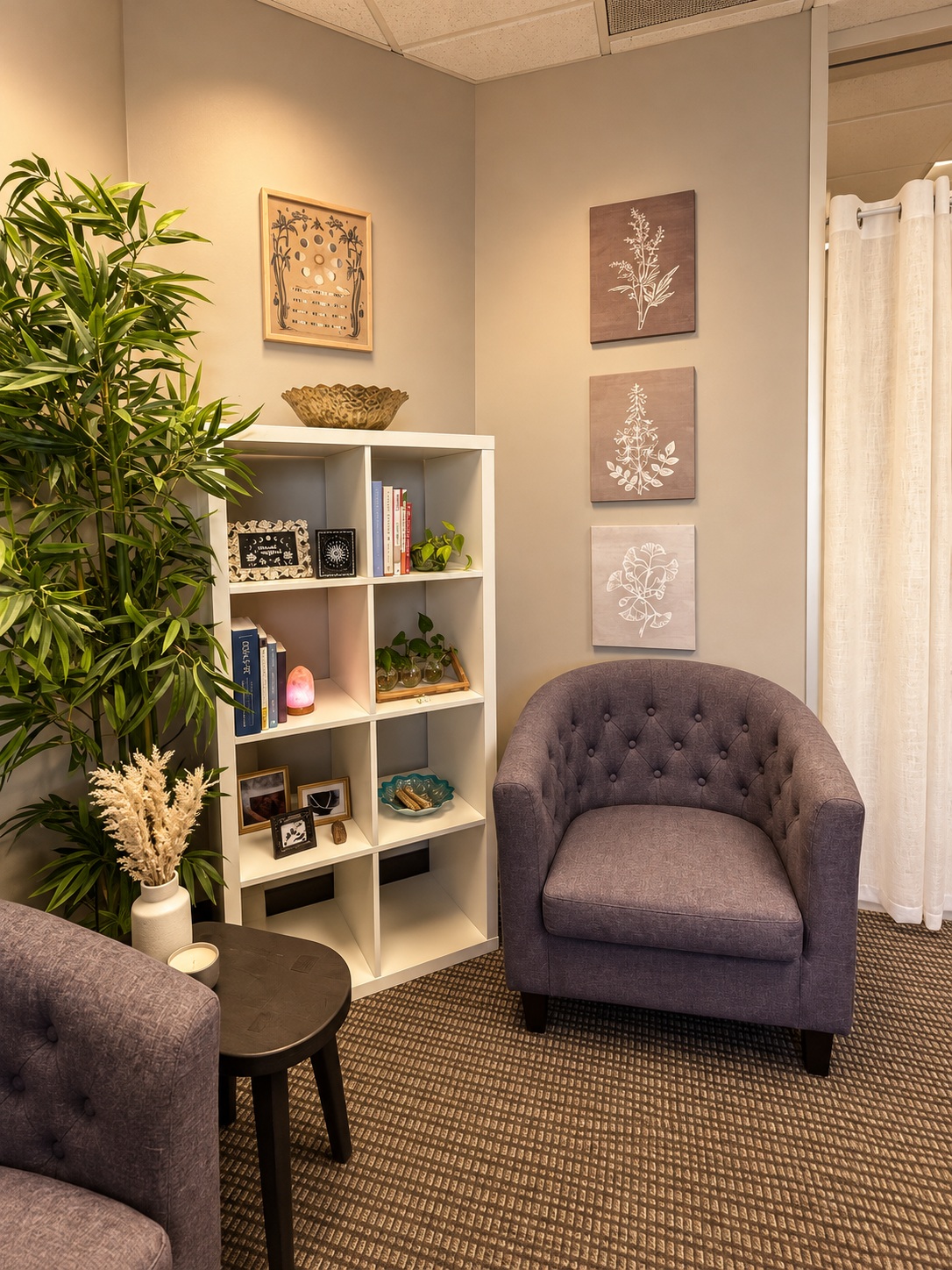
Two upholstered chairs and a bookshelf in a Women’s Recovery office

What are the short-term health effects of cannabis use?

Learning about cannabis-related treatment and THC edibles can help you consider how different products affect your health and choices.

01

Cannabis is a broad term for material from the Cannabis sativa L plant, which contains many cannabinoids.

Delta-9 THC is its most abundant intoxicating form, while delta-8 THC is also intoxicating. Because THC is mind-altering, short-term use can bring a high, warmth, or excitement while changing how you experience thoughts and surroundings. Noticing these changes matters when they affect judgment, emotional steadiness, responsibilities, or your sense of safety, even if your experience does not match someone else’s.

02

Products sold under a cannabis-related label are not necessarily equivalent.

Synthetic cannabinoids are laboratory-made substances chemically similar to cannabis compounds, but they may contain far higher THC concentrations and produce much stronger effects. They are associated with severe, potentially life-threatening health consequences. A careful conversation about what you use, the form it takes, and how it affects you can clarify the concern and help distinguish general education from an individualized treatment recommendation.

What can Intensive Outpatient Program (IOP) care for Cannabis / marijuana / THC involve?

Intensive Outpatient Program (IOP) care can involve structured treatment focused on changing thoughts and behaviors connected with cannabis use while supporting daily functioning. Comparing outpatient treatment for cannabis with a Partial Hospitalization Program (PHP) can help you understand why the appropriate amount of structure is an individual decision.

Psychotherapy, often called talk therapy, includes treatments intended to help identify and change troubling emotions, thoughts, and behaviors

Psychotherapy, often called talk therapy, includes treatments intended to help identify and change troubling emotions, thoughts, and behaviors. It commonly takes place one-on-one with a licensed mental health professional or alongside other patients in a group. For cannabis concerns, this work may provide a setting to examine how THC relates to emotional experiences, choices, and recurring behavior. The value lies in developing personally meaningful change rather than being reduced to a substance or a label.

Treatment is not one fixed path

Treatment is not one fixed path. Some approaches address specific conditions, while others can address several concerns, and a person may need more than one treatment type. Outpatient programs may occur in person or through telehealth, which can make care more accessible when getting to appointments is difficult. These general possibilities explain what outpatient care can include, but your appropriate level of care depends on an assessment of your circumstances and needs.

Dark sofa and coffee table in a furnished room

How can Intensive Outpatient Program (IOP) address Cannabis / marijuana / THC and daily life?

Intensive Outpatient Program (IOP) care can connect changes in cannabis use with the parts of life you want to protect or improve. Broader information about cannabis and cannabinoids can clarify substance-related concerns, while outpatient cannabis treatment offers context for care that may occur alongside everyday responsibilities.

THC’s intoxicating effects can alter mood, thoughts, and perceptions for a time

THC’s intoxicating effects can alter mood, thoughts, and perceptions for a time. Treatment can help you look at how those effects intersect with daily decisions and whether established patterns are making life harder. Psychotherapy aims not only for symptom relief but also to maintain or improve everyday functioning and quality of life. This gives care a practical focus: changes should have value in your real routines, relationships, emotional health, and ability to follow through on responsibilities.

Care can also consider emotional, psychological, and social well-being rather than treating cannabis use as an isolated issue

Care can also consider emotional, psychological, and social well-being rather than treating cannabis use as an isolated issue. Thoughts, emotions, and behavior influence one another, and psychotherapy offers a way to identify patterns that feel troubling or limiting. Addressing these connections may help you define what better functioning means personally. You can participate in those decisions, including which concerns feel most important, rather than having someone else impose a single version of recovery on you.

What could a woman from Lakewood, CO expect when considering outpatient treatment in Denver?

Care for women from Lakewood at our Denver program may involve traveling to Denver, CO for appointments and returning home afterward. Addiction treatment programs for women explain common care structures, while location and travel information provides practical context for the Denver, CO destination. This can help you consider how scheduled outpatient care may fit into your daily life and whether a conversation about support feels right for you.

  1. 01

    Outpatient care generally means that you attend an appointment and leave the same day

  2. 02

    Depending on the level of care, treatment can include individual appointments, group sessions, and support for developing coping skills

  3. 03

    Some outpatient programs coordinate care more intensively than standard visits

  4. 04

    The right structure depends on your needs, health, daily circumstances, and a professional assessment rather than your home city alone

Dark sofa with patterned pillows and a glass table

Common questions

Explore care for women from Lakewood at our Denver program and communities we serve for related guidance. Call admissions when you want to discuss your own situation.

Call Admissions
01 Can cannabis affect my mental and emotional well-being?

Cannabis contains THC, which can temporarily alter mood, thoughts, and perception. The effects and their impact can differ by product and person. If cannabis use is interfering with your well-being or daily functioning, treatment can help you examine those patterns and work toward changes that matter to you.

02 How do I know whether an Intensive Outpatient Program (IOP) is the right level of care?

There is no single treatment setting that fits everyone. Outpatient care is one option among several, and some people need more than one type of treatment over time. An individual assessment can consider the seriousness of your concerns, daily functioning, support needs, and whether a different degree of structure would be more appropriate.

03 Can cannabis-related care include individual and group therapy?

Yes. Psychotherapy may take place individually or with other patients in a group setting. Both formats can help you identify and change troubling emotions, thoughts, and behaviors. The right approach depends on your needs, preferences, and care plan rather than on a judgment about how cannabis use should look.

04 What RTD connection links Lakewood, CO and Denver, CO?

RTD states that the W Line extends from Denver Union Station to Jefferson County Government Center and traverses Denver, CO, Lakewood, CO, and Golden, CO. This documents a transit relationship between Lakewood, CO and Denver, CO only. It does not establish an itinerary, schedule, accessibility, or connection to the treatment facility, making personal transit review important.

05 What local peer support is publicly listed in Lakewood, CO?

Jefferson County Public Health lists peer support at a public Lakewood, CO address for people struggling with substance use, exploring recovery, or facing mental-health concerns. Peer coaching is described as low barrier and low commitment. It may provide connection and encouragement, but it is not clinical treatment, emergency care, guaranteed availability, or affiliated with Women’s Recovery.

If you can't believe that yet, borrow my hope. Just long enough to find your own.

Women’s Recovery graduate

Start with one conversation. Tell us what you're carrying. We'll walk you through the next step and verify your benefits.