






Denver's women-only program for mental health, trauma and substance use.Call Admissions 833.754.0554
Call 833.754.0554Verify Insurance

Chlordiazepoxide (librium) use: information for women from Denver

Your symptoms made sense. We treat what they were managing.

If chlordiazepoxide (librium) use is part of what you’re carrying, we start with mental health and trauma. Healing begins in our Partial Hospitalization Program: a focused day of care, and home every night.

You deserve clear information and choices, whether you are concerned about yourself or someone you love.

Lounge with purple chairs, cream sofa and table

A look at our space

These are rooms at our Denver office. You spend the day here, and you go home at night.

Seating area with a sofa, round table, plants and artwork at Women’s Recovery Lounge with purple chairs, cream sofa and table Lounge with purple chairs and dried flowers Dark sofa and coffee table in a furnished room Plum armchairs beside a window table Entrance to the Belcaro Place building with the number 3801 above the doors

What effect or risk does this official source identify for benzodiazepines?

The official source retained for the chlordiazepoxide (librium) use treatment for women in Denver states that combining opioids and benzodiazepines can increase overdose risk because both can cause sedation and suppress breathing, while also impairing cognitive functions. This is not individualized guidance. Readers may also view the Denver location page.

Supporting guidance: Benzodiazepines and Opioids | National Institute on Drug Abuse (NIDA)

Lounge with purple chairs and dried flowers

What is Librium treated for, and when might treatment for its use help?

Chlordiazepoxide is a prescription benzodiazepine with legitimate medical uses, but use can still become concerning. Chlordiazepoxide (librium) use treatment for women in Denver may help when use is affecting your safety, choices, or daily life. Learn about benzodiazepine addiction treatment for women and admissions at Women’s Recovery.

01

Prescription medicines can be helpful when taken as directed, yet misuse can have serious consequences.

Concern may arise if you feel unable to control your use, continue despite harm, or spend increasing energy obtaining, taking, or recovering from the medication. These experiences are not a moral failure. A careful assessment can consider the pattern, its consequences, and your reasons for wanting something to change while preserving your voice in decisions about care.
02

Treatment can help you understand how chlordiazepoxide use connects with anxiety, sleep concerns, other substance use, relationships, work, caregiving, or stress.

It can also provide structure for developing safer ways to respond to difficult moments. Chlordiazepoxide (Librium) Addiction Treatment guidance for women in Denver should be individualized because medication history, health risks, home stability, and available support can affect which level of care is appropriate.

How should Librium be taken, and what safety concerns matter?

Chlordiazepoxide should be taken only as directed by the treating prescriber. If your use has changed or you feel worried about it, medical guidance and an addiction assessment can address different parts of the concern. Explore chlordiazepoxide outpatient addiction treatment for women or contact Women’s Recovery for a conversation.

01

Benzodiazepines can lead to physical dependence even when taken as prescribed.

Dependence means the body has adapted to the medication; addiction involves impaired control and continued use despite harmful consequences. They can occur together, but they are not interchangeable. Recognizing the difference helps reduce shame and guides care toward your actual needs, whether those involve medical oversight, treatment for problematic use, emotional support, or a combination of these approaches.

02

Do not stop chlordiazepoxide suddenly or change it on your own, because withdrawal can include seizures and may be life-threatening.

Contact the treating prescriber for medication decisions. Combining benzodiazepines with opioids, alcohol, or other depressants increases overdose danger. Care should account for every substance or medication involved so that immediate risks, patterns of use, and suitable support can be considered together rather than addressing one concern in isolation.

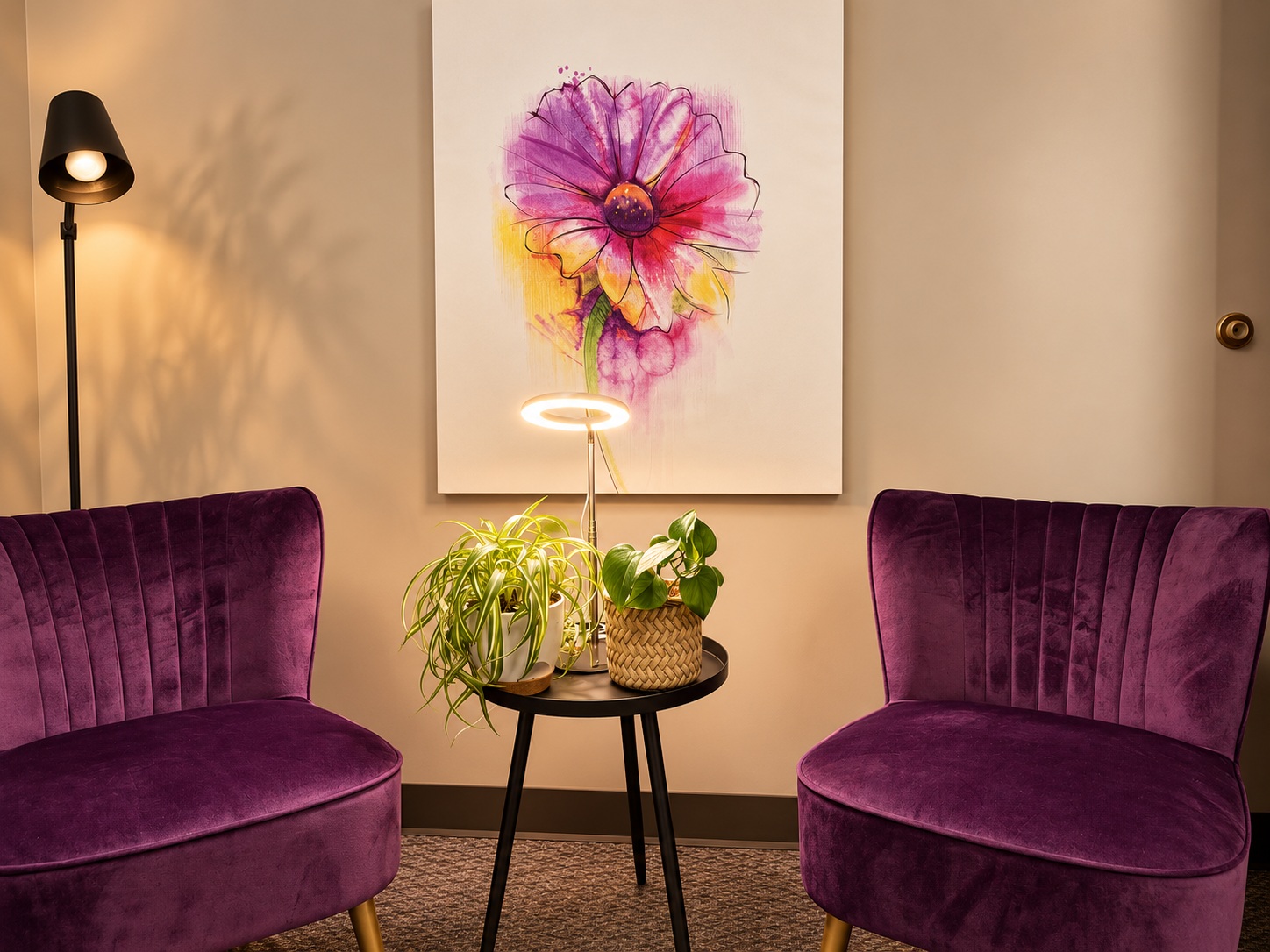
Plum chairs, table and flower painting

How long should a patient be on Librium before use becomes concerning?

There is no single length of use that determines whether you need addiction care. Your prescriber should guide how long the medication is used, while an assessment can consider control, consequences, dependence, and safety. Compare an Intensive Outpatient Program (IOP) for chlordiazepoxide addiction with outpatient treatment for women.

What shapes length
Duration matters medically because physical dependence can develop with steady benzodiazepine use, including use that follows a prescription. Still, time alone does not establish addiction. A useful evaluation looks at what is happening now: whether use feels difficult to control, whether it continues despite problems, and whether attempts to change have created distress or risk. Chlordiazepoxide (Librium) Addiction Treatment information in Denver can help place those concerns in context.
Daily life factors
The right level of care depends on more than how long you have taken chlordiazepoxide. Health risks, other substance use, emotional symptoms, responsibilities, transportation, housing stability, and supportive relationships can all influence what is workable and safe. Outpatient care offers less weekly structure, while more intensive settings provide greater support. An individualized recommendation should balance clinical needs with the realities of your daily life, rather than expecting you to fit one standard pathway.

What should a woman expect from outpatient treatment in Denver?

women’s treatment programs may involve appointments followed by a return home the same day. You can also review admissions information when deciding whether a conversation about outpatient care feels helpful.

  1. 01

    Outpatient treatment can range from standard appointments that let you return home the same day to an Intensive Outpatient Program (IOP) with more coordinated support

  2. 02

    Inpatient or partial-hospitalization care provides a higher level of structure when appropriate

  3. 03

    The right level depends on your needs, stability, and recovery goals

  4. 04

    Appropriate care can give you meaningful support while respecting your daily responsibilities and supportive relationships whenever possible

Seating area with a sofa, round table, plants and artwork at Women’s Recovery

Common questions

Explore care at our Denver location and communities we serve for related guidance. Call admissions when you want to discuss your own situation.

Call Admissions
01 Does dependence on chlordiazepoxide mean I am addicted?

Physical dependence means your body has adapted to chlordiazepoxide and may react when it is reduced or stopped. Addiction involves a pattern of continued use despite harm and difficulty controlling use. Either concern deserves compassionate assessment, but physical dependence alone does not mean you have an addiction.

02 What can chlordiazepoxide addiction treatment address?

Care may address medication use, emotional health, other substance use, daily pressures, relationships, and the stability of your living environment. The appropriate intensity depends on your individual needs. A thoughtful assessment helps connect these factors rather than treating chlordiazepoxide use as an isolated problem.

03 How do I know whether outpatient care is appropriate?

Outpatient care may fit when your health and circumstances allow you to participate safely while living at home. More structured care may be appropriate when risks or support needs are greater. This is an individual clinical decision, not something you need to determine by yourself when you contact the Denver team.

04 Where are Women’s Recovery's publicly listed Denver contact details for someone researching chlordiazepoxide (librium) use: information for women from Denver?

Women’s Recovery’s public contact page lists its Denver location at 3801 E Florida Ave, Ste 650, Denver, CO 80210, with the contact number 833.754.0554. These details verify only the publicly listed Denver address and telephone number. They do not independently establish licensing, accreditation, treatment availability, eligibility, schedules, outcomes, or any other facility.

05 Which official Denver substance-use resources can someone consult while researching chlordiazepoxide (librium) use: information for women from Denver?

The City and County of Denver publishes substance-use support links, harm-reduction resources, treatment-navigation links, and crisis directions for Denver residents. These materials provide public resource navigation only. They do not represent Women’s Recovery treatment, promise that any service is available, provide individualized medical guidance, or establish an endorsement of or affiliation with Women’s Recovery.

If you can't believe that yet, borrow my hope. Just long enough to find your own.

Women’s Recovery graduate

Start with one conversation. Tell us what you're carrying. We'll walk you through the next step and verify your benefits.