






Denver's women-only program for mental health, trauma and substance use.Call Admissions 833.754.0554
Call 833.754.0554Verify Insurance

Motivational interviewing for women in Centennial, CO

Your symptoms made sense. We treat what they were managing.

Motivational therapy is a recognized option within care aimed at changing thoughts and behaviors. It may be combined with individual appointments, group sessions, or coping-skills education, helping create a treatment approach responsive to your circumstances and preferences.

You do not have to feel completely certain before exploring support. Your concerns, priorities, and choices matter throughout the process.

For residents of Centennial, CO. Women’s Recovery lists its physical location in Denver, CO.

Dark sofa and coffee table in a furnished room

A look at our space

These are rooms at our Denver office. You spend the day here, and you go home at night.

Seating area with a sofa, round table, plants and artwork at Women’s Recovery Lounge with purple chairs, cream sofa and table Lounge with purple chairs and dried flowers Dark sofa and coffee table in a furnished room Plum armchairs beside a window table Entrance to the Belcaro Place building with the number 3801 above the doors

What can Motivational Interviewing (MI) involve?

Motivational interviewing (MI): Motivational therapy may be included among treatment approaches designed to support changes in thoughts and behaviors. Outpatient programs can combine it with one-on-one appointments, group sessions, and coping-skills education based on care needs. Explore Motivational Interviewing (MI) and support considerations for Centennial, CO, with a conversation if helpful.

Supporting guidance: Treatment Types for Mental Health, Drugs and Alcohol | SAMHSA Treatment Options for Substance Use Disorder | SAMHSA

Dark sofa with patterned pillows and a glass table

What can Motivational Interviewing (MI) involve?

Motivational Interviewing (MI) for Women in Denver can be understood within talk therapy and broader behavioral treatment, where conversations may address thoughts, emotions, behaviors, and readiness for change. Depending on your needs, care may also connect with group therapy for women or mindfulness for women.

01

Psychotherapy generally aims to help you identify and change troubling emotions, thoughts, and behaviors.

It commonly takes place individually with a licensed mental health professional or in a group with other patients. Within that broader context, motivational therapy may be one part of treatment rather than the entire plan. Appropriate care gives you space to consider change while also addressing the concerns affecting your well-being, relationships, responsibilities, or ability to function from day to day.

02

Treatment can be organized at different levels.

Standard outpatient care involves attending appointments and leaving the same day, with frequency based on your needs. More intensive outpatient or partial hospitalization care may combine individual appointments, group sessions, and coping-skills education for several hours. Comparing these structures matters because a useful approach must provide enough support while remaining realistic alongside work, caregiving, transportation, privacy, and other everyday responsibilities you need to manage.

What elements can be part of Motivational Interviewing (MI)?

Motivational Interviewing (MI) information in Denver is most useful when it places the approach within a complete care plan. Talk therapy may occur individually or in groups, and treatment may include coping-skills work or other approaches such as trauma-focused therapy for women and yoga for women, when clinically appropriate.

01

The elements surrounding motivational therapy can vary because people may need more than one type of treatment.

Care may include one-on-one psychotherapy, group sessions, education about coping skills, and coordination among providers. These elements serve different purposes: private sessions can focus closely on your experiences, while group care can offer structured interaction with other patients. Coping-skills education can support practical changes outside sessions, helping treatment connect with situations you face in ordinary life.

02

For some substance use disorders, counseling and behavioral therapies may be combined with medication as part of a whole-patient approach.

Medication is not interchangeable with motivational therapy, and it should be clinically driven and tailored to the individual. If physical dependence, withdrawal symptoms, or cravings are part of your situation, those concerns deserve appropriate medical assessment. Do not start, stop, or change a medication on your own; those decisions belong with your treating prescriber.

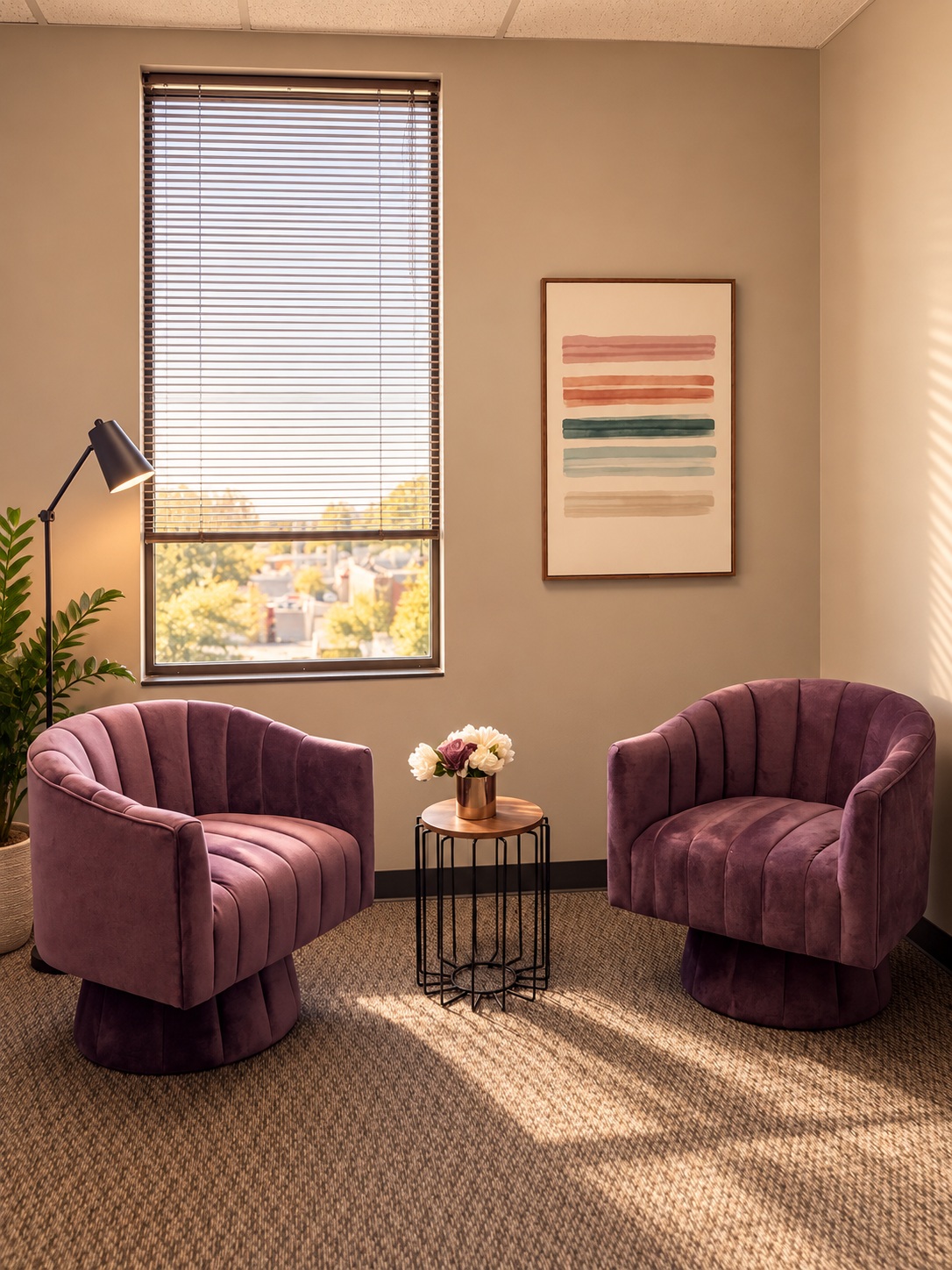
Plum armchairs beside a window table

What goals can guide Motivational Interviewing (MI)?

Clear guidance about Motivational Interviewing (MI) for women in Denver should connect the conversation to goals that matter in daily life. Those goals may include changing difficult patterns, easing distress, or strengthening functioning and quality of life, alongside supports such as neurofeedback for women or group therapy for women when suitable.

01

Psychotherapy goals commonly include relief from symptoms, maintaining or improving daily functioning, and improving quality of life.

Those broad aims can become more personal when you consider where change matters most, such as emotional well-being, relationships, work, caregiving, health, or consistency with treatment. Appropriate care helps connect a general wish for things to be different with patterns that can be understood and addressed, while respecting that your priorities may develop over time.

02

When substance use is involved, treatment may focus on changing thoughts and behaviors and, when needed, managing physical dependence.

Dependence refers to physical adaptation that may require medical attention; addiction involves a broader pattern of compulsive use and harmful consequences. They are not identical. A conversational therapy cannot determine medical risk by itself. Coordinated behavioral and medical care can address different parts of your health rather than expecting one approach to do everything.

What could a woman from Centennial, CO expect when considering outpatient treatment in Denver?

Care for women from Centennial at our Denver program may involve traveling to Denver, CO for appointments and returning home afterward. You can explore treatment programs for women, review location and travel information and consider how outpatient care could fit your daily life.

  1. 01

    Outpatient treatment generally means attending an appointment and leaving the same day rather than staying overnight

  2. 02

    Depending on the type of program, care may include individual appointments, group sessions and opportunities to develop coping skills

  3. 03

    Some outpatient programs provide more frequent or coordinated support than standard visits

  4. 04

    This structure can help you receive meaningful care while continuing to live at home, although the right balance depends on your needs and circumstances

Lounge with purple chairs, cream sofa and table

Common questions

Explore therapies for women in recovery and give yourself permission to ask for help for related guidance. Call admissions when you want to discuss your own situation.

Call Admissions
01 Could Motivational Interviewing (MI) help if I feel unsure about change?

Motivational Interviewing (MI) may be relevant when you feel uncertain about change or want treatment choices considered in relation to your life. Its usefulness depends on your needs and the broader care plan. Appropriate psychotherapy can help address troubling thoughts, emotions, and behaviors while supporting daily functioning and quality of life.

02 Can Motivational Interviewing (MI) be combined with other care?

Possibly. Mental health and substance use care may include more than one treatment type. Depending on your needs, care can combine individual psychotherapy, group sessions, coping-skills education, behavioral therapies, or clinically tailored medication. The right combination should reflect your health, goals, daily responsibilities, and appropriate clinical assessment.

03 How does outpatient treatment differ from more intensive care?

Outpatient care means you attend an appointment and leave the same day. Standard outpatient care may resemble a regular clinical visit, while more intensive outpatient or partial hospitalization care can include individual appointments, groups, and coping-skills education for several hours. The suitable structure depends on the level of care you need.

04 What RTD rail information can help orient a woman traveling from Centennial, CO toward Denver, CO?

RTD locates Dry Creek Station at 9450 E Dry Creek Rd in Centennial, CO and states that it serves the E Line. The published E Line endpoints are Union Station in Denver and RidgeGate Parkway Station. This information establishes orientation only, not an itinerary, schedule, accessibility, or connection to Women’s Recovery.

05 Which Arapahoe County resources address substance use and mental-health needs?

For substance-use needs, Arapahoe County Public Health links to Colorado LADDERS and OwnPath under Find Treatment, plus Colorado Crisis Services. For mental-health needs, it lists AllHealth Network and OwnPath and directs anyone in crisis to call or text 988 or use 988Colorado.com. These listings do not establish eligibility, capacity, county treatment, or Women’s Recovery affiliation.

If you can't believe that yet, borrow my hope. Just long enough to find your own.

Women’s Recovery graduate

Start with one conversation. Tell us what you're carrying. We'll walk you through the next step and verify your benefits.