





Denver's women-only program for mental health, trauma and substance use.Call Admissions 833.754.0554
Call 833.754.0554Verify Insurance

Help with hair pulling / trichotillomania for women from Aurora, CO

Your symptoms made sense. We treat what they were managing.

Hair pulling / trichotillomania: This page presents one concise trichotillomania fact and limited Aurora information about the city’s named rail relationship and two municipal response-resource purposes.

You deserve a conversation that takes your concern seriously without reducing you to a behavior or label.

For residents of Aurora, CO. Women’s Recovery lists its physical location in Denver, CO.

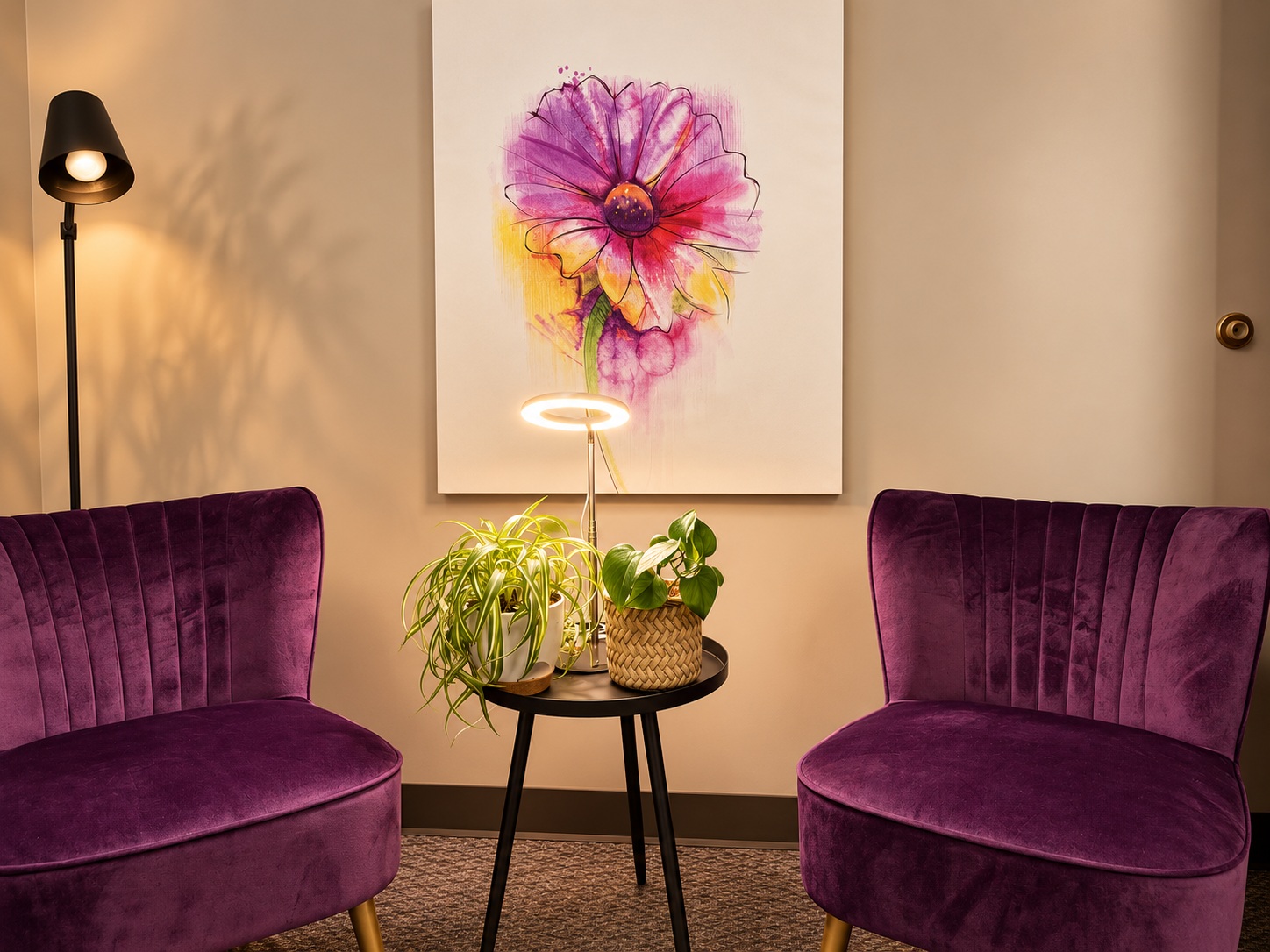
Plum chairs, table and flower painting

A look at our space

These are rooms at our Denver office. You spend the day here, and you go home at night.

Seating area with a sofa, round table, plants and artwork at Women’s Recovery Lounge with purple chairs, cream sofa and table Lounge with purple chairs and dried flowers Dark sofa and coffee table in a furnished room Plum armchairs beside a window table Entrance to the Belcaro Place building with the number 3801 above the doors

What specific fact does this official source state about trichotillomania?

The specific retained NCBI MeSH fact for hair pulling / trichotillomania describes trichotillomania as a compulsion to pull out one’s hair. It provides no additional retained details about diagnosis, individual suitability, services, or outcomes. The separate Aurora page serves as a geographic reference.

Supporting guidance: Trichotillomania - MeSH - NCBI

Seating area with a sofa, round table, plants and artwork at Women’s Recovery

How can you stop trichotillomania hair pulling?

Hair pulling / trichotillomania can help you explore patterns, effects, and appropriate care rather than relying on willpower alone. Learn how obsessive-compulsive and related conditions support for women fits within mental health care, or begin a private conversation through contacting Women’s Recovery.

01

A useful first step is recognizing that repeated behavior can be hard to control and may cause distress or interfere with daily life.

Notice whether pulling takes substantial time, interrupts concentration, affects social comfort, or feels increasingly difficult to resist. These observations are not a diagnosis. They help you understand the concern’s impact and support a more individualized discussion about care that could help you manage symptoms and improve quality of life.

02

Stopping may involve more than deciding not to pull, especially when the behavior has become repetitive or connected with difficult emotions.

Appropriate care can examine the behavior in context, including recurring thoughts, anxiety, and other concerns that may need attention. You retain a voice in what happens next. A conversation can help you consider options without demanding certainty, immediate disclosure to others, or a commitment before you understand the approach.

What mental health condition can be associated with hair pulling?

Hair pulling belongs in a broader conversation about repetitive behaviors, but the behavior alone does not establish OCD or another diagnosis. Reading about OCD support for women and skin picking and excoriation disorder support for women can clarify why similar-looking behaviors still require individual assessment.

01

OCD involves recurring, difficult-to-control thoughts, repetitive and excessive behaviors, or both.

Those symptoms can consume time, create significant distress, and interfere with ordinary responsibilities. Hair pulling should not automatically be treated as proof of OCD, however. A careful assessment considers what happens before, during, and after the behavior, whether unwanted thoughts are involved, and whether other symptoms affect your life. That distinction matters because useful care should respond to your actual experience.

02

It is also possible to have more than one concern at the same time.

Anxiety, mood symptoms, body-image distress, or other repetitive behaviors may shape what you are going through, yet none should be assumed from hair pulling alone. Women can experience differences in symptoms and illness course, and hormonal changes may affect some mental health concerns. Individualized care creates space to discuss those factors without treating gender as an explanation for everything.

Two upholstered chairs and a bookshelf in a Women’s Recovery office

Is trichotillomania a form of autism?

Hair pulling by itself does not tell you whether autism or any other condition is present. Similar behaviors can have different meanings for different people. Exploring support for obsessive-compulsive and related conditions and body dysmorphic disorder support for women can show why context matters more than matching one visible behavior to a label.

01

A sound assessment looks beyond the fact that pulling occurs.

It considers recurring thoughts, emotional responses, the degree of control you feel, the time involved, and the effect on everyday functioning. This prevents one behavior from being used to make broad conclusions about your mental health or development. Clear guidance about hair pulling / trichotillomania should help you understand distinctions while leaving diagnosis to an individualized clinical conversation.

02

If you are wondering about autism, OCD, or another condition, you deserve an answer based on your wider history and current needs.

Online comparisons cannot account for the full pattern of symptoms, when they began, or how they interact. Appropriate care offers value by separating concerns that may look alike and identifying which difficulties are most disruptive now. You can seek that clarity without having to adopt a label before it feels supported or useful.

What could a woman from Aurora, CO expect when considering outpatient treatment in Denver?

Care for women from Aurora at our Denver program may involve traveling to the Women’s Recovery location in Denver for appointments and returning home afterward. Location and travel information can help you understand that practical consideration, while a care conversation can focus on your needs, safety, and preferences.

  1. 01

    Outpatient treatment generally involves scheduled appointments without an overnight stay

  2. 02

    Standard outpatient care may include individual counseling, group sessions, coping-skills education, medication support, or care coordination

  3. 03

    Intensive Outpatient Program (IOP) care involves more intensive, coordinated support, while partial hospitalization or inpatient care may be appropriate when greater structure or protection is needed

  4. 04

    The right level can help you receive care that reflects your clinical needs, safety, and ability to participate while living in Aurora, CO

Dark sofa and coffee table in a furnished room

Common questions

Explore help with hoarding disorder for women from Aurora and help with body dysmorphic disorder for women from Aurora for related guidance. Call admissions when you want to discuss your own situation.

Call Admissions
01 When is hair pulling a reason to seek support?

Consider how often pulling happens, whether it feels difficult to control, and how it affects your time, comfort, relationships, work, or self-image. These details help clarify the kind of support you may need. You do not have to decide what the behavior means before beginning a conversation.

02 Can I tell from online information whether I have trichotillomania?

No. Education can help you recognize patterns and understand related conditions, but diagnosis requires an individualized assessment. A clinician considers your experience, the behavior’s effects, and other possible explanations. Seeking an assessment leaves room for your questions and does not require you to accept a particular conclusion or care plan.

03 Can hair pulling happen with anxiety or other mental health concerns?

Hair pulling may occur alongside anxiety, distress, repetitive thoughts, or other concerns, but one behavior does not identify every condition present. An assessment can consider your broader mental health rather than treating a single symptom as the whole story. Appropriate care can address overlapping concerns while respecting what matters most to you.

04 What travel connection is listed between Aurora, CO and Denver, CO?

Aurora’s official transit page says the RTD A Line operates between Denver Union Station and Denver International Airport, with two stops in Aurora. This establishes only a named rail relationship. It does not identify the nearest stop, a specific itinerary, travel time, current frequency, accessibility, or any connection to the Women’s Recovery address.

05 What purposes do Aurora’s naloxone leave-behind program and Mobile Response Team serve?

Aurora says its Fire Rescue naloxone leave-behind program is intended to provide naloxone after an overdose event and serve as an entry point for education, treatment, and recovery resources. Its Mobile Response Team pairs a mental-health clinician with a paramedic or EMT for behavioral-health crises. The city page gives emergency and non-emergency dispatch instructions; neither is a Women’s Recovery service.

If you can't believe that yet, borrow my hope. Just long enough to find your own.

Women’s Recovery graduate

Start with one conversation. Tell us what you're carrying. We'll walk you through the next step and verify your benefits.