

Original article
Their central purpose is to reduce isolation through understanding, shared experience, encouragement, and accountability. They may complement mental health treatment for women or substance use and addiction treatment for women, while giving you room to participate in a way that respects your comfort and choices.
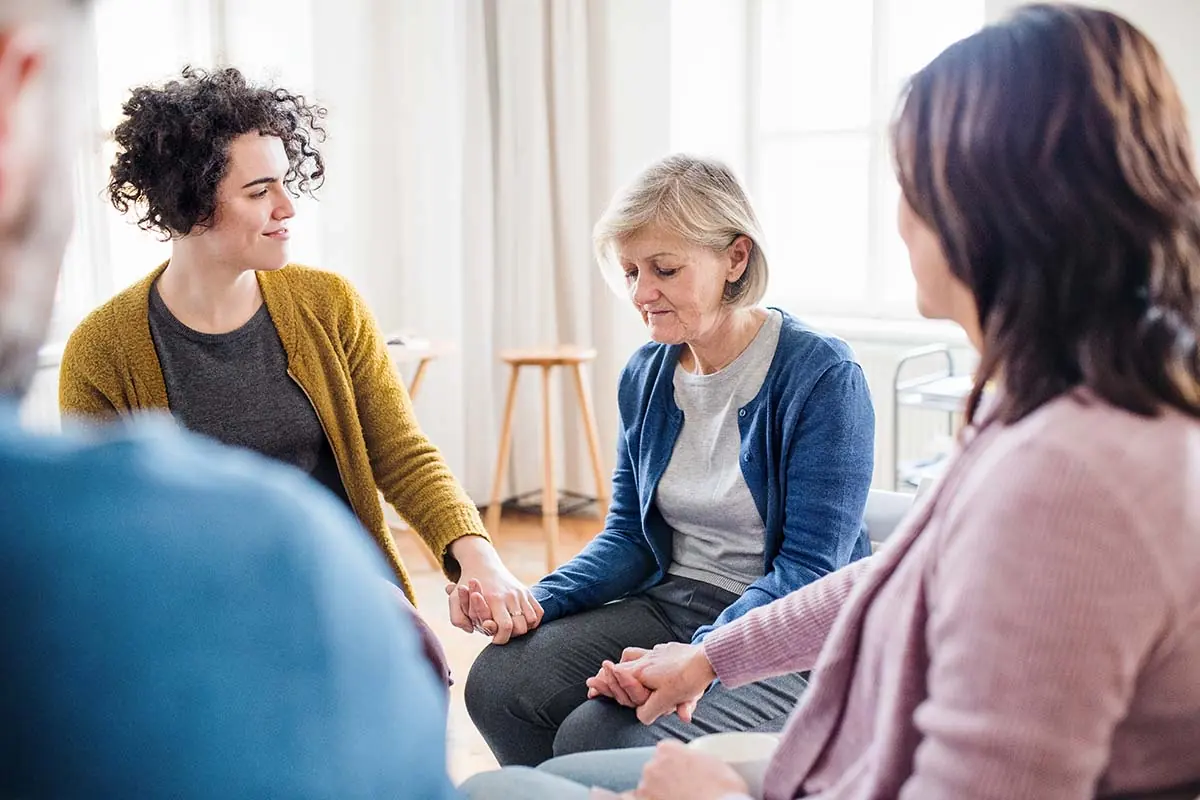
Recovery rarely happens alone. It is far easier to conquer a mental disorder or addiction with the help of others who understand the challenges these conditions present. Women’s support groups fill this need. Even if individual therapy is a primary form of care for a disorder, women’s therapy groups provide support and accountability as an added element to treatment.
Support groups can also fit into a comprehensive treatment program where women can engage in evidence-based or holistic treatment together. When combined with individual therapy, support groups give women the strength they need to recovery from addiction and avoid relapse. There are numerous reasons why women’s support groups are beneficial. For more information, contact Women’s Recovery today at 833.754.0554.

Women’s Support Groups Prevent Isolation
A person who has an addiction may feel like they are alone. They may believe that their problem is unique and that no one understands. Therefore, the individual may choose to isolate themselves so that they do not have to deal with the challenges of the addiction. However, isolation only leads to further addiction, loneliness, and despair.
Support groups pull women out of their isolation and loneliness. They provide a sense of relief that the addicted person is not alone in their struggle with addiction. Having other women around can prevent loneliness and depression. It can also give someone the strength they need to get help for substance disorder.

Women Can Share Their Feelings
People who suffer from addiction bottle emotions up inside. They either refrain from expressing their feelings or express them in ways that are damaging. A support group offers a safe environment where a woman can talk about her thoughts and feelings without being judged.
A support group also provides accountability. Other people in the group can act as a sounding board, where they either confirm or challenge someone’s thoughts. When everyone in the group is sharing, others can learn different perspectives. As a result, the group grows together.

Support Groups Promote Healthy Relationships
The stigma of relationships between women is often unhealthy. The media often portrays women as being competitive and mean toward one another. While this may be true in some situations, women can also be supportive of one another.
treatment programs in CO provide women’s support groups to teach women how to show support and love for one another. This practice is especially important, as it breaks down the social barriers often created by addiction. How do women offer comfort for one another in support groups?
- Learning how to listen and not just talk
- Learning how to listen without judging
- Sharing feelings with other women openly and honestly
- Developing empathy for other women
- Reversing the perception that other women are competition
- Leaning on other women for support and encouragement

Gender-Specific Treatment Prevents Distractions
When women and men are together in a substance abuse treatment center, there is a potential for social distractions and sexual tension. Both men and women may feel uncomfortable sharing their deepest feelings or emotions when each gender is present. This reaction can be a hindrance to addiction recovery.
Women’s support groups remove these distractions, giving women the freedom to grow alongside their peers without men around them. Women learn to support one another more directly. In addition, women who have experienced trauma such as sexual abuse or rape may feel safer around other women.

Women’s Support Groups at Women’s Recovery
If you would like to learn more about women’s support groups, then contact Women’s Recovery at 833.754.0554. We offer a range of addiction treatment options, including:
- Alcohol addiction treatment
- Heroin addiction treatment
- Cocaine addiction treatment
- Benzo addiction treatment
- Opioid addiction treatment
Call us today to find out more about your treatment options. Our women’s therapy groups can help you get on the road to recovery.